

Background
Ibn Tufail was born in 1105 in Guadix, Spain, belonging to the Qays Arab tribe.
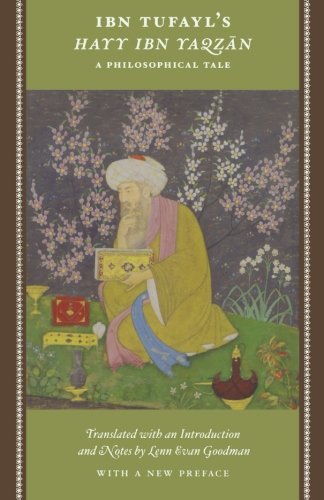
( The Arabic philosophical fable Hayy Ibn Yaqzan is a cla...)
The Arabic philosophical fable Hayy Ibn Yaqzan is a classic of medieval Islamic philosophy. Ibn Tufayl (d. 1185), the Andalusian philosopher, tells of a child raised by a doe on an equatorial island who grows up to discover the truth about the world and his own place in it, unaidedbut also unimpededby society, language, or tradition. Hayys discoveries about God, nature, and man challenge the values of the culture in which the tale was written as well as those of every contemporary society. Goodmans commentary places Hayy Ibn Yaqzan in its historical and philosophical context. The volume features a new preface and index, and an updated bibliography. One of the most remarkable books of the Middle Ages.Times Literary Supplement An enchanting and puzzling story. . . . The book transcends all historical and cultural environments to settle upon the questions of human life that perpetually intrigue men.Middle East Journal Goodman has done a service to the modern English reader by providing a readable translation of a philosophically significant allegory.Philosophy East and West Adds bright new pieces to an Islamic mosaic whose general shape is already known.American Historical Review
http://www.amazon.com/gp/product/0226303101/?tag=2022091-20
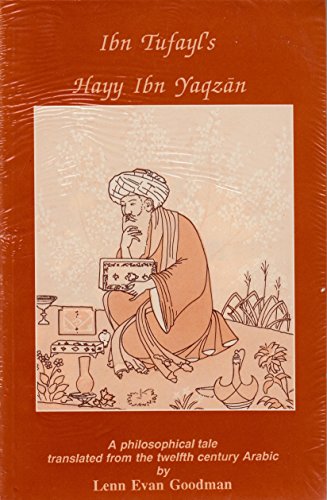
(71 pages, translated by L. E. Goodman with 91 page Introd...)
71 pages, translated by L. E. Goodman with 91 page Introduction + 79 pages of Notes. Spine is uncreased. Remainder marks on all 3 edges. Minor rumples to upper part of front cover + top margins of first few pages. Else Bright Clean Tight!
http://www.amazon.com/gp/product/0917232291/?tag=2022091-20

(The Improvement of Human Reason - Exhibited in the Life o...)
The Improvement of Human Reason - Exhibited in the Life of Hai Ebn Yokdhan is presented here in a high quality paperback edition. This popular classic work by Ibn Tufail is in the English language, and may not include graphics or images from the original edition. If you enjoy the works of Ibn Tufail then we highly recommend this publication for your book collection.
http://www.amazon.com/gp/product/B003YH9R3C/?tag=2022091-20
Astronomer court official novelist philosopher physician theologian writer vizier
Ibn Tufail was born in 1105 in Guadix, Spain, belonging to the Qays Arab tribe.
Ibn Tufail received a good training in philosophy and medicine, and is said to have been a pupil of Ibn Bajjah.
Ibn Tufail became secretary to the governor of Granada, and later physician and vizier to Abu Yaqub Yusuf, the Almohad caliph. He died at Morocco. His chief work is a philosophical romance, in which he describes the awakening and growth of intellect in a child removed from the influences of ordinary life. Its Arabic title is Ḥayy ibn Yaqẓān, also known as Philosophus Autodidactus in the West, a philosophical romance and allegorical novel inspired by Avicennism and Sufism, and which tells the story of an autodidactic feral child, raised by a gazelle and living alone on a desert island, who, without contact with other human beings, discovers ultimate truth through a systematic process of reasoned inquiry. Hayy ultimately comes into contact with civilization and religion when he meets a castaway named Absal. He determines that certain trappings of religion, namely imagery and dependence on material goods, are necessary for the multitude in order that they might have decent lives. However, imagery and material goods are distractions from the truth and ought to be abandoned by those whose reason recognizes that they are distractions. Hayy ibn Yaqdhan had a significant influence on both Arabic literature and European literature, and it went on to become an influential best-seller throughout Western Europe in the 17th and 18th centuries.
(The Improvement of Human Reason - Exhibited in the Life o...)
( The Arabic philosophical fable Hayy Ibn Yaqzan is a cla...)
(71 pages, translated by L. E. Goodman with 91 page Introd...)
