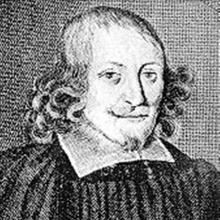
Adrien Auzout was a French astronomer, mathematician, and physicist. He is known as a scientist who approached science with instruments rather than with mathematics. He carried out research mainly in the fields of pneumatics and astronomy, working together with other outstanding figures of the French scientific scene of the period, such as Gilles de Roberval and Jean Picard.
Background
Adrien Auzout was born on January 28, 1622, Rouen, France, to Adrien Auzout and Jeanne Piedelièvre. He was the eldest child of a clerk in the court of Rouen. Adrien, the subject of this biography, was the eldest of the children, having three younger brothers and three younger sisters. Adrien Auzout Senior was an administrator in the Rouen law courts. He preserved the court records but was not himself a lawyer. This was not a particularly well-paid job and, having a large family, it was hard for them to make ends meet. Adrien, the subject of this biography, grew up in Rouen in a difficult period; the government had imposed very high taxes to pay for the Thirty Years War and epidemics of the bubonic plague swept the area in the 1620s and 1630s.
Education
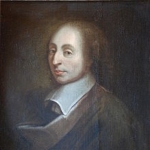
Adrien Auzout was able to study at the Jesuit College in Rouen and, although there is no record of Auzout knowing Blaise Pascal around 1640, both must have attended the Rouen Jesuit College at this time, so probably did know each other.
Career
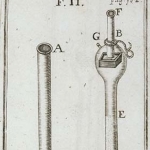
Some sources claim that Auzout and Pascal collaborated after Pascal settled in Rouen in 1639. What is undoubtedly true is that both became interested in the vacuum around 1646 whether working together of individually. Certainly, Auzout was present when Pascal gave public demonstrations in Rouen of variations on Torricelli's experiments inverting a column of mercury in a tube and observing the space above it which he correctly claimed must be a vacuum. Pascal not only carried out the experiment with tubes containing mercury but also with much longer tubes containing water and wine.
In the fall of 1647, Auzout designed an ingenious experiment - creating one vacuum inside another - in order to prove that the weight of a column of air pressing on a barometer causes the mercury to rise inside. Auzout did not neglect mathematics, however; he criticized the treatise of François-Xavier Anyscom on the quadrature of the circle and prepared a treatise of reasons and proportions. By 1660 his career centered on astronomical instruments. He made a significant contribution to the final development of the micrometer and to the replacement of open sights by telescopic sights.
Not until after Christiaan Huygens discovered that there exists a special point (the focus) inside the Keplerian telescope, which has only convex lenses, could there be a breakthrough leading to the micrometer and to radically superior instruments. (Well before Huygens, William Gascoigne, after discovering the focal point, invented the micrometer and telescopic sights, but his inventions remained unknown to Continental astronomers until 1667.) Since an object can be superimposed on the image without distortion at the focus, precise measurements of the size of the image can be made. To do this, Huygens fashioned a crude micrometer. Cornelio Malvasia’s lattice of fine wires was for Auzout, and probably Jean Picard, who worked with him, the jumping-off point for the perfection of the micrometer. They were dissatisfied with the accuracy of the lattice because images never covered exactly an integral number of squares, so they modified it. Two parallel hairs were separated by a distance variable according to the size of the image; one hair was fixed to a mobile chassis that was displaced at first by hand and later by a precision screw. By the summer of 1666, Auzout and Picard were making systematic observations with fully developed micrometers.
Soon after Huygens’ discovery, Eustachio Divini and Robert Hooke replaced open sights with telescopic sights, and during the period 1667-1671 Auzout, Picard, and Gilles Personne de Roberval developed the systematic use of telescopic sights. An incomplete concept of focus caused the delay between discovery and systematic use, for Auzout, reasoning by analogy with open sights, suggested at the end of 1667 that each hair in the crosshairs be placed in a separate plane so that a line of sight might be assured. Unfortunately, after Auzout withdrew from the Académie des Sciences in 1668, he drifted into obscurity.
He died on May 23, 1691, in Rome, Italy.
Achievements
Auzout made original contributions to the techniques of telescopic observation in astronomy, perfecting especially the use of the micrometer. His skill as an experimenter and instrument maker allowed him to carry out, in the Autumn of 1647, an experiment in which he showed, by placing a barometric tube within a void, that the mercury did not remain at the same level, but completely descended into the vessel below. The ingenious project of creating a "void within a void" showed, incontestably, the role of the pressure of air in the barometric experiment.
He was also well known for his particular interest in ancient architecture and engineering hydraulics. During his stay in Rome, he was considered one of the real scholars of his day. He was the first to decipher the canceled line on the Arch of Septimius Severus, in the Roman Forum, and served on the committee to tap the water of Lake Bracciano, 40 km north-west of Rome, for drinking water for the Acqua Paola fountain in Rome.
Auzout believed that comets followed regular orbits and were thus permanent members of the solar system. He also hoped that the distance to the comet and its magnitude could be calculated, and so a proof given that the Earth is in motion.
Membership
Adrien Auzout was elected a Fellow of the Royal Society of London in 1666.
the Royal Society of London
,
United Kingdom
1666 - 1691
Personality
Besides science, Adrien Auzout also practiced astrology, augmenting his income by casting horoscopes for prominent Parisian nobilities; and by 1666 he was receiving gratifications of 1500 livres a year from the crown. By these and perhaps other means Auzout evidently made enough money to survive in Paris, even if he was not necessarily a wealthy man.
He also had always had a strong interest in architecture and had spent much time with Christopher Wren when Wren visited Paris in the summer of 1665. Auzout had studied Vitruvius throughout most of his life and was fascinated by Roman architecture. It is, therefore, no surprise that he moved to Rome where he lived until his death in 1691.
Quotes from others about the person
Leibniz, in a letter written in December 1703, refers to Auzout being in Rome: "I have learned that you intended to give me a copy of the 'Intellectual System' by the late Mr Cudworth...The first time I saw this book was in Rome, where Mr. Auzout, a French mathematician of great reputation, bought it..."
Interests
astrology, architecture
Connections
Little is known of Auzout`s marriage. His wife would have brought a dowry, but almost certainly kept most of it for her personal rather than their joint use. Their relationship was far from happy, and when he departed from France in 1668 he left her behind.
In a letter sent on 28 December 1666 to Henry Oldenburg, the first secretary of the Royal Society of London, Auzout explained how his new micrometer, with two parallel wires either of silk of silver, one of which could be moved by a screw, could be used to calculate the diameters of the planets and the parallax of the moon.