Background
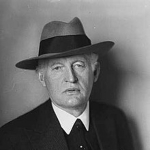
Akseli Gallen-Kallela was born on April 26, 1865 in Pori, Finland in a Swedish-speaking family. His father Peter Gallen worked as a police chief and lawyer. His mother was Anna Matilda (Wahlroos) Gallen.


1933
Munch


Akseli Gallen-Kallela was born on April 26, 1865 in Pori, Finland in a Swedish-speaking family. His father Peter Gallen worked as a police chief and lawyer. His mother was Anna Matilda (Wahlroos) Gallen.
At the age of 11 Gallen-Kallela was sent to Helsinki to study at a grammar school, because his father opposed his ambition to become a painter. After his father's death in 1879, he attended drawing classes at the Finnish Art Society from 1881 to 1884 and studied privately under Adolf von Becker.
In 1884 Gallen-Kallela moved to Paris, to study at the Académie Julian and remained there until 1889. In Paris he became friends with the Finnish painter Albert Edelfelt, the Norwegian painter Carl Dornberger, and the Swedish writer August Strindberg.
Gallen-Kallela's first solo exhibition took place in 1889 at the Ateneum Art Museum, Helsinki.
In 1890 he started collecting material for his depictions of the Kalevala. That period was characterized by romantic paintings of the Kalevala, like the "Aino Myth", and by several landscape paintings.
In December 1894, Gallen-Kallela moved to Berlin to oversee the joint exhibition of his works with the works of Norwegian painter Edvard Munch. Here he became acquainted with the Symbolists.
In March 1895, he received a telegram that his daughter Impi Marjatta had died from diphtheria. This would prove to be a turning point in his work. While his works had previously been romantic, after his daughter's death Gallen-Kallela painted more aggressive works like the "Defense of the Sampo", "Joukahainen's Revenge", "Kullervo Cursing" and "Lemminkäinen's Mother".
On his return from Germany, Gallen studied print-making and visited London to deepen his knowledge, and in 1898 studied fresco-painting in Italy.
For the Paris World Fair in 1900, Gallen-Kallela painted frescoes for the Finnish Pavilion. In 1901 he was commissioned to paint the fresco "Kullervo Goes to War" for the concert hall of the Helsinki Student's Union. Between 1901 and 1903 he painted the frescoes for the Jusélius Mausoleum in Pori, memorializing the 11-year-old daughter of the industrialist F.A. Jusélius.
Gallen-Kallela officially finnicized his name to the more Finnish-sounding Akseli Gallen-Kallela in 1907.
In 1909, Gallen-Kallela moved to Nairobi in Kenya with his family, he was the first Finnish artist to travel south of the Sahara, and there he painted over 150 expressionist oil paintings and bought many east African artefacts. But he returned to Finland after a couple of years, because he realized Finland was his main inspiration. Between 1911 and 1913 he designed and built a studio and house at Tarvaspää, about 10 km northwest of the centre of Helsinki.
In 1918, Gallen-Kallela and his son Jorma took part in the fighting at the front of the Finnish Civil War. When the regent, General Mannerheim, later heard about this, he invited Gallen-Kallela to design the flags, official decorations and uniforms for the newly independent Finland. In 1919 he was appointed aide-de-camp to Mannerheim.
From December 1923 to May 1926, Gallen-Kallela lived in the United States, where an exhibition of his work toured several cities, and where he visited the Taos art-colony in New Mexico to study indigenous American art.
In 1925 he began the illustrations for his "Great Kalevala". It was still unfinished when he died of pneumonia on March 7, 1931 in Stockholm, Sweden, while returning from a lecture in Copenhagen, Denmark.
Sunset
Lake Keitele
Aino Myth, Triptych
The Fratricide
Ad Astra
The Lair of the Lynx
Spring, study for the Jusélius Mausoleum frescos
The Great Black Woodpecker
Stockflotte
Mäntykoski Waterfall
In the sauna
Joukahainen's Revenge
Boy with a Crow
Ilmarinen ploughing the Viper-field and The Defense of the Sampo
Shepherd Boy from Paanajärvi
Imatra in Winter
Parisienne
By the River of Tuonela, study for the Jusélius Mausoleum frescos
Démasquée
Poster for the German Exposition of Art in Ateneum
Conceptio artis
Kullervos Curse
The Defense of the Sampo
Le depart de Väinämöinen
Portrait of Phyllis Sjöström
Mt. Donia Sabuk
Study for the fresco 'Ilmarinen ploughing the Viper-field'
The girl and the rooster
The abduction of Sampo
Portrait of Maxim Gorky
Symposium
Rustic life
Study
Old Woman With a Cat
The Hand of Christ. The Palm of Peace
Lemminkäinen's Mother
The storm
Marie Gallén at the Kuhmoniemi-bridge
View from North Quay
The poster Bilbol
His political ideas became most apparent in his frescoes for the Finnish Pavilion. One of the vipers in the fresco "Ilmarinen Plowing the Field of Vipers" was wearing the Romanov crown, and the process of removing the vipers from the field was a clear reference to his wish for an independent Finland.
Akseli Gallen-Kallela married Mary Sloor in 1890. The couple had three children, Impi Marjatta, Kirsti and Jorma.