Background
Andres Klein-Szanto was born in Buenos Aires, Argentina.

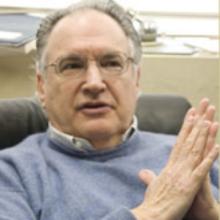
at Fox Chase Cancer Center, circa 2012
1980
Oak Ridge, TN, USA
at the Oak Ridge National Laboratory, 1980
1992
Philadelphia, PA
at Fox Chase Cancer Center
medicine specialist Professor of Pathology cancer research
Andres Klein-Szanto was born in Buenos Aires, Argentina.
Primary Bilingual Schools: Colegio Sarmiento Olivos and Colegio Panamericano, Olivos
Secundary School: Colegio Roca (Arts and Sciences)
University of Buenos Aires, School of Medicine
Andres Klein-Szanto is a pathologist and cancer researcher. He worked as a student assistant and histotechnologist in the Departments of Histology and Pathology during his medical student years. He graduated from the University of Buenos Aires Medical School in 1965 (Medico) and after training in pathology and further postgraduate experimental pathology work he was awarded the Doctor in Medicine degree (1970). His role models and mentors during these early years were Professors De Robertis, Mancini, Davison, Lascano, Schajowicz, Itoiz, and especially Romulo L. Cabrini. He worked as an instructor and then Chief Instructor of Pathology in the Medical and Dental Schools of the University of Buenos Aires and the University of Zurich, Switzerland (1965-1977) were he trained in anatomical pathology, dermatopathology and oral pathology. Since 1978, he was employed as a Senior Medical Scientist at the Oak Ridge National Laboratory and as Professor of Biology and Molecular Carcinogenesis at the M.D. Anderson Cancer Center of the University of Texas. In 1986 he moved to the Fox Chase Cancer Center in Philadelphia where he was Professor of Pathology and Director of the Histopathology Facility (1986-2022). He was also a Consultant at the Univ. of Pennsylvania and the Irving Cancer Center of Columbia University, NYC. His laboratory studied mechanisms of tumor progression of squamous cell carcinomas and developed several models to evaluate the development of human cancer using xenotransplanted normal and precancerous human tissues exposed in vivo to carcinogens. His laboratory was the first to describe in an in vivo model, the signature p53 mutations seen in skin tumors produced by benzo(a)pyrene, the most ubiquitous human carcinogen present in tobacco smoke. During the last two decades of his career, his work on sutilisin-hexin-like proprotein convertases (PC or PCK) and cancer emphasized the role of these proteases in skin squamous cancer progression as well as in several human malignancies. Partly because of these discoveries, PCKs have been recognized as targets for cancer therapy and several clinical trials were conducted. The Klein-Szanto laboratory has published some of the first papers highlighting the role of furin in human tumor invasion and progression and has also been at the forefront of PCK-inhibitor experimental treatments with CMK, PDX, and PC siRNAs. The use of inhibitors helped to better understand the mechanism of PCK activation of cancer-related factors such as the TGF beta, IGFR, IGFR-1, MT-MMPs, etc, but also showed the direct effect of these inhibitors on cancer cell growth and invasion in vitro and in vivo animal models. In particular, his lab was the first to highlight the overexpression of furin in human ovarian and lung cancer and its potential as a target for therapy. In addition, his laboratory was heavily involved during two decades in esophageal cancer research with a team previously at the University of Pennsylvania, later at Columbia University Cancer Center (2000-2027).
Dr. Klein-Szanto published more than 450 scientific papers and six books on these topics. He served on several specialty journal editorial boards, was the Editor in Chief of the Journal of Cutaneous Pathology and participated as a committee and study section member for the National Institute of Health, NIEHS, and other funding agencies and professional associations.
POSITIONS:
Instructor and Chief Instructor, University of Buenos Aires, School of Medicine and School of Dentistry, Argentina
Oberassistent, University of Zurich, Faculty of Medicine, Zurich, Switzerland.
Researcher at Argentine National Energy Commission, Buenos Aires, Argentina.
Visiting Scientist, Radiumhospitalet, Oslo University Hospital, Oslo, Norway.
Researcher at Oak Ridge National Laboratory, MD. Anderson Cancer Center and Fox Chase Cancer Center, USA
In vivo growth of human xenotransplanted normal and preneoplastic tissues. In vivo malignant transformation of normal and preneoplastic human respiratory epithelium in xenotransplants exposed to human tobacco-derived carcinogens:
Klein-Szanto AJ, Iizasa T, Momiki S, Garcia-Palazzo I, Caamano J, Metcalf R, Welsh J, Harris CC. A tobacco-specific N-nitrosamine or cigarette smoke condensate causes neoplastic transformation of xenotransplanted human bronchial epithelial cells. Proc Natl Acad Sci U S A. 1992 Aug 1;89(15):6693-7. doi: 10.1073/pnas.89.15.6693. PMID: 1323115; PMCID: PMC49569.
First in vivo description of signature p53 mutations in mouse skin exposed to human carcinogen benzopyrene, the most ubiquitous human carcinogen from tobacco smoke:
Ruggeri B, DiRado M, Zhang SY, Bauer B, Goodrow T, Klein-Szanto AJ. Benzo[a]pyrene-induced murine skin tumors exhibit frequent and characteristic G to T mutations in the p53 gene. Proc Natl Acad Sci U S A. 1993 Feb 1;90(3):1013-7. doi: 10.1073/pnas.90.3.1013. PMID: 8430068; PMCID: PMC45801.
Pioneering descriptions of PACE4 and furin's role as protumorigenic endogenous enzymes in mouse skin and human malignancies, including ovarian and lung cancer. Studies using furin inhibitors to decrease experimental and human cancer cell growth and invasion:
Bassi DE, Lopez De Cicco R, Mahloogi H, Zucker S, Thomas G, Klein-Szanto AJ. Furin inhibition results in absent or decreased invasiveness and tumorigenicity of human cancer cells. Proc Natl Acad Sci U S A. 2001 Aug 28;98(18):10326-31. doi: 10.1073/pnas.191199198. Epub 2001 Aug 21. PMID: 11517338; PMCID: PMC56960.
Bassi DE, Fu J, Lopez de Cicco R, Klein-Szanto AJ. Proprotein convertases: "master switches" in the regulation of tumor growth and progression. Mol Carcinog. 2005 Nov;44(3):151-61. doi: 10.1002/mc.20134. PMID: 16167351.
First transgenic mouse eye and skin melanoma models:
Klein-Szanto A, Bradl M, Porter S, Mintz B. Melanosis and associated tumors in transgenic mice. Proc Natl Acad Sci U S A. 1991 Jan 1;88(1):169-73. doi: 10.1073/pnas.88.1.169. PMID: 1846037; PMCID: PMC50771.
Mintz B, Silvers WK, Klein-Szanto AJ. Histopathogenesis of malignant skin melanoma induced in genetically susceptible transgenic mice. Proc Natl Acad Sci U S A. 1993 Oct 1;90(19):8822-6. doi: 10.1073/pnas.90.19.8822. PMID: 8415614; PMCID: PMC47452.
Klein-Szanto AJ, Silvers WK, Mintz B. Ultraviolet radiation-induced malignant skin melanoma in melanoma-susceptible transgenic mice. Cancer Res. 1994 Sep 1;54(17):4569-72. PMID: 8062242.
Son of : Geza M. Klein and Madeleine Szanto
Married to: Maria Ursula Weyrauch
Father of : Walter M. Klein, Matias A. Klein and Julian O. Klein