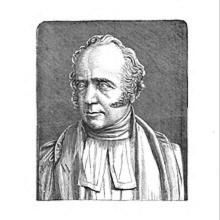
Background
Andrew Reed was born on November 27, 1787 in London, England.


( This work has been selected by scholars as being cultur...)
This work has been selected by scholars as being culturally important, and is part of the knowledge base of civilization as we know it. This work was reproduced from the original artifact, and remains as true to the original work as possible. Therefore, you will see the original copyright references, library stamps (as most of these works have been housed in our most important libraries around the world), and other notations in the work. This work is in the public domain in the United States of America, and possibly other nations. Within the United States, you may freely copy and distribute this work, as no entity (individual or corporate) has a copyright on the body of the work. As a reproduction of a historical artifact, this work may contain missing or blurred pages, poor pictures, errant marks, etc. Scholars believe, and we concur, that this work is important enough to be preserved, reproduced, and made generally available to the public. We appreciate your support of the preservation process, and thank you for being an important part of keeping this knowledge alive and relevant.
http://www.amazon.com/gp/product/1371321132/?tag=2022091-20
( This work has been selected by scholars as being cultur...)
This work has been selected by scholars as being culturally important, and is part of the knowledge base of civilization as we know it. This work was reproduced from the original artifact, and remains as true to the original work as possible. Therefore, you will see the original copyright references, library stamps (as most of these works have been housed in our most important libraries around the world), and other notations in the work. This work is in the public domain in the United States of America, and possibly other nations. Within the United States, you may freely copy and distribute this work, as no entity (individual or corporate) has a copyright on the body of the work. As a reproduction of a historical artifact, this work may contain missing or blurred pages, poor pictures, errant marks, etc. Scholars believe, and we concur, that this work is important enough to be preserved, reproduced, and made generally available to the public. We appreciate your support of the preservation process, and thank you for being an important part of keeping this knowledge alive and relevant.
http://www.amazon.com/gp/product/1372992952/?tag=2022091-20
Andrew Reed was born on November 27, 1787 in London, England.
He entered Hackney Academy in 1807 to study theology under George Collison.
In 1807 he was ordained minister of New Road Chapel in 1811. About 1830 he built the larger Wycliffe Chapel, where he remained until 1861. He visited America on a deputation to the Congregational Churches in 1834 and received the degree of D. D. from Yale. Reed's name is permanently associated with a long list of philanthropic achievements, including the London Orphan Asylum, the Infant Orphan Asylum and the Reedham Orphanage, which he undertook on non-denominational lines because the governors of the other institutions had made the Anglican Catechism compulsory. Besides these he originated in 1847 an asylum for idiots at Highgate, afterwards moved to Earlswood in Surrey with a branch at Colchester, and in 1855 the Royal Hospital for Incurables at Putney Besides an account of his visit to America (2 vols. , 1834), he compiled a hymn-book (1841), and published some sermons and books of devotion.
He founded several important charitable institutions on a non-denominational basis, including the Idiot Asylum at Earlswood now the Royal Earlswood Hospital; the Infant Orphan Asylum (1827) at Wanstead; the Royal Hospital for Incurables (1855) at Putney now the Royal Hospital for Neuro-disability; and the London Asylum for Orphans 1813, initially at Lower Clapton in the parish of Hackney.
( This work has been selected by scholars as being cultur...)
( This work has been selected by scholars as being cultur...)
Reed was active in supporting repeal of the Corn Laws, Dr Philip's initiative to right some of the wrongs of the native people of South Africa by financing their trip to London to speak directly to a Committee of the House of Commons, and took part in conferences in America (as one of two international delegates from the Congregational Union of England & Wales) in the 1830s, one of which led to the formation of Boston's first anti-slavery society.
He married Elizabeth Holmes Reed.