Background
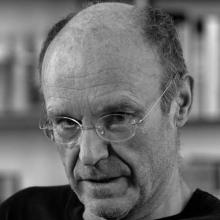
KIEFER, Anselm was born on March 8, 1945 in Donaueschingen.

KIEFER, Anselm was born on March 8, 1945 in Donaueschingen.
He went to art colleges in Freiburg and Karlsruhe, and had contact with Joseph Beuys at the state art academy in Diisseldorf.
Galerie am Kaiserplatz, Karlsruhe 1969; first one-man exhibition in United States of America, Marian Goodman Gallery, New York; retrospective exhibitions Stadtische Kunsthalle, Diisseldorf, Musee d’Art Modeme, Paris and Israel Museum, Jerusalem 1984, Stedelijk Museum, Amsterdam 1986, United States tour 1987-1989; first group exhibition, Deutscher Kiinstlerbund, Kunstverein, Hanover 1969; has also exhibited Kunstverein, Frankfurt 1976, Kassel Documents 1977, 1982, 1987, Biennale de Paris 1977, Venice Biennale 1980; other group exhibitions include Expressions: New Art from German>'. touring exhibition United States of America 1983-1984, touring exhibition Moscow and Leningrad 1983, 1984 Museum of Modem Art survey of international art. Fifth Biennale of Sydney, Australia 1984; works in many private collections includlnK Saatchi Collection, London, and in many public galleries including Art Institute of Chicago, Museum of Modem Art, Phila. Museum of Art, Hirshhom Museum, Washington, D.C., Los Angeles Museum of Contemporary Art and San Francisco Museum of Modem Art; Wolf Foundation Works in many private collections includlnK Saatchi Collection, London, and in many public galleries including Art Institute of Chicago, Museum of Modem Art, Phila. Museum of Art, Hirshhom Museum, Washington, D.C., Los Angeles Museum of Contemporary Art and San Francisco Museum of Modem Art. Wolf Foundation.
His works can hardly be compared to the those of any of his German painter contemporaries. He created landscapes on monumental canvases in earthy tones, and combined oil, acrylic and shellac with diverse materials such as gold, clay, wood, fabric, straw, barbed wire, and lead. Handwritten names and terms make reference to German history and Nazism. Kiefer subsequently turned apocalyptic; he attacked his canvases with an axe or retouched them with a blowtorch to give the pictures a desolate air. The works appear enigmatic in their aesthetic obsession, and leave the viewer with a series of open questions in relation to his engage-ment with history.
In the nineties, Kiefer moved away from modern German history in order to take up more universal subject matters, dealing with philosophy, religion and mysticism, literature and poetry. In addition to the painting that holds a special place in his oeuvre, his work includes photographs and artist books, sculptures, woodcuts, installations, and glass vitrines.