Background
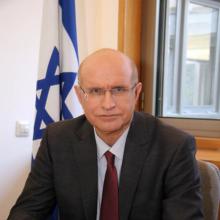
Avishay Braverman was born on January 15, 1948 in Ramat Gan, Israel. His Polish-born father Jacob Braverman was a carpenter and his mother Sarah, a native of Lithuania, a kindergarten teacher.

Avishay Braverman

Tel Aviv University, Israel

Stanford University, California, United States

Ben Gurion University, Beer Sheva, Israel

World Bank, Washington
Tel Aviv University, Israel
Stanford University, California, United States
Ben Gurion University, Beer Sheva, Israel
World Bank, Washington
economist educationist politician
Avishay Braverman was born on January 15, 1948 in Ramat Gan, Israel. His Polish-born father Jacob Braverman was a carpenter and his mother Sarah, a native of Lithuania, a kindergarten teacher.
Braverman graduated from “Blich” High School in Ramat Gan, where he also served as captain of the basketball team. In 1968, he graduated with a Bachelors degree in Economics and Statistics from Tel Aviv University, summa cum laude as part of the Academic Reserve (Atuda). He studied for a Masters degree at Tel Aviv University and a Doctor of Philosophy in Economics from Stanford University, California, under the guidance of Professor Joseph Stiglitz.
In 1976, Braverman joined the World Bank in Washington D.C. and served there for 14 years as senior economist and division chief. During those years, he led policy, research and development programs in South America, Africa, Asia, the Middle East and Eastern Europe. In his final role, he was entrusted with the Bank’s agricultural policies. In 1990 he was appointed president of Ben-Gurion University of the Negev and succeeded in getting it out of the red.
In January 2006, Braverman joined the Labor Party and was elected as a member to the 17th Knesset. He served as a member of the Finance and Economic Affairs Committee and as Chairman of the Lobby for Retirees, and from July 23, 2008 until the end of the 17th Knesset term, served as Chairman of the Knesset’s Finance Committee. Avishay Braverman served as Minister of Minority Affairs from March 2009 until his resignation in January 2011.
In January 17, 2011, he resigned as minister following the resignation of Ehud Barak from the Labor Party and the party’s resignation from the coalition.In 2013, he was appointed chairman of the Knesset Economic Affairs Committee.Prior to the March 2015 20th Knesset elections, Braverman announced that he would not run for another term and retired from political life.
His tenure in President was characterized by a great building momentum on the University’s three campuses in Beer Sheva, Sde Boker and later, Eilat, and the initiation and establishment of many curricula and research programs, including: the Kreitman School of Advanced Graduate Studies; the National Institute of Biotechnology in the Negev, sponsored by the de Picciotto Family; the Ilse Katz Institute for Nanoscale Science and Technology; the reconfiguration of the Jacob Blaustein Institute for Desert Research (BIDR) in Sde Boker which transformed under the renamed Institutes to incorporate three research institutes, among them, the Zuckerberg Institute for Water Research (ZIWR), as well as the Albert Katz International School for Desert Studies; and on the Marcus Family Campus in Beer-Sheva, the Heksherim Research Institute for Jewish & Israeli Literature & Culture; further development and naming of the unique Joyce and Irvine Goldman School of Medicine, founded by the School’s first Dean and first University President, the late Professor Moshe Prywes; establishing the Medical School for International Health (MSIH) in collaboration with Columbia University; the School of Management, later named the Guilford Glazer Faculty of Business and Management; the Department of Computer Science; the Department for Computer Systems Engineering; the Pilots Training Course - a full undergraduate degree program for Israeli Air Force cadets in a combined Flight School and university setting, among others.
Under Braverman’s tenure, the Robert H. Arnow Center for Bedouin Studies and Development was established. In 2010, he initiated and submitted for government approval a multi-annual plan totaling 800 million NIS, the purpose of which was to promote economic initiative, infrastructure and development in Arab communities. Braverman promoted a program for allocation of 305 million NIS to Arab students and the granting of 1,600 scholarships to outstanding Bedouin students, invested in the promotion of research laboratories in Arab communities and assisted in establishing a national research and development center for the Druze population in Israel. Braverman also sought to include 40% of the Israeli minority population in the national priority map.
Prior to the 2009 elections he won fourth place in the party’s primaries, retaining his seat in the subsequent election.
He published 4 books, numerous articles and working papers.
In November 2005, Braverman announced his intention to become involved in politics. Despite rumors that he would join Kadima, in a move viewed as surprising, he ended up joining Labor Party.
European Academy of Sciences and Arts]
A former president of the Ben-Gurion University of the Negev, he served as a member of the Knesset for the Labor Party between 2006 and 2015, and as Minister of Minority Affairs between 2009 and 2011.
Quotes from others about the person
In the deliberations for awarding the Israel Prize, the judges stated that "The academic community conceived by Braverman, his participation in its design and the raising of funds for its establishment, accelerated the development of the city of Beer-Sheva and the entire Negev… Today Beer-Sheva is a metropolitan area amalgamating cities and satellite towns, and at its center, the University, Soroka University Medical Center and the Advanced Technologies Park, where leading international companies operate in the field of information security and other technologies. Neighborhoods offering high-quality housing have been built around the university, a fact which has even contributed to the increase in real estate value in Beer-Sheva”.
Avishay Braverman is married to architect Yael Braverman and is the father of two sons.