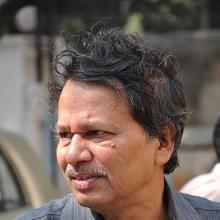
Baraguru Ramachandrappa is an Indian Kannada writer, poet, screenwriter, lyricist, and film director. His career combines literary writing, university teaching, public work in Kannada-language institutions, and socially engaged cinema. He directed films including Ondu Oorina Kathe, Shanti, Thaayi, Ekalavya, and Angulimala, and received major state and national recognition.
Background
Ethnicity:
He belongs to the Kannada-speaking cultural community of Karnataka.
Baraguru Ramachandrappa was born on October 18, 1947, in Baragur village in Sira taluk of Tumkur district, Karnataka, to Rangadasappa and Kenchamma. Baragur is part of the Kannada-speaking region of southern Karnataka, whose literary culture has developed through poetry, fiction, theatre, journalism, and public movements centered on the Kannada language.
His work has remained closely connected with Kannada literary and cultural life. He has written across several forms, including novels, poetry, short stories, plays, essays, criticism, and research, while also adapting literary and social concerns to cinema.
Education
Ramachandrappa completed postgraduate study in Kannada at Central College in Bengaluru, receiving an M.A. in Kannada. Central College, established in the nineteenth-century development of modern higher education in Bengaluru, became an important institution for humanities and language study in Karnataka.
He later taught Kannada at Bangalore University. The university, founded in 1964, developed as a major public center for higher education and research in the Bengaluru region, and its Kannada department supported the academic study of the language and its literature.
Career
Ramachandrappa worked as a professor in the Kannada department of Bangalore University, combining university teaching with literary writing and cultural criticism. His literary output includes novels, poetry collections, short stories, drama, essays, edited works, research, and criticism. His writings frequently address social inequality, cultural identity, education, labor, and the tensions produced by class-based society.
He entered Kannada cinema as a writer and director with Ondu Oorina Kathe in 1978. The film earned him a Karnataka State Film Award for story writing, beginning a film career that included directing, screenplay writing, dialogue writing, and lyric writing. His later films included Benki, Surya, Kote, Karadipura, Janumada Jodi, Hagalu Vesha, Kshaama, Shanti, Thaayi, Ekalavya, Ugragami, Shabari, Bhageerathi, and Angulimala.
His cinema often connected narrative storytelling with social questions. Shanti, made with a single performer, received international attention for its unusual production concept and was associated with a Guinness World Records entry. Thaayi, directed and scripted by Ramachandrappa, adapted Maxim Gorky's Mother to a contemporary Indian setting and examined political struggle, economic inequality, and human relationships.
Alongside creative work, Ramachandrappa held public cultural responsibilities. He served as president of the Kannada Sahitya Academy for two years and chaired the Kannada Development Authority. He also served on educational, literary, broadcasting, and film-related bodies, and was president of the textbook revision committee of the Karnataka Text Books Society from 2015.
Views
Ramachandrappa's literary and cinematic work reflects a humanist and socially critical outlook. Class-based society, inequality, labor, cultural identity, and the responsibilities of education recur as subjects in his creative and analytical writing.
His films and essays treat literature and cinema as public forms capable of examining social relationships and political conditions. His association with the Kannada Bandaya literary movement places his work within a reformist current of Kannada writing that emphasized social criticism, dissent, and the representation of marginalized lives.
Personality
Ramachandrappa's public work presents him as a socially engaged literary and cultural figure whose writing, teaching, and filmmaking address language, education, inequality, and public culture.