

Background
She was born on October 23, 1952, in Baltimore, Maryland, the daughter of Franklin Willard Waesche and Constance (Karpers) Waesche.
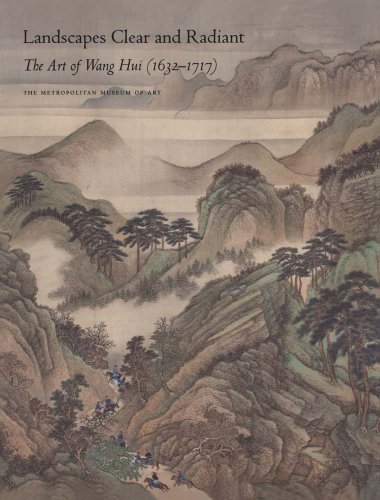
( Wang Hui, the most celebrated painter of late seventee...)
Wang Hui, the most celebrated painter of late seventeenth-century China, played a key role both in reinvigorating past traditions of landscape painting and in establishing the stylistic foundations for the imperially sponsored art of the Qing court. Drawing upon his protean talent and immense ambition, Wang developed an all-embracing synthesis of historical landscape styles that constituted one of the greatest artistic innovations of late imperial China. This comprehensive study of the painter, the first published in English, features three essays that together consider his life and career, his artistic achievements, and his masterwork—the series of twelve monumental scrolls depicting the Kangxi emperor's Southern Inspection Tour of 1689. The first essay, by Wen C. Fong, closely examines Wang Hui's genius for "repossessing the past," his ability to engage in an inventive dialogue with previous masters and to absorb their stylistic personae while making works that were distinctly his own. Chin-Sung Chang next traces the entire trajectory of Wang's development as an artist, from his precocious youth in the village of Yushan, through growing local and national fame—first as a copyist, then as the creator of groundbreaking panoramic landscapes—to the ultimate confirmation of his stature with the commission to direct the Southern Inspection Tour project. Focusing on this extraordinary eight-year-long effort, Maxwell K. Hearn's essay discusses the contemporary sources for the scrolls, the working methods of Wang and his assistants (comparing drafts with finished versions), and the artistic innovations reflected in these imposing works, the extant examples of which measure more than two feet high and from forty-six to eighty-six feet long. Presented in this volume are twenty-seven of Wang Hui's major paintings, including two of the Southern Inspection Tour scrolls, drawn from The Metropolitan Museum of Art and from museums in Beijing, Taipei, Shanghai, the United States, and Canada. These are supplemented by a wealth of comparative images that range from ancient Chinese paintings and seventeenth-century woodblock maps to works by present-day artists. Invaluable information is provided by the scholarly catalogue, compiled by Shi-yee Liu, Research Associate in the Department of Asian Art at the Metropolitan Museum, which details the inscriptions, colophons, signatures, and seals of each work. [This book was originally published in 2008 and has gone out of print. This edition is a print-on-demand version of the original book.]
http://www.amazon.com/gp/product/0300200048/?tag=2022091-20
She was born on October 23, 1952, in Baltimore, Maryland, the daughter of Franklin Willard Waesche and Constance (Karpers) Waesche.
Bachelor in English, College Notre Dame, Baltimore, 1964. Master of Arts in Writing, Johns Hopkins University, 1972.
She served as an adjunct professor at Towson State University in Maryland from 1987 to 1998, teaching in the field of writing. She later continued her academic and literary career by teaching memoir and poetry in the Osher Lifelong Learning Institute program at Johns Hopkins University. Alongside her teaching, she worked as a freelance book critic and contributed to literary publications.
( Wang Hui, the most celebrated painter of late seventee...)
She has been a member of the American Association of University Women, the Academy of American Poets, the Association for General and Liberal Studies, the College English Association (Middle Atlantic group), the Poetry Society of America, and Delta Epsilon Sigma.
Married Philip H. Scharper, June 16, 1962. Children: Philip H., Junior, Mia Diane, Julie Anne.
