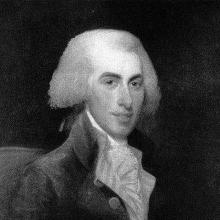
Background
Charles Bulfinch was born on August 8, 1763 in Boston, Massachusetts, United States into a well-connected and well-to-do Boston family. His father was a physician and a graduate of Harvard College and Edinburg University.

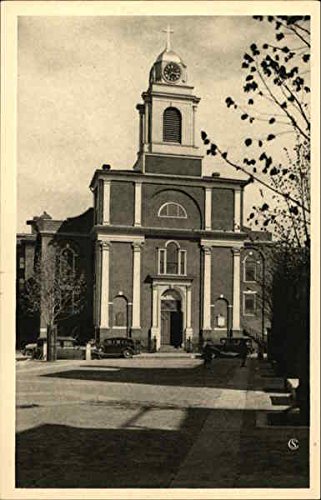
http://www.amazon.com/gp/product/B00PB9VXCO/?tag=2022091-20
1804
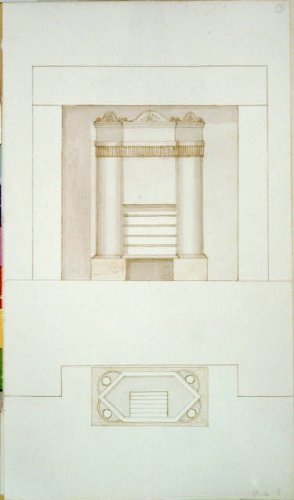
http://www.amazon.com/gp/product/B06XMZLY52/?tag=2022091-20
1824
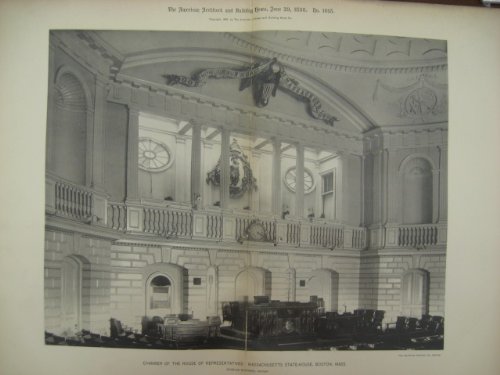
http://www.amazon.com/gp/product/B006T629HG/?tag=2022091-20
1892
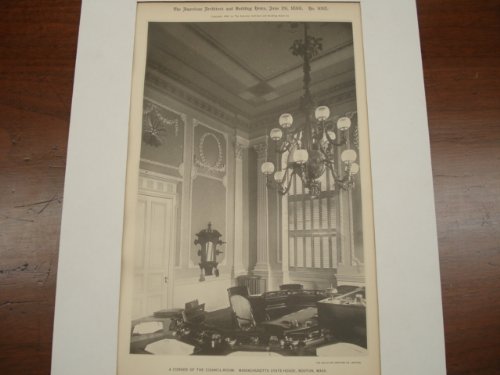
http://www.amazon.com/gp/product/B006T63KFG/?tag=2022091-20
1895
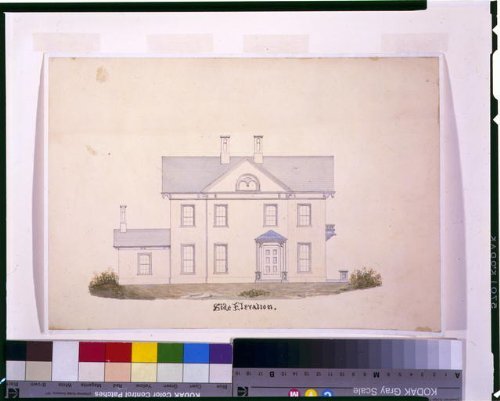
(1830-1860)
1830-1860
http://www.amazon.com/gp/product/B06WWGGRKK/?tag=2022091-20
Charles Bulfinch was born on August 8, 1763 in Boston, Massachusetts, United States into a well-connected and well-to-do Boston family. His father was a physician and a graduate of Harvard College and Edinburg University.
Bulfinch ыегвшув at Harvard University in Cambridge, Massachusetts, United States in 1781. Then, as soon as political conditions permitted, Bulfinch took the 18th-century gentleman's grand tour of Europe from 1785 to 1787.
The following year Charles provided plans for churches in Taunton and Pittsfield and executed a Revolutionary memorial in Boston, a Roman Doric column of stucco-covered brick, 60 feet high, capped with an eagle doubling as weather vane (it was destroyed when Beacon Hill was cut away in 1811). They were so well received that Bulfinch was encouraged to erect, on speculation, a 16-house block of uniform proportion, scale, and composition in the manner made famous and fashionable by New Town in Edinburgh, Scotland. Fortunately, his reputation was unaffected; his friends rallied round, and he soon had plenty of commissions.
Bulfinch had submitted a plan for the proposed new Massachusetts statehouse in 1787, and in 1795 Governor Samuel Adams authorized construction to proceed under Bulfinch's supervision; the building was completed 3 years later. Eventually, this project, named Tontine Crescent and begun in 1793, was an enormous success, and it set a pattern for similar blocks which give the Beacon Hill area of Boston its distinctive character.
But Bulfinch was caught in the brief depression following Jay's Treaty in November 1794 and could not raise enough money to finish it immediately; he went bankrupt in January 1796. Recognized as a "genius" who had made fashionable Boston over into his own stylistic image, he received commissions from all over the region and inspired followers and imitators, notably Samuel McIntire and Asher Benjamin. In 1817 Bulfinch was appointed architect of the Capitol in Washington, D. C.
That is how he approached the U. S. Capitol. But there, on the national scene, he was forced to meet a new concept of architecture, and it frustrated him. As he completed the center section of the Capitol, the design was much more traditional than Latrobe and William Thornton, the other original designer, had envisaged. In particular, Bulfinch was criticized for making the dome higher than they had planned.
Charles designed a number of houses on Beacon Hill in Boston, United States. When he was 32, Bulfinch designed his the most famous structure, the new State House in Boston. Charles also designed the Maine Capitol at Augusta and the Connecticut State House at Hartford. President James Monroe was so impressed with his Boston State House that he appointed him to succeed Benjamin Henry Latrobe as supervising architect of the National Capitol in 1818, where he was mainly concerned with rebuilding parts of the Capitol burned by the British in 1814.
During the 1826 Bulfinch executed several more important commissions: a Unitarian church in Washington in 1822, a prison in Alexandria, Virginia, United States in 1826, and a Capitol for the new state of Maine, in August 1829, remodeled in 1911.
As far as the contemporary public was concerned, Bulfinch was the "designer of the Capitol" and, though little is left of his work because of later alterations, he still enjoys that reputation.
Quotations:
On first studying the drawings of Benjamin Henry Latrobe, one of the original designers, he wrote: "My courage almost failed me … the design is in the boldest stile. "
The experience had practical results, which Bulfinch records in his autobiography: "My inexperience and that of my agents in conducting business of this nature … led me to surrender all my property… and I found myself reduced to my personal exertions for support…. "
Charles was recognized as a "genius" who had made fashionable Boston over into his own stylistic image, he received commissions from all over the region and inspired followers and imitators, notably Samuel McIntire and Asher Benjamin.
In 1788 Charle married to Hannah Apthorp. They had nine children.
25 June 1728 - 26 February 1802.
October 8, 1734 - March 15, 1814.
August 8, 1767 - April 8, 1841.
January 20, 1777 - January 17, 1837.
1790 - 22 May 1829.
June 18, 1809 - October 12, 1870.
May 23, 1803 - 1887.
July 15, 1796 - May 27, 1867.
1794 - 21 January 1862.
March 26, 1806 - 1836.