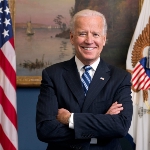
Grassley was an excellent student; he received the Purple and Old Gold Award in his senior year.
Gallery of Charles Grassley
1955
The photo shows the Social Sciences honorary society Pi Gamma Mu in 1955. Grassley is in the fourth row, third from the left.
Career
Gallery of Charles Grassley
1980
His election to the U.S. Senate in 1980 marked the beginning of a transformative chapter. Over successive terms, Grassley became a central figure in shaping federal policy.
Gallery of Charles Grassley
1980
Campaign 1980, Race for the Senate
Gallery of Charles Grassley
1980
Campaign 1980, Race for the Senate
Gallery of Charles Grassley
1981
Chuck Grassley and Barbara Grassley 1950s
Gallery of Charles Grassley
He began his public service in the Iowa House of Representatives in 1959, a period when state legislatures served as laboratories of democracy.
His election to the U.S. Senate in 1980 marked the beginning of a transformative chapter. Over successive terms, Grassley became a central figure in shaping federal policy.
Collection: Charles E. Grassley Papers | Archives and Finding Aids
(Senator Grassley intends that his papers be made availabl...)
Senator Grassley intends that his papers be made available to researchers as soon as possible. However, in his deed of gift he also recognizes that access to some material must be restricted because of its sensitive or confidential nature.
Charles Ernest Grassley is an American politician who has served as a United States senator from Iowa since 1981. He began his political career in 1959 and is one of the longest-tenured members of the Senate, known for his work in fiscal oversight, judicial policy, and congressional accountability.
Background
Ethnicity:
Primarily of German and Irish descent; his upbringing in rural Iowa reflects the cultural synthesis of Midwestern agrarian communities shaped by Northern European immigrants.
Chuck Grassley was born into a farming family in Butler County, Iowa, a landscape defined by expansive fields and seasonal discipline. His father, Louis Arthur Grassley, was a farmer, and his mother, Ruth Corwin Grassley, managed the household.
Growing up during the Great Depression and World War II, Grassley absorbed a worldview shaped by scarcity, responsibility, and community interdependence. Rural life demanded resilience: long hours, self-reliance, and a close awareness of economic fluctuations.
This environment instilled in him a lifelong sensitivity to agricultural policy, taxation, and government accountability. His upbringing also nurtured a moral clarity rooted in Protestant Midwestern values—emphasizing honesty, thrift, and duty.
Education
Grassley’s educational journey unfolded within the modest yet intellectually fertile institutions of mid-20th-century Iowa. His early schooling took place in a rural setting where education was not merely academic but deeply practical—interwoven with the rhythms of farm life. Students often balanced studies with labor, and this duality shaped Grassley’s disciplined approach to learning.
At New Hartford High School, Grassley distinguished himself not through flamboyance but through diligence. The curriculum of the time emphasized civics, American history, and basic economics—subjects that would later define his legislative focus. Teachers in such rural schools often served as moral and intellectual guides, instilling a respect for public institutions and democratic processes. It is reasonable to assume that Grassley encountered educators who emphasized the importance of constitutional governance and citizen participation.
His transition to the University of Northern Iowa (then Iowa State Teachers College) marked a significant intellectual expansion. The institution, originally dedicated to training educators, fostered a strong foundation in the social sciences. Grassley pursued political science, immersing himself in the study of American government, comparative political systems, and public administration.
The 1950s were a transformative period in American intellectual life. Universities across the country were grappling with questions of democracy versus totalitarianism, the role of government in economic management, and the ethical dimensions of public service. At Iowa State Teachers College, Grassley would have been exposed to debates shaped by thinkers such as John Dewey, whose pragmatism emphasized practical consequences in policy, and Reinhold Niebuhr, whose Christian realism explored the moral complexities of political life.
Grassley’s later graduate studies at the University of Iowa deepened his engagement with political theory and public administration. The University of Iowa, a major research institution, provided exposure to broader intellectual currents. Professors likely introduced him to classical political thought—Aristotle’s conception of civic virtue, Locke’s theories of governance, and Madisonian constitutionalism.
Given his later legislative focus, it is plausible that Grassley was particularly influenced by the Federalist Papers and the philosophy of checks and balances. His enduring commitment to oversight and transparency reflects an intellectual lineage that values institutional restraint and accountability.
Equally significant were the informal aspects of university life. Grassley would have interacted with peers who were veterans of World War II or the Korean War, bringing firsthand perspectives on global conflict and national service. These interactions likely reinforced his understanding of governance as a lived, human experience rather than an abstract system.
His education did not produce a theoretician in the classical sense; rather, it shaped a practitioner of politics grounded in empirical observation and ethical responsibility. Grassley’s intellectual formation can thus be seen as a fusion of Midwestern pragmatism and constitutional idealism—a combination that would define his decades-long career.
Chuck Grassley’s professional life represents a rare continuity in democratic governance—a career that bridges local concerns and national policy across more than four decades.
He began his public service in the Iowa House of Representatives in 1959, a period when state legislatures served as laboratories of democracy. Here, Grassley developed a reputation for meticulous attention to detail and fiscal conservatism. His early legislative work focused on budgeting, taxation, and agricultural issues—areas directly connected to his upbringing.
In 1974, he was elected to the U.S. House of Representatives, entering Congress during a period of profound institutional crisis following the Watergate scandal. This context proved formative. The post-Watergate Congress emphasized transparency, ethics, and oversight—principles that Grassley would champion throughout his career.
His election to the U.S. Senate in 1980 marked the beginning of a transformative chapter. Over successive terms, Grassley became a central figure in shaping federal policy. As Chairman of the Senate Finance Committee, he influenced tax legislation, healthcare policy, and trade agreements. His work often reflected a careful balance between fiscal discipline and social responsibility.
Grassley’s tenure on the Senate Judiciary Committee placed him at the heart of judicial confirmations and constitutional debates. He played a role in evaluating Supreme Court nominees, navigating politically charged environments while maintaining a proceduralist approach rooted in institutional norms.
One of his defining characteristics has been his commitment to oversight. Grassley became known for investigating government waste, corporate misconduct, and inefficiencies within federal agencies. His advocacy for whistleblower protections reflects a belief in transparency as a cornerstone of democracy.
Despite his national prominence, Grassley maintained an unusually close connection to his constituents. He is known for visiting all 99 counties in Iowa annually—a practice that underscores his belief in direct democratic engagement.
His career also spans significant transformations in American politics: the Cold War, globalization, the rise of digital governance, and increasing polarization. Through these shifts, Grassley has remained a consistent advocate for institutional continuity and accountability.
The Ambassador’s Tours: Opening Iowa to the World
Among the lesser-known yet profoundly influential initiatives associated with Chuck Grassley is his long-standing commitment to what became known as the “Ambassador’s Tours”—a series of organized international visits to the state of Iowa that he supported and promoted over more than two decades. Held approximately every two years, these tours brought foreign ambassadors and senior diplomats stationed in Washington, D.C., directly into the heart of rural America.
The conceptual foundation of the Ambassador’s Tours was deceptively simple: to bridge the gap between diplomatic perception and economic reality. Grassley understood that international diplomacy often unfolds in capital cities, where impressions of a country can become abstract and disconnected from its productive base. By inviting ambassadors to Iowa, he sought to expose them to the agricultural, industrial, and technological capacities that define the American Midwest.
Participants in these tours would travel across the state, visiting farms, agribusiness enterprises, manufacturing facilities, educational institutions, and local communities. They engaged directly with farmers, entrepreneurs, university researchers, and state officials. In doing so, they encountered not only the economic infrastructure of Iowa but also its cultural identity—rooted in openness, reliability, and long-term partnerships.
From a strategic perspective, the tours functioned as a form of economic diplomacy at the subnational level. Grassley recognized that trade relationships are often built on familiarity and trust rather than abstract agreements. By facilitating personal interactions between Iowa producers and foreign diplomats, he created channels through which export opportunities could emerge organically.
The results for Iowa were tangible. The state, already a major exporter of agricultural products such as corn, soybeans, pork, and ethanol, benefited from enhanced visibility in international markets. Ambassadors who participated in the tours often became informal advocates for Iowa within their respective governments, encouraging trade missions, reducing informational barriers, and fostering bilateral cooperation.
Beyond immediate economic gains, the Ambassador’s Tours contributed to a broader repositioning of Iowa within the global landscape. They demonstrated that international engagement need not be confined to coastal cities or federal institutions. Instead, they highlighted the capacity of regional economies to act as active participants in global trade networks.
The initiative also reinforced Grassley’s personal political philosophy. His belief in direct engagement—whether with constituents or international partners—found expression in these tours. Just as he maintained a tradition of visiting all 99 counties in Iowa, he extended the same principle outward, inviting the world to experience Iowa firsthand.
Over time, the Ambassador’s Tours became an institutionalized practice, anticipated by diplomatic missions and integrated into the informal calendar of Washington’s foreign policy community. Their longevity—spanning more than twenty years—attests to their effectiveness and relevance.
In an era increasingly defined by globalization, Grassley’s initiative stands as an example of how local leadership can shape international relationships. It reflects a model of diplomacy that is grounded not in abstraction but in experience—where policy is informed by seeing, hearing, and understanding the realities of a place.
Chuck Grassley’s achievements are best understood not as isolated accomplishments but as part of a sustained commitment to institutional stewardship. Over decades, he has shaped key aspects of American governance, particularly in fiscal oversight, judicial processes, and legislative accountability.
As Chairman of the Senate Finance Committee, Grassley played a central role in crafting tax legislation that sought to balance economic growth with fiscal responsibility. His work often emphasized fairness in taxation, aiming to close loopholes and ensure equitable treatment across different sectors of the economy.
In the realm of healthcare policy, Grassley contributed to significant legislative efforts, including reforms aimed at improving access and reducing costs. His approach reflected a pragmatic understanding of policy—seeking incremental improvements rather than sweeping ideological transformations.
Perhaps his most enduring legacy lies in his commitment to oversight. Grassley has been instrumental in strengthening whistleblower protections, recognizing the vital role that internal dissent plays in maintaining institutional integrity. His investigations into government waste and corporate misconduct have reinforced the principle that accountability must extend across both public and private sectors.
Grassley’s influence on the judiciary is equally significant. Through his work on the Senate Judiciary Committee, he has participated in the confirmation of numerous federal judges, shaping the legal landscape of the United States. His approach has often emphasized qualifications and adherence to constitutional principles.
Beyond formal achievements, Grassley’s dedication to constituent engagement stands as a unique contribution to democratic practice. His annual visits to every county in Iowa exemplify a model of representation that prioritizes accessibility and responsiveness.
Among Chuck Grassley’s most distinctive contributions is the sustained development of the Ambassador’s Tours, a long-running initiative that transformed Iowa into a direct participant in global diplomacy. By organizing and supporting these visits over more than two decades, Grassley effectively created a platform for economic engagement that bypassed traditional bureaucratic channels.
The tours strengthened Iowa’s export capacity by fostering trust-based relationships with foreign governments. They enhanced the state’s visibility as a reliable supplier of agricultural and industrial products, contributing to long-term trade partnerships.
Equally important was their symbolic impact: the tours demonstrated that American economic strength is deeply rooted in its regions, and that diplomacy can be conducted not only in Washington but also in the fields, factories, and communities of states like Iowa.
Through this initiative, Grassley expanded the scope of senatorial influence—showing that a legislator can act not only as a policymaker but also as a facilitator of international economic connection.
(Senator Grassley intends that his papers be made availabl...)
Politics
Chuck Grassley’s political philosophy emerges from a synthesis of Midwestern pragmatism, constitutional conservatism, and institutional fidelity. His worldview is not rooted in abstract ideological constructs but in a lived experience shaped by rural life, economic fluctuations, and the practical demands of governance.
At its core, Grassley’s political outlook emphasizes fiscal responsibility. Having grown up in a farming environment where resources were finite and carefully managed, he approaches government spending with a similar sensibility. For Grassley, the federal budget is not merely a ledger but a moral document reflecting the priorities and discipline of a nation. This perspective aligns with a broader conservative tradition that values limited government intervention and efficient allocation of resources.
Yet Grassley’s conservatism is tempered by a commitment to fairness and accountability. His advocacy for whistleblower protections illustrates a belief that power—whether governmental or corporate—must be subject to scrutiny. This reflects an understanding of democracy as a system that requires constant vigilance to prevent abuses.
His views on governance are deeply influenced by the American constitutional tradition. Grassley’s work on the Judiciary Committee demonstrates a respect for the separation of powers and the role of the judiciary as an independent arbiter. He has often emphasized the importance of adhering to procedural norms, even in politically contentious situations.
Grassley’s approach to policy is notably incremental. Rather than pursuing sweeping ideological reforms, he favors gradual adjustments that can be evaluated and refined over time. This reflects a pragmatic philosophy akin to the ideas of John Dewey, where policy is seen as an evolving process shaped by experience and evidence.
On social issues, Grassley has generally aligned with traditional conservative positions, reflecting the values of his constituency. However, his rhetoric often avoids polarizing language, instead emphasizing common ground and shared interests.
In the broader context of American politics, Grassley represents a form of conservatism that is institutional rather than populist. His focus on process, oversight, and continuity distinguishes him from more ideologically driven figures.
Views
Grassley’s worldview is shaped by a deep belief in continuity—of institutions, traditions, and civic responsibility. He views democracy not as a static system but as an ongoing process that requires participation, oversight, and adaptation.
His outlook is fundamentally empirical. Rather than relying on ideological abstractions, he evaluates policies based on their practical outcomes. This aligns with a broader American tradition of pragmatism, where truth is understood through experience.
Grassley also exhibits a historical consciousness. His long tenure in the Senate provides him with a unique perspective on the evolution of American politics. He approaches contemporary challenges with an awareness of past precedents, seeking solutions that respect institutional continuity.
At a philosophical level, his worldview reflects a balance between individual responsibility and collective governance. He recognizes the importance of personal initiative while acknowledging the role of government in providing a framework for societal stability.
Quotations:
“If you’re not responsive to the people, then you’re not doing your job.”
“Oversight is not optional—it’s a responsibility.”
“Transparency brings accountability.”
Membership
Grassley has been a longstanding member of key Senate committees, including Finance and Judiciary, shaping policy at the highest levels.
United States Senate Committees
,
United States
Personality
Chuck Grassley’s personality is defined by discipline, persistence, and an almost ascetic dedication to routine. Known for his early mornings and rigorous schedule, he embodies a work ethic that mirrors the agricultural rhythms of his youth.
He is often described as approachable yet reserved, preferring substance over spectacle. His use of social media—particularly concise, idiosyncratic messages—reveals a willingness to adapt to modern communication while maintaining authenticity.
Physical Characteristics:
Grassley presents the physical bearing of a Midwestern statesman shaped more by endurance than by display. Standing at approximately average height, his posture reflects decades of disciplined routine—upright yet unassuming. His physique, neither imposing nor frail, conveys resilience rather than athleticism, a body accustomed not to spectacle but to continuity.
His facial features are marked by clarity and restraint. A high forehead suggests intellectual concentration, while his eyes—often described as attentive and observant—reflect a habit of careful listening. The lines that have formed over time do not merely indicate age but a sustained engagement with public life, etched by years of legislative debate and constituent interaction.
His hair, once darker, has transitioned to a characteristic silver, reinforcing the image of longevity and experience. His attire remains consistently formal, adhering to the conventions of American political life: dark suits, modest ties, and an overall presentation that avoids ostentation.
There is a certain constancy in his physical presence. Unlike figures who seek to project charisma through appearance, Grassley’s visual identity aligns with his political philosophy—steady, reliable, and grounded. His movements are measured, his gestures economical, suggesting a personality that values precision over flourish.
Quotes from others about the person
“Grassley is the Senate’s conscience on oversight.”
“He represents Iowa in the most literal sense—he listens.”
“A relentless watchdog of government.”
Interests
Agriculture, history, public accountability, community engagement
Philosophers & Thinkers
James Madison, John Dewey
Politicians
Ronald Reagan
Writers
Mark Twain, Willa Cather
Artists
Grant Wood (regionalist painter from Iowa)
Sport & Clubs
College wrestling; Iowa Hawkeyes
Athletes
Dan Gable
Connections
Chuck Grassley has been married to Barbara Ann Speicher since 1954, forming a partnership that has endured alongside his long political career. Their family life reflects stability and continuity, with several children and grandchildren.
United States Senator; President Pro Tempore of the Senate (historically held); Chairman of Senate Committees
Awards
Recipient Congressional award, Cmty Anti-Drug Coalitions of America, 1997, Excellence in Health Service award, National Association Community Health Centers, 1998, Ester Peterson Senior Advocate award, United Seniors Health Cooperative, 2000, American Finance Leadership award, Finance Services Roundtable, 2001, Bipartisan Hero award, National Association Pediatric Nurse Associate and Practitioners, 2001, Excellence in Public Service award, American Academy Pediatrics, 2001, Patients' Champions award, American Chiropractic Association, 2001, National Leadership award, National Citizens' Coalition Nursing Home Reform, 2002, Legislation of Year, Biotechnology Industry Organization, 2003, National Energy Leadership award, National Bio-Diesel Board, 2003.
Recipient Congressional award, Cmty Anti-Drug Coalitions of America, 1997, Excellence in Health Service award, National Association Community Health Centers, 1998, Ester Peterson Senior Advocate award, United Seniors Health Cooperative, 2000, American Finance Leadership award, Finance Services Roundtable, 2001, Bipartisan Hero award, National Association Pediatric Nurse Associate and Practitioners, 2001, Excellence in Public Service award, American Academy Pediatrics, 2001, Patients' Champions award, American Chiropractic Association, 2001, National Leadership award, National Citizens' Coalition Nursing Home Reform, 2002, Legislation of Year, Biotechnology Industry Organization, 2003, National Energy Leadership award, National Bio-Diesel Board, 2003.