Background
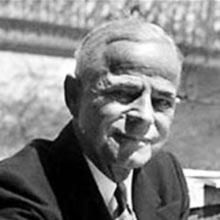
Charles Edward Merrill was born on October 19, 1885, in Green Cove Springs, Florida. He was the son of Charles Morton Merrill and Octavia Wilson. His father was a physician and drugstore proprietor in Green Cove Springs.

Charles Edward Merrill was born on October 19, 1885, in Green Cove Springs, Florida. He was the son of Charles Morton Merrill and Octavia Wilson. His father was a physician and drugstore proprietor in Green Cove Springs.
Merrill attended a preparatory school affiliated with Stetson University and the Worcester Academy in Massachusetts before studying at Amherst College from 1904 to 1906. He played one summer of class-D minor league baseball.
In his youth, Merrill worked briefly for a newspaper in West Palm Beach. His first permanent job was in the New York City office of a textile firm. He rapidly rose to credit manager and then to assistant to the president. He later joined George Burr and Company, a commercial paper house, where he helped create a bond department and managed it until 1913. That year he left to become sales manager for Eastman, Dillon and Company. In January 1914 Merrill established his own small investment banking firm. In 1915 he formed a partnership with Edmund Lynch and renamed the firm Merrill Lynch and Company. From 1915 to 1930 the firm was closely associated with underwriting the securities offered by numerous chain stores, including McCrory, Kresge, and J. C. Penney. During World War I Merrill volunteered and served as a first lieutenant in the army, with the aviation division of the Signal Corps. In 1926 his firm underwrote a large issue of securities for Safeway Stores, and Merrill became a large stockholder and director of this West Coast grocery chain. After the stock market crash in 1929, his reputation as a sound judge of security values was enhanced significantly when clients recalled his advice a year earlier to curtail their purchases of securities on borrowed funds because, in his opinion, the stock market was overpriced. In 1930 he temporarily retired from active participation in the brokerage and investment banking business. Merrill died in Southampton, New York.
In 1932 Merrill was among the founders of Family Circle, the first magazine that depended on distribution through grocery stores. Merrill returned to Wall Street in the early 1940's, and he was the key figure in the creation through the merger of the nation's largest and most successful brokerage firm, known as Merrill Lynch, Pierce, Fenner, and Beane. His broad strategy of seeking out and servicing the typical middle-income investor in a more professional manner was extremely successful in the 1940's and 1950's, and it was instrumental in consolidating the position of Merrill Lynch as the leader in the brokerage field, with over a hundred offices in cities across the nation. By 1954 the firm alone handled around 10 percent of the round-lot transactions on the New York Stock Exchange and almost 18 percent of the odd-lot transactions popular with the small investor. Most important, the revolutionary new policies that the firm instituted were ultimately imitated by virtually every brokerage house on Wall Street, although none developed and maintained quite the same commitment to serving the requirements of the small investor. Merrill ranks as one of the most important and innovative men in American finance in the twentieth century. In the brokerage field, he has no peer in all of American history. Merrill was inducted into the Junior Achievement U. S. Business Hall of Fame in 1976.
As a senior partner, Charles urged the implementation of policies that altered drastically the relationship between the brokerage firm and its customers. He advocated the solicitation of accounts of unsophisticated, middle-class investors. The firm employed low-pressure sales representatives who were skilled in the techniques of public relations and offered customers generally reliable and basically conservative advice. To guarantee that salesmen were at least minimally familiar with investment techniques, Merrill Lynch inaugurated a training program for new employees. One goal was to improve the bad public image of stockbrokers as sleazy operators. Merrill strove to upgrade their status to a more professional level. The sales force was supported by a large number of security analysts whose opinions about stock values were now distributed free of charge to any customer or potential customer requesting information. Simultaneously, Merrill Lynch launched in 1948 an aggressive advertising campaign, unprecedented in Wall Street history, which explained to the uninitiated investor, often in full-page advertisements, the mechanics of security transactions and discussed the principles of sound investment.
Merrill hoped that by demystifying Wall Street operations and by advocating a conservative, nonspeculative investment program, thousands of new investors would be drawn into the stock market, and over the long run, they would remain loyal customers of his firm. To encourage wide participation in the market, the firm also fought to maintain low commissions on small transactions. To inspire public confidence, the firm disclosed the extent of its own investment position in the stocks recommended by its security analysts and salesmen another first.
Quotations:
"If the planters carry politics into the fields they will find it bad business. "
"Mr. Ware has no right to discharge any of his laborers on account of their political opinion. "
"Mr. Ware has no right to discharge any of his laborers on account of their political opinion. "
"If he wants their labor, let them go to work, without regard to politics. "
In his later years, Merrill gave substantial sums to educational institutions and various charities, including Amherst College, Stetson University, and Harvard Medical School, where he was treated for heart disease. At his death, his estate was valued at approximately $25 million. Most of the funds went to establish the Merrill Trust, which has made grants for educational, medical, religious, and general charitable purposes. In 1972 it listed assets of $64 million.
Merrill was married three times: to Elizabeth Church on April 12, 1912 (divorced in 1925); to Hellen Ingram on February 19, 1925 (divorced in 1938); and to Kinta Des Mares on March 8, 1939 (divorced in 1952). He had two children by his first wife and a son, James, by his second wife.
Was born in 1942. He is the former managing general partner of the San Francisco Giants Major League Baseball franchise.
1914–2001
March 3, 1926 – February 6, 1995 Was an American poet.
August 17, 1920 – November 29, 2017 Was an American educator, author, and philanthropist, best known for supporting historically black colleges and founding the Commonwealth School in Boston.