Background
He was born on June 16, 1867 at Victoria, British Columbia, Canada, the son of Andrew William and Minna (Hausman) Piper. A few years after his birth his parents removed to the state of Washington.


( This work has been selected by scholars as being cultur...)
This work has been selected by scholars as being culturally important, and is part of the knowledge base of civilization as we know it. This work was reproduced from the original artifact, and remains as true to the original work as possible. Therefore, you will see the original copyright references, library stamps (as most of these works have been housed in our most important libraries around the world), and other notations in the work. This work is in the public domain in the United States of America, and possibly other nations. Within the United States, you may freely copy and distribute this work, as no entity (individual or corporate) has a copyright on the body of the work. As a reproduction of a historical artifact, this work may contain missing or blurred pages, poor pictures, errant marks, etc. Scholars believe, and we concur, that this work is important enough to be preserved, reproduced, and made generally available to the public. We appreciate your support of the preservation process, and thank you for being an important part of keeping this knowledge alive and relevant.
https://www.amazon.com/Flora-Northwest-Charles-Vancouver-1867-1/dp/1362369314?SubscriptionId=AKIAJRRWTH346WSPOAFQ&tag=prabook-20&linkCode=sp1&camp=2025&creative=165953&creativeASIN=1362369314

( This work has been selected by scholars as being cultur...)
This work has been selected by scholars as being culturally important, and is part of the knowledge base of civilization as we know it. This work was reproduced from the original artifact, and remains as true to the original work as possible. Therefore, you will see the original copyright references, library stamps (as most of these works have been housed in our most important libraries around the world), and other notations in the work. This work is in the public domain in the United States of America, and possibly other nations. Within the United States, you may freely copy and distribute this work, as no entity (individual or corporate) has a copyright on the body of the work. As a reproduction of a historical artifact, this work may contain missing or blurred pages, poor pictures, errant marks, etc. Scholars believe, and we concur, that this work is important enough to be preserved, reproduced, and made generally available to the public. We appreciate your support of the preservation process, and thank you for being an important part of keeping this knowledge alive and relevant.
https://www.amazon.com/Forage-Plants-Culture-Charles-Vancouver/dp/1362451118?SubscriptionId=AKIAJRRWTH346WSPOAFQ&tag=prabook-20&linkCode=sp1&camp=2025&creative=165953&creativeASIN=1362451118
He was born on June 16, 1867 at Victoria, British Columbia, Canada, the son of Andrew William and Minna (Hausman) Piper. A few years after his birth his parents removed to the state of Washington.
Piper obtained his early education in Washington. In 1885 he graduated from the University of Washington with the degree of bachelor of science, receiving in 1892 the master's degree.
In 1900 he obtained the degree of M. S. from Harvard.
He helped his father run his bakery business in Seattle and in spare time pursued his hobby, botanizing in the Puget Sound and Mount Ranier country. In 1893 he began teaching botany and zoology in what is now the State College of Washington, at Pullman, remaining head of his department until 1903.
At Pullman he made very valuable collections for the school, not only of plants, but also of zoological specimens and insects. In this work his students and many acquaintances helped him, especially his assistant, R. Kent Beattie. Together the two young men carried on explorations in Washington, Idaho, and Oregon, collecting and classifying botanical specimens and compiling material published later in The Flora of the Palouse Region (1901), Flora of Southeastern Washington and Adjacent Idaho (1914), and Flora of the Northwest Coast (1915). In 1906 Flora of the State of Washington appeared, of which Piper was sole author.
From 1903 until his death he was employed by the United States Department of Agriculture, being in charge of the office of forage crops investigations from its beginning as a separate unit in 1905. While in this position he accomplished a prodigious amount of work and published many articles, both alone and in collaboration with others. Scientists all over the world wrote for his help and sent him specimens.
By the request of the War Department Piper was sent in 1911 to make a survey of forage crop possibilities in the Philippines. He carried out this enterprise so successfully that he was asked in 1923 to make a similar study in the Panama Canal district. His work on grasses led to his most brilliant achievement. Conceiving the idea that somewhere there must grow a cousin of the weedy Johnson grass of the Southern states, without the latter's objectionable features, he sent innumerable requests to the old world for samples of grass and actually found in Sudan mistakenly classified under the name Sorghum Halepense, the grass of his dreams, which he named Sudan grass. In 1913 he published Sudan Grass, a New Drought-resistant Hay Plant, as Circular No. 125 of the Bureau of Plant Industry. The value of this grass crop in the United States since 1918 has been estimated at $10, 000, 000 a year.
Among his writings not elsewhere mentioned were The Soybean (1923), in collaboration with W. J. Morse, and Forage Plants and Their Culture (1914, 1924). For two or three years he worked under the impediment of ill health but in this time he completed unfinished manuscripts, and he left a practically empty desk when death overtook him.
Charles Vancouver Piper compiled the first authoritative guides to flora in the northwestern United States. He was the sole author of lora of the State of Washington, a co-author of The Flora of the Palouse Region, Flora of the Northwest Coast, these books are still the best works for the botany of that region. The record of his achievements would be incomplete without mention of his work for the improvement of golf courses. In collaboration with R. A. Oakley he wrote Turf for Golf Courses and contributed many valuable articles on this subject. Besies, he was a founding member of the American Society of Agronomy.
( This work has been selected by scholars as being cultur...)
( This work has been selected by scholars as being cultur...)
Quotations: He had a passion for doing things and one of his characteristic expressions was: "What's next?"
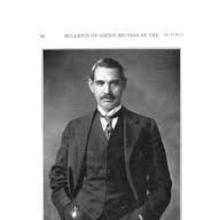
He himself worked at high pressure and inspired his associates with much of his own enthusiasm. He was big in all ways, over six feet in height, broadminded, generous, and absolutely without pretense.
He married Laura Maude Hungate on September 15, 1897.