(Works of Charles Monroe Sheldon - 1857 - 1946 is an uncha...)
Works of Charles Monroe Sheldon - 1857 - 1946 is an unchanged, high-quality reprint of the original edition of 1890. Hansebooks is editor of the literature on different topic areas such as research and science, travel and expeditions, cooking and nutrition, medicine, and other genres. As a publisher we focus on the preservation of historical literature. Many works of historical writers and scientists are available today as antiques only. Hansebooks newly publishes these books and contributes to the preservation of literature which has become rare and historical knowledge for the future.
(Unlike some other reproductions of classic texts (1) We h...)
Unlike some other reproductions of classic texts (1) We have not used OCR(Optical Character Recognition), as this leads to bad quality books with introduced typos. (2) In books where there are images such as portraits, maps, sketches etc We have endeavoured to keep the quality of these images, so they represent accurately the original artefact. Although occasionally there may be certain imperfections with these old texts, we feel they deserve to be made available for future generations to enjoy.
In His Steps To-Day. What Would Jesus Do in Solving the Problems of Present Political, Economic and Social Life?
(Unlike some other reproductions of classic texts (1) We h...)
Unlike some other reproductions of classic texts (1) We have not used OCR(Optical Character Recognition), as this leads to bad quality books with introduced typos. (2) In books where there are images such as portraits, maps, sketches etc We have endeavoured to keep the quality of these images, so they represent accurately the original artefact. Although occasionally there may be certain imperfections with these old texts, we feel they deserve to be made available for future generations to enjoy.
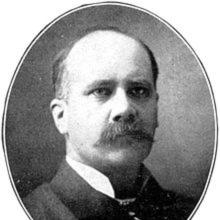
Charles Monroe Sheldon was an American Congregational clergyman and author from New York.
Background
He was born on February 26, 1857 in Wellsville, New York, United States, the son of Stewart Sheldon, a Congregational minister, and Sarah (Ward) Sheldon, both of Scots-Irish ancestry.
In the bracing moral atmosphere of the Congregational parsonage, Charles had a peripatetic boyhood as his father served successive churches in New York, Missouri, Rhode Island, and Michigan. When he was ten the family moved to a farm near Yankton, S. Dak. In later years, Sheldon fondly recalled his adolescent years on the farm, with its hard work, self-reliance, close family life, and clear-cut moral verities.
Education
Following the example of a much admired maternal uncle (also a Congregational minister), he entered Phillips Academy, Andover, Massachussets, and graduated in 1879; he received his degree from Brown University in 1883. He worked his way through both preparatory school and college, in part through teaching night school in a working-class section of Providence.
Although he was strongly attracted to a career in journalism and received a tempting job offer from Lyman Abbott of the Outlook, he decided in favor of his father's vocation, entered Andover Theological Seminary, and received the B. D. in 1886.
Career
His first pastorate, following his ordination in 1886, was a Congregational church in Waterbury, Vermont. In January 1889, Sheldon became minister of the newly formed Central Congregational Church of Topeka, Kans. Topeka, as an important rail and shipping center, included a large immigrant and working-class population as well as a black ghetto called "Tennesseetown. "
Sheldon dramatized the problems and moral challenges of the modern industrial city in a series of stories which he read to his Sunday evening congregation and which were later published serially in the Advance, a small Congregational paper in Chicago. Two of these series appeared in book form as Richard Bruce (1892) and The Crucifixion of Philip Strong (1894). These efforts attracted little notice until the appearance, in 1897, of Sheldon's novel In His Steps. Although Sheldon's own later estimate of 30, 000, 000 was exaggerated, the more likely figure of 6, 000, 000 still places the book among the all-time best sellers. (Only one publisher, Grosset and Dunlap, ever paid Sheldon more than token royalties. )
Though Sheldon never repeated the success of In His Steps, his fame as an author provided a stepping-stone to a long and productive career as a religious publicist. Of his lifetime total of more than fifty books, most were inspirational and rather superficial works of social comment from a liberal Protestant point of view. He also wrote occasionally for secular periodicals such as the Independent and the Atlantic.
In March 1900, at the invitation of the publisher, he edited the Topeka Daily Capital for one week, stressing uplifting news and banning stories and advertisements he considered objectionable. Through shrewd national promotion the paper's circulation rose to more than 300, 000 during this week, but efforts to continue the experiment met the united resistance of the newspaper's business and reportorial staffs.
From the 1890's on, Sheldon was also in demand as a lecturer, particularly on the theme of prohibition, which figured prominently in In His Steps. He toured the British Isles on behalf of this reform in 1900 and again in 1917-1918. In 1914-1915, completing a three years' leave of absence from his Topeka pulpit, he was a member of a prohibition "Flying Squadron" that spoke in 247 American cities in 243 days.
He resigned from his Topeka pastorate in 1919 following a severe illness and for five years (1920 - 1925) was editor-in-chief of the Christian Herald, a nondenominational Protestant monthly published in New York City; later he was a contributing editor. In 1936 he endorsed his fellow Kansan Alfred M. Landon for president.
His death in Topeka's Starmont Hospital two days before his eighty-ninth birthday was the result of a cerebral hemorrhage.
Achievements
Charles Monroe Sheldon was the leader of the Social Gospel movement. Of his more than fifty books his novel, In His Steps, became extremely popular, sales soared into the millions, that still places the book among the all-time best sellers. He became editor for a week of the Topeka Daily Capital applying the "What Would Jesus Do?" concept, during his activity there the newspaper's circulation exploded in 3 times.
The stretch of US-24 on the north side of Topeka, Kansas between US-75 and K-4 is named the Charles Sheldon Memorial Highway in his honor.
(Works of Charles Monroe Sheldon - 1857 - 1946 is an uncha...)
Politics
After 1933 he turned his attention from prohibition to pacifism and the Protestant ecumenical movement.
Views
He was most passionate about were equality and prohibition. He believed that all persons were equal and should be treated as such. He was a pioneer among Protestant ministers in welcoming blacks into a mainstream church. He was also committed to fair treatment for Jews and Catholics, and proclaimed the equality of men and women. A strong supporter of the feminist struggle for equal rights, he urged women to enter politics. He also pushed for full equality in the workplace.
Connections
On May 20, 1891, he married Mary Abby Merriam, a banker's daughter whom he had met during his Waterbury days and whose family had also moved to Topeka. Their son and only child, Merriam Ward Sheldon, was born in 1897.