Background
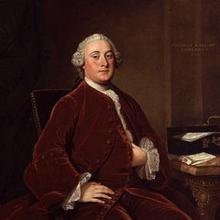
Sir Charles Wyndham was born on 19 August 1710, the son of Sir William Wyndham, of Or- chard-Wyndham, Somerset, and his first wife, Katherine, daughter of Charles Seymour, sixth Duke of Somerset.

Sir Charles Wyndham was born on 19 August 1710, the son of Sir William Wyndham, of Or- chard-Wyndham, Somerset, and his first wife, Katherine, daughter of Charles Seymour, sixth Duke of Somerset.
He was educated at Westminster School and Christ Church, Oxford.
He entered the House of Commons as Tory M.P. for Bridgwater in 1735, lost his seat there in 1741, but was then returned for Appleby. He had become a Whig by that time, and supported the proposal to take Hanoverian troops into British pay. In June 1740 he succeeded to his father’s baronetcy and Somerset estates, and was elected to represent the family borough of Taunton in 1747. (He was elected also for Cockermouth, but preferred the Somerset seat.)
On 22 March 1751 he moved the House of Lords address of condolence to the king on the death of Frederick, Prince of Wales. In the same year he was appointed lord lieutenant of Cumberland. He also acquired a political reputation, although he was very rarely involved in political debates.
In 1757, Egremont was asked to become secretary of state in the ministry that James Walde- grave, second Earl Waldegrave, was attempting to form, but he declined the offer. He was then involved in several other political ventures before becoming secretary of state for the Southern Department (home secretary), replacing William Pitt, the Elder, in October 1761. He remained in that post for a little less than two years, through the governments of the Duke of Newcastle, the Earl of Bute, and George Grenville, the last of whom happened to be his brother-in-law.
Egremont’s position was strengthened in April 1763 when George Grenville, his brother- in-law, was persuaded to become prime minister. This was a short-lived ministry, however, during which Egremont’s main task seems to have been to order the arrest, imprisonment, and prosecution of John Wilkes, the beacon of liberty at this time, for publishing issue number 45 of North Briton. Egremont died at the beginning of September 1763.
Egremont was involved in dealings with Spain aimed at ensuring that the Spanish agreement with France—the Bourbon family compact—would bring no detriment to English interests. At this time, and until 1782, both the secretaries of state for the Southern and Northern departments could deal with foreign as well as domestic policy. In 1762 he was further involved in developing peace negotiations with France, opposing the Earl of Bute’s peace- at-any-price approach in ending the Seven Years’ War. Nonetheless, Egremont did cede some territory to Spain to appease the French, agreeing to give up Florida in return for the recently acquired Havana in modern-day Cuba.
The terms of the peace settlement, and the rival approaches adopted by various members of the succession of ministries under which Egremont served, led him into many conflicts-—in particular, with the Earl of Bute; John Russell, the fourth Duke of Bedford; and Sir William Petty, the second Earl of Shelburne. The conflict with Shelburne arose from Egremont’s pressing for all British territories in North America to be included in the new province of Canada—a move that Shelburne vehemently opposed.
The second Earl of Egremont was not the most able of politicians and, in the character of the age, owed much of his political success to preferment and family connections. But he did take advantage of political opportunities that arose.
His contemporary and more recent critics have denied his parliamentary ability and pointed to his avarice, and few political observers would rank his political skills above the ordinary.
In 1751 he married Alicia Maria, daughter of George Carpenter, second Baron Carpenter of Killaghy, and sister of the first Earl of Tyrconnel.