

Background
Davis, David Brion was born on February 16, 1927 in Denver, Colorado, United States. Son of Clyde Brion and Martha (Wirt) Davis.

http://www.amazon.com/gp/product/B010EWD5V4/?tag=2022091-20

http://www.amazon.com/gp/product/B011DBO5YQ/?tag=2022091-20
http://www.amazon.com/gp/product/B011DBK1KS/?tag=2022091-20
http://www.amazon.com/gp/product/B00DF9X9K6/?tag=2022091-20
http://www.amazon.com/gp/product/B008VS2YDE/?tag=2022091-20

http://www.amazon.com/gp/product/B002IZYHZ4/?tag=2022091-20
http://www.amazon.com/gp/product/B011DBTPHS/?tag=2022091-20
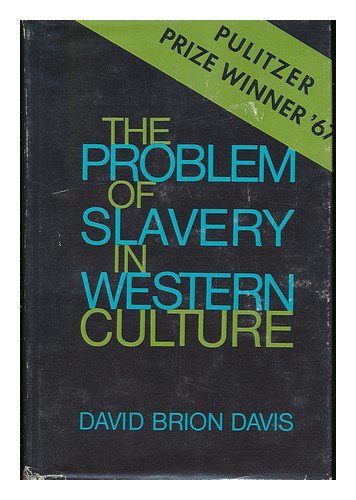
(Although slavery in Western culture has been justified fr...)
Although slavery in Western culture has been justified from the earliest times by religious and philosophical doctrines that gave it the highest sanction, it has always been a source of social and psychological tension. This monumental study offers a panoramic survey of the contradictory ideas and practices that led to the great slavery controversies in Europe and America in the eighteenth and nineteenth centuries. Professor Davis analyzes the ambivalent attitudes toward slavery in the Greek, Roman and early Christian periods.
http://www.amazon.com/gp/product/B000H3ROJA/?tag=2022091-20
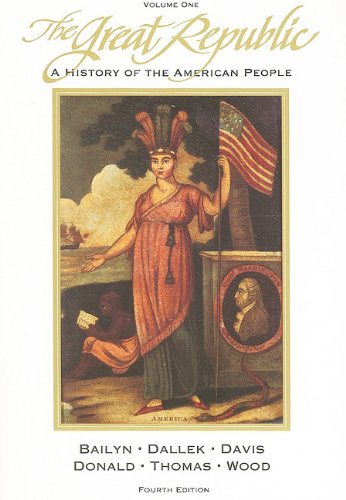
(The Great Republic aims to narrate and interpret American...)
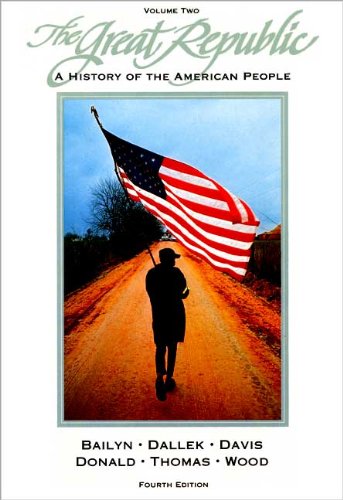
The Great Republic aims to narrate and interpret American history around a central structure of several overarching themes: the reconciling of majority and minority interests in governing the body politic; the relations between America and the outer world; and the role of ideas in shaping American society and institutions.
http://www.amazon.com/gp/product/0669209864/?tag=2022091-20
( Pulitzer Prize-winner David Brion Davis here provides a...)
Pulitzer Prize-winner David Brion Davis here provides a penetrating survey of slavery and emancipation throughout world history--from ancient times to the 20th century. He demonstrates that slavery, once regarded as a form of human progress, played a crucial part in the expansion of the Western world, and that not until the 18th and 19th centuries did views of slavery as a retrograde institution gain far-reaching acceptance. Illuminating this momentous historical shift from "progressive" slavery to "progressive" emancipation, Davis ranges over a wide array of important developments--from the transition from white to black slavery, to the impact of the Civil War and the Emancipation Proclamation, to 20th-century debates about slavery in the League of Nations and the U.N. He probes the intricate connections among slavery, emancipation, and the idea of progress, shedding new light on two crucial issues--the human capacity for dignifying acts of oppression and the problems of implementing social change--and placing the most recent international debate about freedom and human rights into much-needed perspective.
http://www.amazon.com/gp/product/0195037332/?tag=2022091-20
(This volume brings together one of the most provocative d...)
This volume brings together one of the most provocative debates among historians in recent years. The centre of controversy is the emergence of the anti-slavery movement in the United States and Britain and the relation of capitalism to the development.
http://www.amazon.com/gp/product/B001Q1WPTG/?tag=2022091-20
http://www.amazon.com/gp/product/B010WHK9BK/?tag=2022091-20
http://www.amazon.com/gp/product/B002DFP9E2/?tag=2022091-20
http://www.amazon.com/gp/product/B014S2WFNA/?tag=2022091-20
http://www.amazon.com/gp/product/B0000CJTOY/?tag=2022091-20
(David Brion Davis's books on the history of slavery refle...)
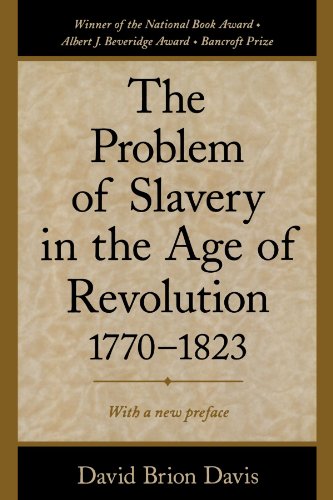
David Brion Davis's books on the history of slavery reflect some of the most distinguished and influential thinking on the subject to appear in the past generation. The Problem of Slavery in the Age of Revolution, the sequel to Davis's Pulitzer Prize-winning The Problem of Slavery in Western Culture and the second volume of a proposed trilogy, is a truly monumental work of historical scholarship that first appeared in 1975 to critical acclaim both academic and literary. This reprint of that important work includes a new preface by the author, in which he situates the book's argument within the historiographic debates of the last two decades.
http://www.amazon.com/gp/product/0195126718/?tag=2022091-20

(Part of a trilogy "The Problem of Slavery in World Histor...)
Part of a trilogy "The Problem of Slavery in World History", this is the second book in the series. It features a preface exploring the anti-slavery debate among American historians, between the 1970s and 1990s, started by the original publication of this book in the 1970s.
http://www.amazon.com/gp/product/B00FDVFGI2/?tag=2022091-20
(Book by Bernard Bailyn, Robert Dallek, David Brion Davis,...)
Book by Bernard Bailyn, Robert Dallek, David Brion Davis, David Herbert Donald, John L. Thomas, Gordon S. Wood
http://www.amazon.com/gp/product/0669209872/?tag=2022091-20
http://www.amazon.com/gp/product/B00DF9OF2W/?tag=2022091-20
http://www.amazon.com/gp/product/B00MZPNV36/?tag=2022091-20
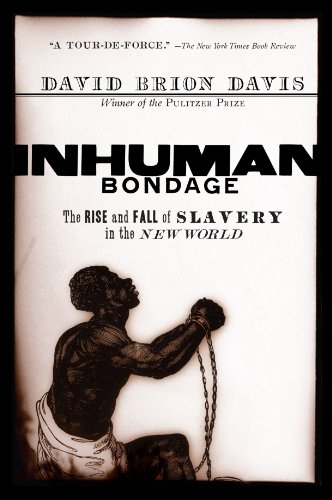
(Winner of a Pulitzer Prize and a National Book Award, Dav...)
Winner of a Pulitzer Prize and a National Book Award, David Brion Davis has long been recognized as the leading authority on slavery in the Western World. Now, in Inhuman Bondage, Davis sums up a lifetime of insight in this definitive account of New World slavery. The heart of the book looks at slavery in the American South, describing black slaveholding planters, the rise of the Cotton Kingdom, the daily life of ordinary slaves, the highly destructive slave trade, the sexual exploitation of slaves, the emergence of an African-American culture, and much more. But though centered on the United States, the book offers a global perspective spanning four continents. It is the only study of American slavery that reaches back to ancient foundations and also traces the long evolution of anti-black racism in European thought. Equally important, it combines the subjects of slavery and abolitionism as very few books do, and it connects the actual life of slaves with the crucial place of slavery in American politics, stressing that slavery was integral to America's success as a nation-not a marginal enterprise. A definitive history by a writer deeply immersed in the subject, Inhuman Bondage offers a compelling portrait of the dark side of the American dream.
http://www.amazon.com/gp/product/0195339444/?tag=2022091-20

http://www.amazon.com/gp/product/B00DF9PGSO/?tag=2022091-20
http://www.amazon.com/gp/product/B0040GTVZA/?tag=2022091-20
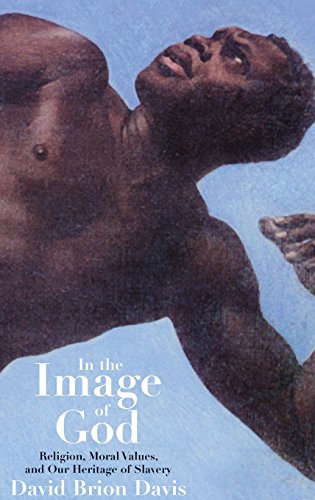
(In this broad-ranging book, the pre-eminent authority on ...)
In this broad-ranging book, the pre-eminent authority on the history of slavery meditates on the origins, experience, and legacy of this "peculiar institution." David Brion Davis begins with a substantial and highly personal introduction in which he discusses some of the major ideas and individuals that have shaped his approach to history. He then presents a series of interlocking essays that cover topics including slave resistance, the historical construction of race, and the connections between the abolitionist movement and the struggle for women's rights. The book also includes essays on such major figures as Reinhold Niebuhr and Martin Luther King, Jr., as well as appreciations of two of the finest historians of the twentieth century: C. Vann Woodward and Eugene D. Genovese. Gathered together for the first time, these essays present the major intellectual, historical, and moral issues essential to the study of New World slavery and its devastating legacy.
http://www.amazon.com/gp/product/0300088140/?tag=2022091-20
http://www.amazon.com/gp/product/B011DB18PU/?tag=2022091-20
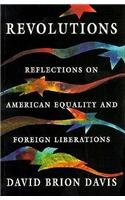
(Analyzes American attitudes and reactions to revolutions.)
Analyzes American attitudes and reactions to revolutions.
http://www.amazon.com/gp/product/0674768051/?tag=2022091-20
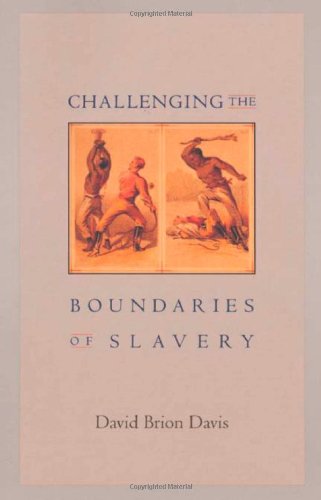
( In this engaging book, David Brion Davis offers an ill...)
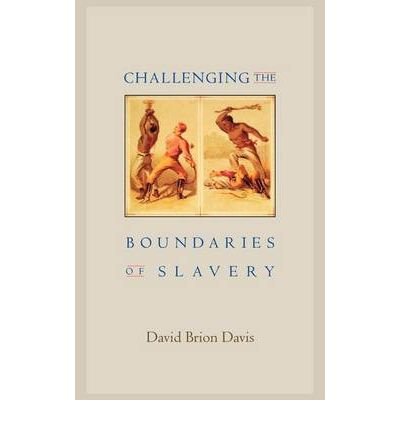
In this engaging book, David Brion Davis offers an illuminating perspective on American slavery. Starting with a long view across the temporal and spatial boundaries of world slavery, he traces continuities from the ancient world to the era of exploration, with its expanding markets and rise in consumption of such products as sugar, tobacco, spices, and chocolate, to the conditions of the New World settlement that gave rise to a dependence on the forced labor of millions of African slaves. With the American Revolution, slavery crossed another kind of boundary, in a psychological inversion that placed black slaves outside the dream of liberty and equality--and turned them into the Great American Problem. Davis then delves into a single year, 1819, to explain how an explosive conflict over the expansion and legitimacy of slavery, together with reinterpretations of the Bible and the Constitution, pointed toward revolutionary changes in American culture. Finally, he widens the angle again, in a regional perspective, to discuss the movement to colonize blacks outside the United States, the African-American impact on abolitionism, and the South's response to slave emancipation in the British Caribbean, which led to attempts to morally vindicate slavery and export it into future American states. Challenging the boundaries of slavery ultimately brought on the Civil War and the unexpected, immediate emancipation of slaves long before it could have been achieved in any other way. This imaginative and fascinating book puts slavery into a brilliant new light and underscores anew the desperate human tragedy lying at the very heart of the American story.
http://www.amazon.com/gp/product/0674019857/?tag=2022091-20
http://www.amazon.com/gp/product/B011DBQCMO/?tag=2022091-20
http://www.amazon.com/gp/product/B0140ENVYI/?tag=2022091-20
(The material in this book represents in large part lectur...)
The material in this book represents in large part lectures delivered at the invitation of the faculty and trustees of the Union Theological Seminary, Richmond, Virginia, on the James Sprunt foundation. For publication, these lectures were revised and in some cases amplified. Contents: The Peak of Catholic Persecution: Thomas of Torquemada; The Peak of Protestant Intolerance: John Calvin; The Victim of Protestant Persecution: Michael Servetus; The Remonstrator: Sebastien Castellio; The Heretic as Hypnocrite: David Joris; The Heretic as Exile: Bernadino Ochino; The Bard of Speech Unbound: John Milton; The Seeker: Roger Williams; Apologist for the Act of Toleration: John Locke.
http://www.amazon.com/gp/product/0807110345/?tag=2022091-20
http://www.amazon.com/gp/product/B011SK0TPQ/?tag=2022091-20

http://www.amazon.com/gp/product/B008918N1K/?tag=2022091-20
http://www.amazon.com/gp/product/B004RPNH2W/?tag=2022091-20
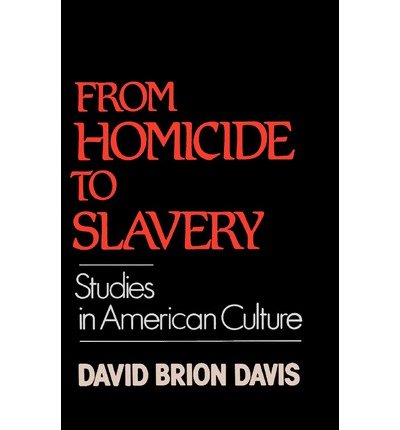
(For more than twenty years David Brion Davis has been rec...)
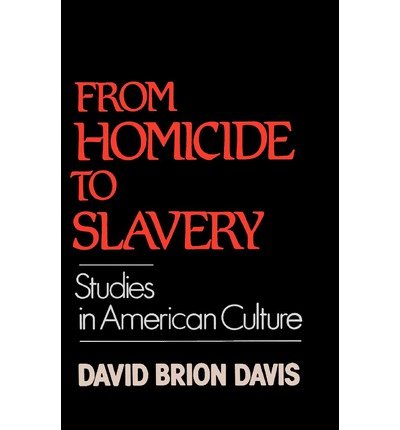
For more than twenty years David Brion Davis has been recognized as a leading authority on the moral and ideological responses to slavery in the Western world. From Homicide to Slavery, Davis's first book of collected essays, brings together selections reflecting his wide-ranging interests in colonial history, Afro-American history, the social sciences, and American literature. The essays are interconnected by Davis's central concern with violence, irrationality, and the definition of moral limits during a period when Americans believed they were breaking free from historical constraints and acquiring new powers of self-perfection. Topics range from a socially revealing murder trial in 1843 to debates over capital punishment, movements of counter-subverison, the iconography of race, the cowboy as an American hero, the portrayal of violence in American literature, the historiography of slavery, and the British and American antislavery movements.
http://www.amazon.com/gp/product/0195040899/?tag=2022091-20
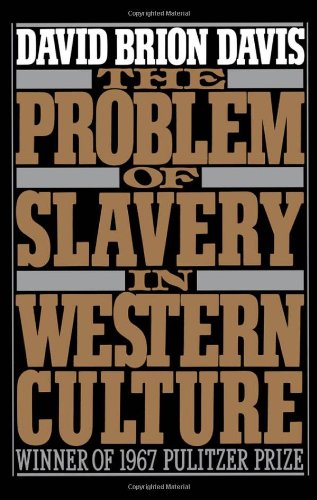
(Winner of several national awards including the 1967 Puli...)
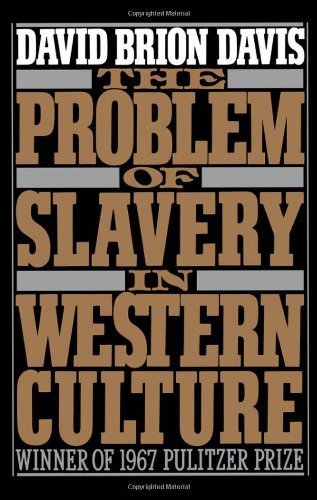
Winner of several national awards including the 1967 Pulitzer Prize, this classic study by David Brion Davis has given new direction to the historical and sociological research of society's attitude towards slavery. Davis depicts the various ways different societies have responded to the intrinsic contradictions of slavery from antiquity to the early 1770's in order to establish the uniqueness of the abolitionists' response. While slavery has always caused considerable social and psychological tension, Western culture has associated it with certain religious and philosophical doctrines that gave it the highest sanction. The contradiction of slavery grew more profound when it became closely linked with American colonization, which had as its basic foundation the desire and opportunity to create a more perfect society. Davis provides a comparative analysis of slave systems in the Old World, a discussion of the early attitudes towards American slavery, and a detailed exploration of the early protests against Negro bondage, as well as the religious, literary, and philosophical developments that contributed to both sides in the controversies of the late eighteenth century. This exemplary introduction to the history of slavery in Western culture presents the traditions in thought and value that gave rise to the attitudes of both abolitionists and defenders of slavery in the late eighteenth century as well as the nineteenth century.
http://www.amazon.com/gp/product/0195056396/?tag=2022091-20
http://www.amazon.com/gp/product/B007S7ETDM/?tag=2022091-20
Davis, David Brion was born on February 16, 1927 in Denver, Colorado, United States. Son of Clyde Brion and Martha (Wirt) Davis.
AB summa cum laude, Dartmouth College, 1950. Doctor of Letters, Dartmouth College, 1977. AM, Harvard, 1953; Doctor of Philosophy, Harvard, 1956.
Master of Arts, Oxford University, 1969. Doctor of Humane Letters, University New Haven, 1986. Doctor of Letters, Columbia University, 1999.
Scheduler, Cessna Aircraft Company, Wichita, Kansas, 1950-1951;
instructor history, Dartmouth, 1953-1954;
member of faculty, Cornell Univercity, 1955-1969;
professor of history, Cornell Univercity, 1963-1969;
Ernest I. White professor of history, Cornell Univercity, 1964-1969;
professor of history, Yale University, since 1969;
Farnam professor of history, Yale University, 1972-1978;
Sterling professor of history, Yale University, since 1978;
associate director National Humanities Institute, Yale University, 1975. Fulbright lecturer, Hyderabad, India, 1967, universities Guyana and West Indies, 1974. Walter Lynwood Fleming lecturer Southern history Louisiana State University, 1969.
Harmsworth professor Oxford (England) University, 1969-1970. Fellow Center Advanced Study Behavioral Sciences, 1972-1973, Henry E. Huntington Library, 1976. Benjamin Rush lecturer American Psychiatric Association, 1976.
French-American Foundation chair in American civilization Ecole des Hautes Etudes en Sciences Sociales, Paris, 1980-1981. Fulbright lecturer, Israel, Holland, Italy, 1981. Patten lecturer Ind U., 1981.
Hanes lecturer U. North Carolina, 1982. Thompson lecturer Vassar College, 1983. Robert Fortenbaugh Memorial lecturer Gettysburg College, 1983.
Distinguished scholar in residence Kentucky State University, 1984. Member International Conference on Capitalism and Slavery, Bellagio, Italy, 1984. Phi Beta Kappa vis.lectr., 1984-1985.
Distinguished resident Westminster College, Salt Lake City, 1985. Project director research grants National Endowment for Humanities, 1980, 81. Gilbert Osofsky lecturer University of Illinois, Chicago, 1986.
Arnold Shankman lecturer Winthrop College, Rock Hill, South Carolina., 1987, William W. Cook lecturer University of Michigan School Law, 1988. Elijah Lovejoy lecturer Colby College, 1989. James Neal Primm lecturer U. Missouri-St. Louis, 1989.
Goltz lecturer Bowdoin College, 1989. William E. Massey Senior lecturer Harvard University, 1989. Athearn lecturer U. Colorado, 1990.
Scofield lecturer U. Missouri, Kansas City, 1991. Lecturer Society Fellows New York University, 1991, U. Houston, 1991. Participant conference Hamilton College, 1992.
Teacher summercourse Gilder-Lehrman Institute, 1994, 95, 96, 97. John Hope Franklin lecturer Adelphi College, 1995. Paley lecturer Hebrew U., Jerusalem, 1995.
Lecturer Black History Month College Charleston, 1995, Worcester State College, 1995. Taft lectures, U. Cincinnati, 1996.
(The Great Republic aims to narrate and interpret American...)
(Although slavery in Western culture has been justified fr...)
(Winner of several national awards including the 1967 Puli...)
(The material in this book represents in large part lectur...)
( Pulitzer Prize-winner David Brion Davis here provides a...)
(David Brion Davis's books on the history of slavery refle...)
(In this broad-ranging book, the pre-eminent authority on ...)
(For more than twenty years David Brion Davis has been rec...)
(Winner of a Pulitzer Prize and a National Book Award, Dav...)
(Part of a trilogy "The Problem of Slavery in World Histor...)
(This volume brings together one of the most provocative d...)
( In this engaging book, David Brion Davis offers an ill...)
(Book by Bernard Bailyn, Robert Dallek, David Brion Davis,...)
(Homicide in American Fiction 1798-1860 by Davis, David Brion)
(Analyzes American attitudes and reactions to revolutions.)
Member subcommittee internal security Democratic National Policy Council, Pulitzer Prize Committee, 1968, Bancroft Prize Committee, 1989. Co-chair advisory board Gilder-Lehrman Institute American History, 1995—2005. With Army of the United States, 1945-1946.
Fellow American Academy Arts and Sciences, British Academy (correspondent). Member American Philosophical Society (administrative board Benjamin Franklin papers), Massachusetts Hist Society, American History Society (Albert J. Beveridge award 1975, award for scholarly achievement 2007), Institute Early American History and Culture (council 1976-1979), American Antiquarian Society, Society of America Historians (Bruce Catton prize for lifetime achievement 2004), Organization American Historians (president 1988-1989, chair Frederick Jackson Turner award committee 1989, Lincoln prize committee 1992), American Histor. Association (Scholarly Achievement award 2007), Association American Publications (Best Book in History award 2006), Milan Group in Early United States History, Phi Beta Kappa Society (Ralph Waldo Emerson Book award, 2007).
Married Toni Lisa Hahn, September 9, 1971. Children: Adam Jeffrey, Noah Benjamin;children from previous marriage: Jeremiah Jonathan, Martha Elizabeth, Sarah Brion.
