Harvard University. Photo: chensiyuan, CC BY-SA 4.0, via Wikimedia Commons (https://commons.wikimedia.org/wiki/File:Sanders_theater_2009y.JPG)
Career
Gallery of Deirdre McCloskey
University of Chicago. Photo: Public domain, via Wikimedia Commons (https://commons.wikimedia.org/wiki/File:Campus_Spring.jpg)
Gallery of Deirdre McCloskey
University of Iowa. Photo: Billwhittaker ( talk ) at en.wikipedia, CC BY-SA 3.0, via Wikimedia Commons (https://commons.wikimedia.org/wiki/File:Iowa_Hall.JPG)
Gallery of Deirdre McCloskey
University of Illinois Chicago. Photo: artistmac, CC BY-SA 2.0, via Wikimedia Commons (https://commons.wikimedia.org/wiki/File:University_of_Illinois_at_Chicago_-1.jpg)
Gallery of Deirdre McCloskey
Erasmus University Rotterdam. Photo: Erasmus University Rotterdam, CC BY-SA 3.0, via Wikimedia Commons (https://commons.wikimedia.org/wiki/File:EURbuilding.jpg)
Gallery of Deirdre McCloskey
Cato Institute. Photo: Tedder, CC BY 3.0, via Wikimedia Commons (https://commons.wikimedia.org/wiki/File:Cato_Institute_building_March_2013_2.jpg)
University of Iowa. Photo: Billwhittaker ( talk ) at en.wikipedia, CC BY-SA 3.0, via Wikimedia Commons (https://commons.wikimedia.org/wiki/File:Iowa_Hall.JPG)
University of Illinois Chicago. Photo: artistmac, CC BY-SA 2.0, via Wikimedia Commons (https://commons.wikimedia.org/wiki/File:University_of_Illinois_at_Chicago_-1.jpg)
Erasmus University Rotterdam. Photo: Erasmus University Rotterdam, CC BY-SA 3.0, via Wikimedia Commons (https://commons.wikimedia.org/wiki/File:EURbuilding.jpg)
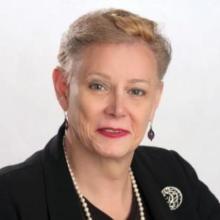
Deirdre Nansen McCloskey is an American economist, economic historian, author, and professor emerita whose work spans British economic history, cliometrics, rhetoric and methodology in economics, liberalism, ethics, and gender. Her books include The Rhetoric of Economics, Crossing, and the Bourgeois Era trilogy.
Background
McCloskey was born on September 11, 1942, in Ann Arbor, Michigan, to Robert McCloskey, a Harvard professor of government, and Helen Stueland, a poet. Her family background connected academic political thought with literary culture.
She was born Donald Nansen McCloskey and later adopted the name Deirdre. In 1995 she transitioned from male to female while teaching at the University of Iowa; she subsequently wrote about the experience in Crossing: A Memoir. She had been married and had two children before the transition.
Education
McCloskey studied economics at Harvard University, receiving an AB in 1964 and a PhD in 1970. Her doctoral research examined British iron and steel and was supervised by economic historian Alexander Gerschenkron; the dissertation later received the David A. Wells Prize.
Harvard's economics department was a leading center of postwar American economic research, while the university's broader intellectual environment supported historical, institutional, and quantitative approaches to social science. McCloskey's training there provided the foundation for her later work in economic history and cliometrics.
She also taught price theory and economic history at the University of Chicago after completing her graduate education. The University of Chicago's economics tradition emphasized formal price theory, competitive markets, and analytical rigor; McCloskey later combined that training with historical research, literary interpretation, and the study of rhetoric.
McCloskey began her academic career at the University of Chicago in 1968 as an assistant professor of economics and later became an associate professor of economics. She was tenured in 1975 and was appointed associate professor of history in 1979. Her Chicago work contributed to the development of cliometric economic history, which applies economic theory and quantitative methods to historical questions.
In 1980 she moved to the University of Iowa, where she taught economics and history until 1999. She served as chair of the Department of Economics in 1981 and 1982 and helped establish the Project on Rhetoric of Inquiry, known as Poroi, in 1985. Iowa provided an interdisciplinary setting for her study of economic argument, historical explanation, philosophy of economics, and writing.
McCloskey's research shifted during the late 1970s and early 1980s from primarily quantitative economic history toward rhetoric and methodology. The Rhetoric of Economics argued that economists use language, metaphor, narrative, and persuasion alongside mathematics and statistics. Her later books extended this humanistic approach to economic expertise, statistical significance, ethics, gender, and the history of liberalism.
After Iowa, McCloskey joined the University of Illinois at Chicago, where she held professorships in economics, history, English, communication, philosophy, and classics and became a distinguished professor emerita. She also held the Tinbergen Distinguished Professorship at Erasmus University Rotterdam for five years. At the Cato Institute she became Distinguished Scholar and Isaiah Berlin Chair in Liberal Thought.
Her economic-history writing examined British industrialization, trade, entrepreneurship, open-field agriculture, the gold standard, and the Industrial Revolution. In the Bourgeois Era trilogy, she argued that changing ideas about commerce, innovation, dignity, and liberalism helped explain modern economic growth more effectively than explanations based only on capital accumulation, exploitation, or institutions.
McCloskey helped establish cliometric economic history by applying economic theory, quantitative evidence, and historical research to questions about British industry, agriculture, trade, and economic growth.
Her work on the rhetoric of economics broadened methodological discussion by showing how economic arguments depend on language, metaphor, narrative, and persuasion as well as formal analysis.
McCloskey became a prominent advocate for the rights and dignity of transgender people and other members of the LGBT community.
She played a major role in the public and academic debate surrounding the statistical and identity claims discussed in J. Michael Bailey's The Man Who Would Be Queen.
(A practical guide to clear, concise, and persuasive writi...)
2019
Religion
McCloskey identifies with the Episcopal tradition, a member church of the worldwide Anglican Communion. Episcopalian religious life is rooted in the Book of Common Prayer, sacramental worship, episcopal governance, and a broad Anglican tradition that has historically combined theological continuity with intellectual and political diversity.
Her public self-description as Episcopalian places her religious outlook alongside her emphasis on human dignity, moral agency, and the ethical dimensions of commercial society. These themes appear in her writing on virtue, liberalism, and the moral vocabulary of economic life.
Politics
McCloskey has been associated with the Libertarian Party and was its candidate for Illinois comptroller in 2022. Her political writing advocates classical liberal principles, including personal autonomy, voluntary exchange, free speech, limited government, and protection of civil society from coercive state power.
Her economic and political arguments treat liberalism as both an institutional arrangement and a moral tradition. In her account, legal equality, secure liberty, and permission to innovate helped generate modern prosperity, while her criticism of socialism, nationalism, and expansive state administration reflects the libertarian movement's opposition to concentrated political power.
The Libertarian Party, founded in the United States in 1971, combines civil-liberties positions with support for free markets and sharply limited government. McCloskey's candidacy brought her academic arguments about liberalism, public finance, and economic freedom into an electoral setting.
Views
McCloskey's philosophy of social science rejects the idea that economics can be adequately understood as a purely mechanical or positivist discipline. She argues that economists, like other human scientists, rely on language, narrative, metaphor, interpretation, and persuasion as well as measurement and formal models.
Her later work develops a humanistic account of economic life. She maintains that modern prosperity was supported by a change in the moral and rhetorical status of commerce, innovation, and ordinary business people, and she emphasizes the importance of the classical virtues, especially prudence, justice, courage, temperance, faith, hope, and love.
McCloskey describes herself as a liberal and feminist Aristotelian. Her writings defend personal freedom, equal dignity, experimentation, and voluntary exchange while criticizing coercion, authoritarianism, and the misuse of statistical significance as a substitute for substantive judgment.
Membership
McCloskey has participated in major professional organizations in economics, economic history, and interdisciplinary social science. Her memberships and leadership roles connected her with the communities that developed cliometrics, economic history, rhetoric of inquiry, and methodological debate.
She served in leadership positions in the American Economic Association, the Eastern Economic Association, the Economic History Association, and the British Economic History Society. She also helped found the Cliometrics Society, an organization devoted to the use of economic theory and quantitative methods in historical research.
Served on the executive committee from 1994 to 1997 and participated in committees concerning economics education and curriculum balance.
American Economic Association
,
United States
Served as president from 1996 to 1997 and founded the annual Gerschenkron Prize.
Economic History Association
,
United States
Served as president from 2003 to 2004.
Eastern Economic Association
,
United States
Served on the council and was its first American member.
British Economic History Society
,
United Kingdom
1987 - 1990
Co-founded the society devoted to quantitative and economic approaches to history.
Cliometrics Society
,
United States
American Historical Association
,
United States
Modern Language Association
,
United States
Society for Social Studies of Science
,
United States
Personality
McCloskey's public writing and interviews present her as intellectually wide-ranging, argumentative, witty, and strongly committed to open debate. She combines quantitative economic analysis with literary criticism, moral philosophy, and historical interpretation.
Quotes from others about the person
Colleagues and institutional biographies have described McCloskey as a prolific scholar whose work crosses economics, economic history, philosophy, rhetoric, literature, ethics, and gender studies.
Aristotle; Adam Smith; Friedrich Hayek; Ludwig von Mises; Isaiah Berlin
Politicians
Adam Smith
Writers
Jane Austen; Charles Dickens; Robert Frost
Connections
McCloskey is the child of Robert McCloskey, a professor of government at Harvard University, and Helen Stueland, a poet. She was married from 1965 until 1995 and has two children, Daniel and Margaret.
Her transition in 1995 became an important subject of her memoir Crossing: A Memoir, which describes the personal and social dimensions of changing gender while she was an established academic. The book was recognized as a New York Times Notable Book.
Cato Institute profile
Documents McCloskey's position as Distinguished Scholar and Isaiah Berlin Chair in Liberal Thought and summarizes her principal books and research.
Knowledge and Persuasion in Economics
Provides bibliographic and descriptive information about McCloskey's methodological study of rhetoric, mathematics, and interpretation in economics.