

Background
Keene, Donald was born in 1922.
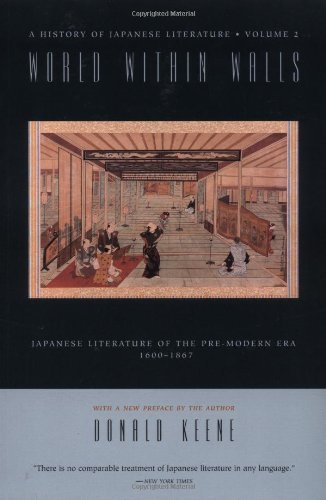
( The Tokugawa family held the shogunate from 1603 to 186...)
The Tokugawa family held the shogunate from 1603 to 1867, ruling Japan and keeping the island nation isolated from the rest of the world for more than 250 years. Donald Keene looks within the "walls" of isolation and meticulously chronicles the period's vast literary output, providing both lay readers and scholars with the definitive history of premodern Japanese literature. World Within Walls spans the age in which Japanese literature began to reach a popular audience--as opposed to the elite aristocratic readers to whom it had previously been confined. Keene comprehensively treats each of the new, popular genres that arose, including haiku, Kabuki, and the witty, urbane prose of the newly ascendant merchant class.
http://www.amazon.com/gp/product/0231114672/?tag=2022091-20
http://www.amazon.com/gp/product/B010EUMMZG/?tag=2022091-20
http://www.amazon.com/gp/product/B008UBGDZC/?tag=2022091-20
http://www.amazon.com/gp/product/B010EVJR4O/?tag=2022091-20
( Frog in the Well is a vivid and revealing account of Wa...)
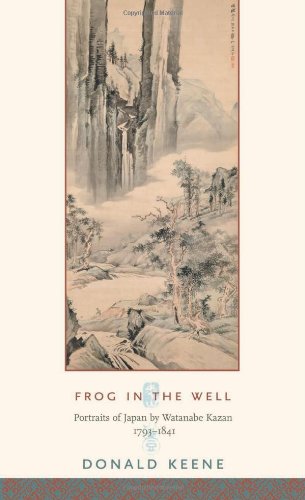
Frog in the Well is a vivid and revealing account of Watanabe Kazan, one of the most important intellectuals of the late Tokugawa period. From his impoverished upbringing to his tragic suicide in exile, Kazan's life and work reflected a turbulent period in Japan's history. He was a famous artist, a Confucian scholar, a student of Western culture, a samurai, and a critic of the shogunate who, nevertheless, felt compelled to kill himself for fear that he had caused his lord anxiety. During this period, a typical Japanese scholar or artist refused to acknowledge the outside world, much like a "frog in the well that knows nothing of the ocean," but Kazan actively sought out Western learning. He appreciated European civilization and bought every scrap of European art that was available in Japan. He became a painter to help his family out of poverty and, by employing the artistic techniques of the West, achieved great success with his realistic and stylistically advanced portraits. Although he remained a nationalist committed to the old ways, Kazan called on the shogunate to learn from the West or risk disaster. He strove to improve the agricultural and economic conditions of his province and reinforce its defenses, but his criticisms and warnings about possible coastal invasions ultimately led to his arrest and exile. Frog in the Well is the first full-length biography of Kazan in English, and, in telling his life's story, renowned scholar Donald Keene paints a fascinating portrait of the social and intellectual milieus of the late Tokugawa period. Richly illustrated with Kazan's paintings, Frog in the Well illuminates a life that is emblematic of the cultural crises affecting Japan in the years before revolution.
http://www.amazon.com/gp/product/0231138261/?tag=2022091-20
http://www.amazon.com/gp/product/B010EWGPMK/?tag=2022091-20
http://www.amazon.com/gp/product/0231103409/?tag=2022091-20
http://www.amazon.com/gp/product/B001A9G85G/?tag=2022091-20
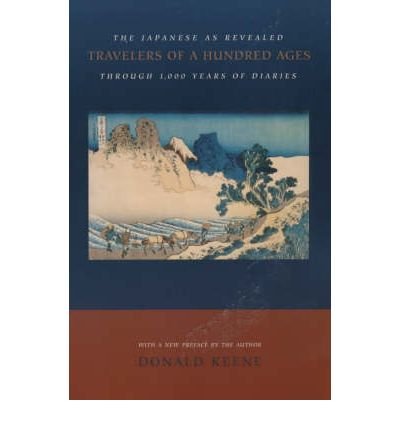
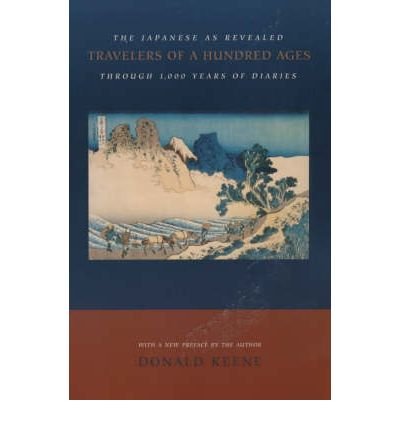
(At once an intimate account of the diarists' lives and a ...)
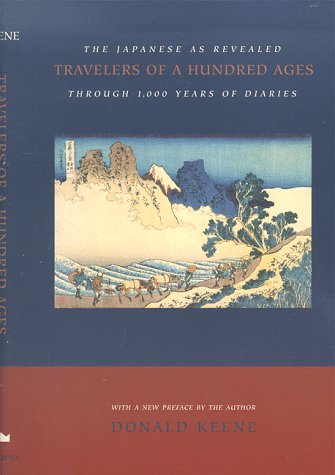
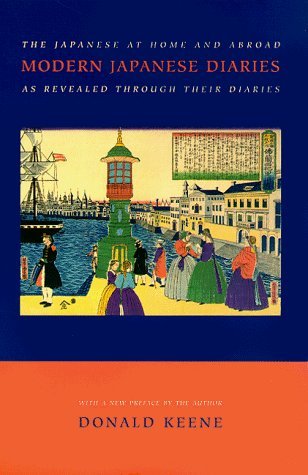
At once an intimate account of the diarists' lives and a testimony to the greater struggles and advances of Japanese culture, this book illuminates the hidden and largely unknown worlds of imperial courts, Buddhist monasteries, country inns, and merchants' houses.
http://www.amazon.com/gp/product/B0041YQSZM/?tag=2022091-20
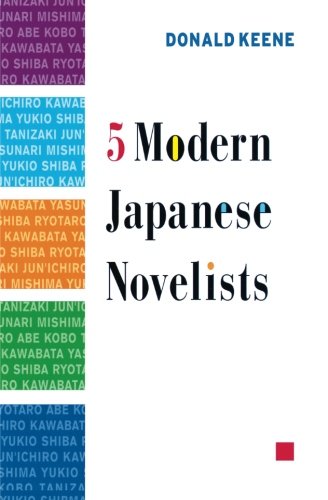
( A superb introduction to modern Japanese fiction as wel...)
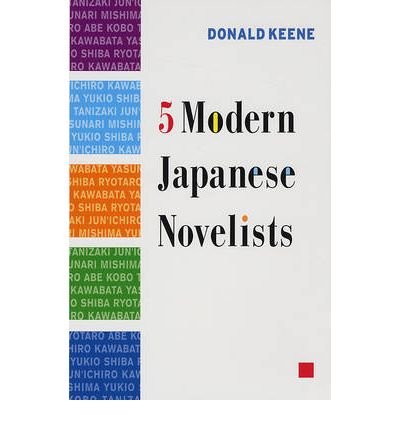
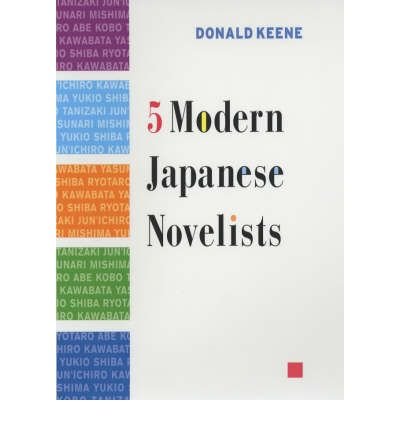
A superb introduction to modern Japanese fiction as well as a memoir of his own love affair with Japanese literature and culture, this volume consists of chapters on five modern Japanese novelists whom Donald Keene knew personally: Yasunari Kawabata, Yukio Mishima, Jun'ichiro Tanizaki, Ryotaro Shiba, and Kobo Abe. Each chapter opens with a vignette describing Keene's personal encounters with these famous men, blending his autobiographical observations with literary and cultural analysis.
http://www.amazon.com/gp/product/0231126115/?tag=2022091-20
(Classic addition to your library.)
Classic addition to your library.
http://www.amazon.com/gp/product/B009GG0CKC/?tag=2022091-20

(Three plays by one of contemporary Japan's most prominent...)
Three plays by one of contemporary Japan's most prominent writers -- Involuntary Homicide, The Green Stockings, The Ghost is Here -- translated for this volume reveal Kobo Abe's deep love of absurdity in the face of universal concerns.
http://www.amazon.com/gp/product/B00FBBM3FS/?tag=2022091-20

http://www.amazon.com/gp/product/B01182D8H0/?tag=2022091-20

http://www.amazon.com/gp/product/B000PVCWYQ/?tag=2022091-20
http://www.amazon.com/gp/product/0030628164/?tag=2022091-20
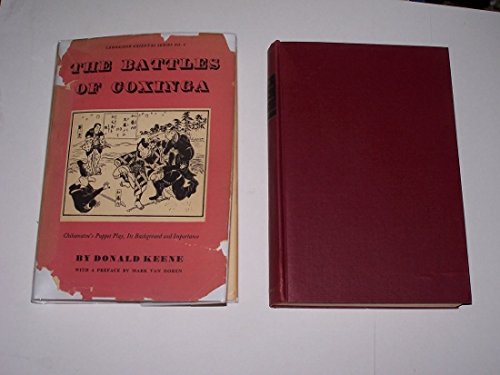
(Coxinga was half Chinese and half Japanese, a 17th centur...)
Coxinga was half Chinese and half Japanese, a 17th century adventurer and pirate, whose exploits shook the Far East in the seventeenth century.
http://www.amazon.com/gp/product/0521054699/?tag=2022091-20
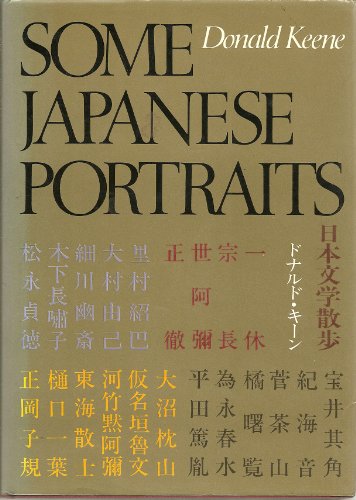
(Illuminates the wealth, themes, and character of Japanese...)
Illuminates the wealth, themes, and character of Japanese literature from the 15th century to 1912 by introducing Western readers to the life, work, and literary style of 21 Japanese poets and writers.
http://www.amazon.com/gp/product/0870112988/?tag=2022091-20
(Volume 1 of a two part survey of Japanese literature from...)
Volume 1 of a two part survey of Japanese literature from 1868 when Japan was "opened to the West" until 1984. this covers Japanese fiction. Chapters include "The Meiji Political Novel", "Natsumi Soseki", "War Literature", "Yukio Mishima" and 23 other topics.
http://www.amazon.com/gp/product/0030628148/?tag=2022091-20

(This is a collection of journals written by Japanese men ...)
This is a collection of journals written by Japanese men and women - from all levels of society - who journeyed to American, Europe and China between 1860 and 1920. The diaries record personal views of the countries and their cultures, and express sentiments ranging from delight to disillusionment.
http://www.amazon.com/gp/product/B00EQCER6G/?tag=2022091-20
http://www.amazon.com/gp/product/B000YDC3L2/?tag=2022091-20
( This is an account of the growth and uses of Western le...)
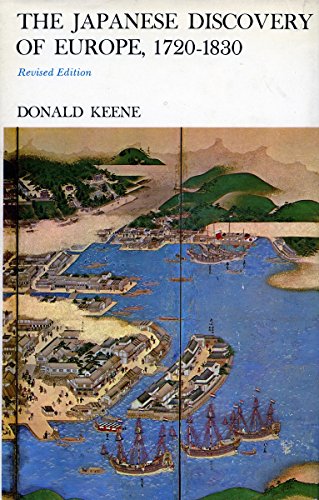
This is an account of the growth and uses of Western learning in Japan from 1720 to 1830. These are the dates of the beginning of official interest in Western learning and of the expulsion of Siebold from the country, the first stage of a crisis that could be resolved only by the opening of the country of the West. The century and more included by the two dates was a most important period in Japanese history, when intellectuals, rebelling at the isolation of their country, desperately sought knowledge from abroad. The amazing energy and enthusiasm of men like Honda Toshiaki made possible the spectacular changes in Japan, which are all too often credited to the arrival of Commodore Perry. The author chose Honda Toshiaki (1744-1821) as his central figure. A page from any one of Honda's writings suffices to show that with him one has entered a new age, that of modern Japan. One finds in his books a new spirit, restless, curious and receptive. There is in him the wonder at new discoveries, the delight in widening horizons. Honda took a kind of pleasure even in revealing that Japan, after all, was only a small island in a large world. To the Japanese who had thought of Chinese civilization as being immemorial antiquity, he declared that Egypt's was thousands of years older and far superior. The world, he discovered, was full of wonderful things, and he insisted that Japan take advantage of them. Honda looked at Japan as he thought a Westerner might, and saw things that had to be changed, terrible drains on the country's moral and physical strength. Within him sprang the conviction that Japan must become one of the great nations of the world.
http://www.amazon.com/gp/product/0804706697/?tag=2022091-20
( Perhaps no one is more qualified to write about Japanes...)
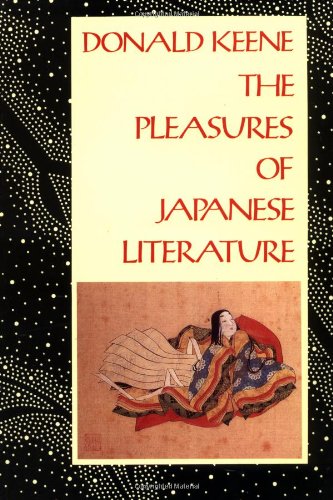
Perhaps no one is more qualified to write about Japanese culture than Donald Keene, considered the leading interpreter of that nation's literature to the Western world. The author, editor, or translator of nearly three dozen books of criticism and works of literature, Keene now offers an enjoyable and beautifully written introduction to traditional Japanese culture for the general reader. The book acquaints the reader with Japanese aesthetics, poetry, fiction, and theater, and offers Keene's appreciations of these topics. Based on lectures given at the New York Public Library, The Metropolitan Museum of Art, and the University of California, Los Angeles, the essays -though written by a renowned scholar- presuppose no knowledge of Japanese culture. Keene's deep learning, in fact, enables him to construct an overview as delightful to read as it is informative. His insights often illuminate aspects of traditional Japanese culture that endure today. One of these is the appreciation of "perishability." this appreciation os seen in countless little bits of Japanese life: in temples made of wood instead of durable materials; in the preference for objects -such as pottery- that are worn, broken, or used rather than new; and in the national love of the delicate cherry blossom, which normally falls after a brief three days of flowering. Keene quotes the fourteenth-century Buddhist monk Kenko, who wrote that "the most precious thing about life is its uncertainty." Throughout the volume, Keene demonstrates that the rich artistic and social traditions of Japan can indeed be understood by readers from our culture. This book will enlighten anyone interested in Japanese literature and culture.
http://www.amazon.com/gp/product/0231067372/?tag=2022091-20
(History)
History
http://www.amazon.com/gp/product/B0000CQT2I/?tag=2022091-20
(London 1952 1st (stated). 8vo., 246p., index. VG in VG DJ.)
London 1952 1st (stated). 8vo., 246p., index. VG in VG DJ.
http://www.amazon.com/gp/product/B000MYO9GU/?tag=2022091-20
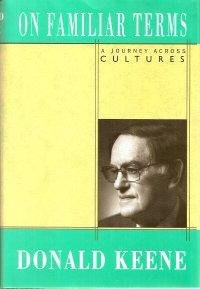
(This is the intimate and inspiring story of one of the tr...)
This is the intimate and inspiring story of one of the truly great cosmopolitans of our time. During an exceptional career spanning five decades, Donald Keene has brought the works of Japan's greatest writers to worldwide attention through his highly acclaimed writings, translations, and anthologies. On Familiar Terms is the deeply personal story of his remarkable life - from a Depression-era childhood through his wartime experiences as a naval intelligence officer in the Pacific, his early enchantment with the now-vanished world of old Kyoto, and the diverse and lasting friendships he made in New York, Japan, and England. In this poignant and engaging portrait of intellectual, spiritual, and personal growth, Donald Keene recalls his lifelong journey, including fascinating relationships with and illuminating anecdotes about such writers as Yukio Mishima, Yasunari Kawabata, Kenzaburo Oe, and Kobo Abe. This is a story of universal interest, of self-discovery among shifting cultural boundaries, and the making of a committed internationalist against the backdrop of a complex and restless world.
http://www.amazon.com/gp/product/1568360061/?tag=2022091-20
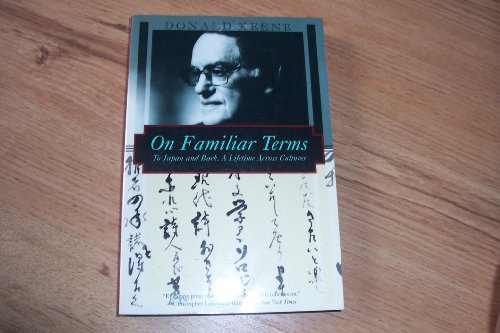
(The intimate memoirs of the renowned scholar who "discove...)
The intimate memoirs of the renowned scholar who "discovered" modern Japanese literature.
http://www.amazon.com/gp/product/1568361297/?tag=2022091-20
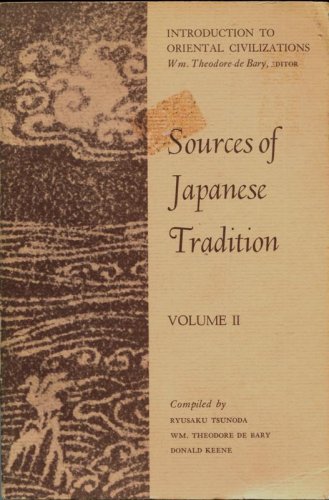
(Here, in the second volume of Sources of Japanese Traditi...)
Here, in the second volume of Sources of Japanese Tradition, the editors bring together translations that reflect Japanese thought in the world today.
http://www.amazon.com/gp/product/B0016X939E/?tag=2022091-20
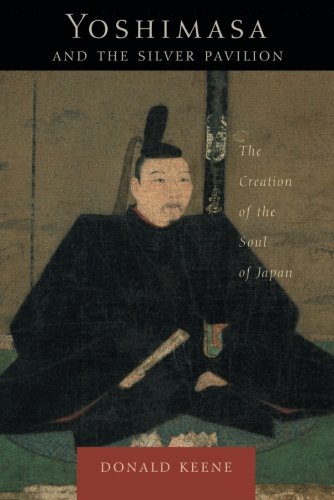
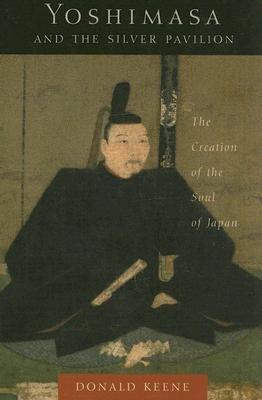
( During Yoshimasa's reign, the aesthetic taste of the Ja...)
During Yoshimasa's reign, the aesthetic taste of the Japanese was shaped: the nõ theater flourished, Japanese gardens were developed, and the tea ceremony had its origins in a small room at the Silver Pavilion. Flower arrangement, ink painting, and shoin-zukuri architecture began or became of major importance under Yoshimasa. Poets introduced their often barely literate warlord-hosts to the literary masterpieces of the past and taught them how to compose poetry. Even the most barbarous warlord came to want the trappings of culture that would enable him to feel like a civilized man. This long-neglected but critical period in Japanese history at last has the thorough treatment it deserves.
http://www.amazon.com/gp/product/0231130570/?tag=2022091-20
http://www.amazon.com/gp/product/B0021PG5UQ/?tag=2022091-20
http://www.amazon.com/gp/product/B00Y2R0WPU/?tag=2022091-20
( At once an intimate account of the diarists' lives and ...)
At once an intimate account of the diarists' lives and a testimony to the greater struggles and advances of Japanese culture, this book illuminates the hidden and largely unknown worlds of imperial courts, Buddhist monasteries, country inns, and merchants' houses.
http://www.amazon.com/gp/product/0231114370/?tag=2022091-20

( The Tokugawa family held the shogunate from 1603 to 186...)
The Tokugawa family held the shogunate from 1603 to 1867, ruling Japan and keeping the island nation isolated from the rest of the world for more than 250 years. Donald Keene looks within the "walls" of isolation and meticulously chronicles the period's vast literary output, providing both lay readers and scholars with the definitive history of premodern Japanese literature. World Within Walls spans the age in which Japanese literature began to reach a popular audience--as opposed to the elite aristocratic readers to whom it had previously been confined. Keene comprehensively treats each of the new, popular genres that arose, including haiku, Kabuki, and the witty, urbane prose of the newly ascendant merchant class.
http://www.amazon.com/gp/product/0030136261/?tag=2022091-20
http://www.amazon.com/gp/product/B00Y2R09EY/?tag=2022091-20
http://www.amazon.com/gp/product/B001AD39EU/?tag=2022091-20
http://www.amazon.com/gp/product/B0027NMMY0/?tag=2022091-20
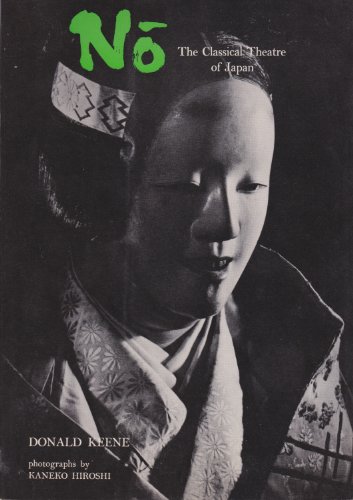
(comprehensive look at Classical Japanese theater)
comprehensive look at Classical Japanese theater
http://www.amazon.com/gp/product/0870111922/?tag=2022091-20
http://www.amazon.com/gp/product/B011DAW2C4/?tag=2022091-20
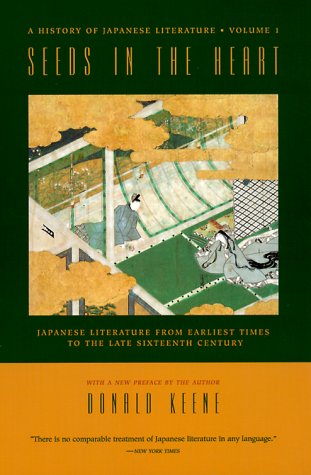
( Donald Keene employs his prodigious wealth of knowledge...)
Donald Keene employs his prodigious wealth of knowledge, critical insight, and narrative aplomb to guide readers through the first nine hundred years of Japanese literature--a period that not only defined the unique properties of Japanese prosody and prose but also produced some of its greatest works. Covering courtly fiction, Buddhist writings, war tales, diaries, poems, and more, Seeds in the Heart explores a vast and variegated treasury of writings. Detailed textual examinations of classic texts--from the Kojiki to The Tale of Genji, from The Pillow Book of Sei Shônagon to Zeami's Nô plays--allow students, lay readers, and scholars a new understanding and enjoyment of this great literature.
http://www.amazon.com/gp/product/0231114419/?tag=2022091-20
http://www.amazon.com/gp/product/B010B9R6FG/?tag=2022091-20
http://www.amazon.com/gp/product/B00Y2R0TZ8/?tag=2022091-20

http://www.amazon.com/gp/product/B011DBSRWM/?tag=2022091-20
http://www.amazon.com/gp/product/B004USMIU8/?tag=2022091-20
http://www.amazon.com/gp/product/0670523259/?tag=2022091-20
http://www.amazon.com/gp/product/B011DBJPP0/?tag=2022091-20
(Excellent condition)
Excellent condition
http://www.amazon.com/gp/product/B0000CM8IJ/?tag=2022091-20
http://www.amazon.com/gp/product/B010B9RRDW/?tag=2022091-20
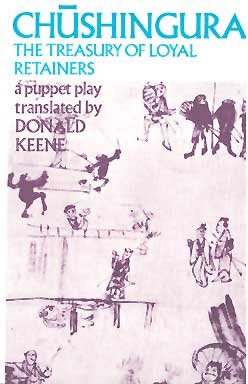
(This book is a puppet play which represents major Asian t...)
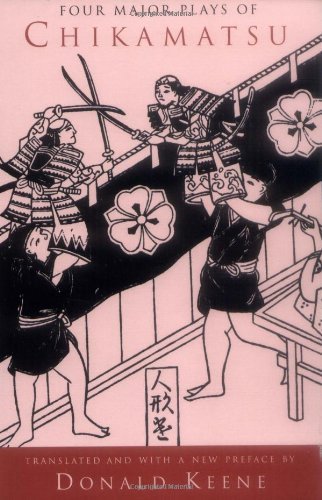
This book is a puppet play which represents major Asian traditions.
http://www.amazon.com/gp/product/B0085P38M4/?tag=2022091-20
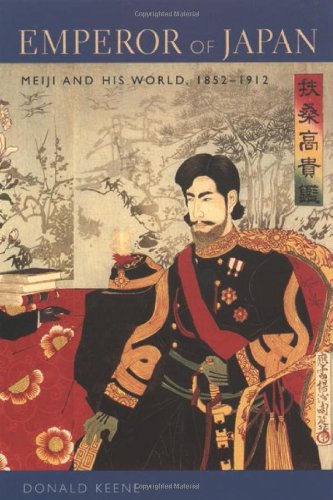
( When Emperor Meiji began his rule, in 1867, Japan was a...)
When Emperor Meiji began his rule, in 1867, Japan was a splintered empire, dominated by the shogun and the daimyos, who ruled over the country's more than 250 decentralized domains and who were, in the main, cut off from the outside world, staunchly antiforeign, and committed to the traditions of the past. Before long, the shogun surrendered to the emperor, a new constitution was adopted, and Japan emerged as a modern, industrialized state. Despite the length of his reign, little has been written about the strangely obscured figure of Meiji himself, the first emperor ever to meet a European. Most historians discuss the period that takes his name while barely mentioning the man, assuming that he had no real involvement in affairs of state. Even Japanese who believe Meiji to have been their nation's greatest ruler may have trouble recalling a single personal accomplishment that might account for such a glorious reputation. Renowned Japan scholar Donald Keene sifts the available evidence to present a rich portrait not only of Meiji but also of rapid and sometimes violent change during this pivotal period in Japan's history. In this vivid and engrossing biography, we move with the emperor through his early, traditional education; join in the formal processions that acquainted the young emperor with his country and its people; observe his behavior in court, his marriage, and his relationships with various consorts; and follow his maturation into a "Confucian" sovereign dedicated to simplicity, frugality, and hard work. Later, during Japan's wars with China and Russia, we witness Meiji's struggle to reconcile his personal commitment to peace and his nation's increasingly militarized experience of modernization. Emperor of Japan conveys in sparkling prose the complexity of the man and offers an unrivaled portrait of Japan in a period of unique interest.
http://www.amazon.com/gp/product/023112340X/?tag=2022091-20
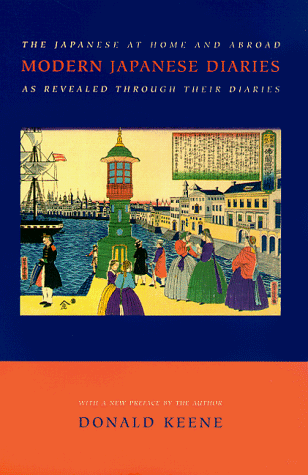
( This is a collection of journals written by Japanese me...)
This is a collection of journals written by Japanese men and women--from samurai and other government officials to novelists and poets--who journeyed to America, Europe, and China between 1860 and 1920. The diaries faithfully record personal views of the countries and their cultures and sentiments that range from delight to disillusionment. At once an intimate account of the travellers' lives and a testimony to the greater struggles and advances of their cultures, Donald Keene's eloquent translation and commentary invites the reader to partake in the world as each person experienced it.
http://www.amazon.com/gp/product/0231114435/?tag=2022091-20
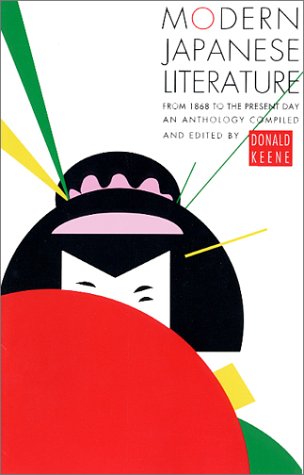
( Modern Japanese Literature is Donald Keene’s critically...)
Modern Japanese Literature is Donald Keene’s critically acclaimed companion volume to his landmark Anthology of Japanese Literature. Now considered the standard canon of modern Japanese writing translated into English, Modern Japanese Literature includes concise introductions to the writers, as well as a historical introduction by Professor Keene. Includes: Growing Up” by Ichiyo, a lyrical story of pre-adolescence in the 90s; Natsume’s story of Botchan,” an ill-starred and ineffectual Huck Finn; Nagai’s The Sumida River”; Kokomitsu’s Kafkaesque Time”; Kawabata’s The Mole”; Firefly Hunt”; a glimpse into Tanizaki’s masterpiece Thin Snow”; and the postwar work of such writers as Dazai and Mishima.
http://www.amazon.com/gp/product/0802150950/?tag=2022091-20
http://www.amazon.com/gp/product/B00HQ1FGRI/?tag=2022091-20

( When Emperor Meiji began his rule, in 1867, Japan was a...)
When Emperor Meiji began his rule, in 1867, Japan was a splintered empire, dominated by the shogun and the daimyos, who ruled over the country's more than 250 decentralized domains and who were, in the main, cut off from the outside world, staunchly antiforeign, and committed to the traditions of the past. Before long, the shogun surrendered to the emperor, a new constitution was adopted, and Japan emerged as a modern, industrialized state. Despite the length of his reign, little has been written about the strangely obscured figure of Meiji himself, the first emperor ever to meet a European. Most historians discuss the period that takes his name while barely mentioning the man, assuming that he had no real involvement in affairs of state. Even Japanese who believe Meiji to have been their nation's greatest ruler may have trouble recalling a single personal accomplishment that might account for such a glorious reputation. Renowned Japan scholar Donald Keene sifts the available evidence to present a rich portrait not only of Meiji but also of rapid and sometimes violent change during this pivotal period in Japan's history. In this vivid and engrossing biography, we move with the emperor through his early, traditional education; join in the formal processions that acquainted the young emperor with his country and its people; observe his behavior in court, his marriage, and his relationships with various consorts; and follow his maturation into a "Confucian" sovereign dedicated to simplicity, frugality, and hard work. Later, during Japan's wars with China and Russia, we witness Meiji's struggle to reconcile his personal commitment to peace and his nation's increasingly militarized experience of modernization. Emperor of Japan conveys in sparkling prose the complexity of the man and offers an unrivaled portrait of Japan in a period of unique interest.
http://www.amazon.com/gp/product/0231123418/?tag=2022091-20

( Originally published in 1952, this account of the growt...)
Originally published in 1952, this account of the growth and uses of Western learning in Japan has been enlarged by two new chapters that extend the story from 1798 to 1830. The author has incorporated the results of recent research by scholars in Japan and the West and made corrections in the text.
http://www.amazon.com/gp/product/0415588650/?tag=2022091-20
http://www.amazon.com/gp/product/B010B9RNYA/?tag=2022091-20
( This is the third book in a multivolume history of mode...)
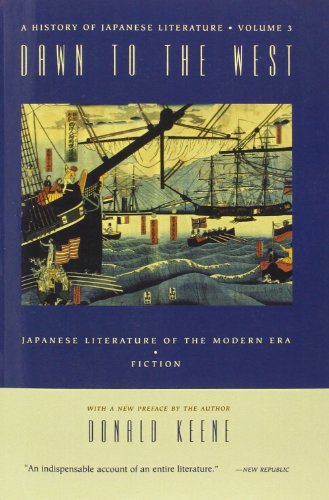
This is the third book in a multivolume history of modern Japanese literature by the world's authoritative translator and scholar of Japanese culture and literature. The Columbia paperback edition, with Donald Keene's new preface, includes an introduction, an appendix, glossary, index, and a selected list of translations into English. (New Republic)
http://www.amazon.com/gp/product/0231114354/?tag=2022091-20
language educator translator writer
Keene, Donald was born in 1922.
Bachelor, Columbia University, 1942. AM, Columbia University, 1947. Doctor of Philosophy, Columbia University, 1949.
Doctor of Letters, University Cambridge, 1978.
Lecturer Cambridge University, 1948-1953. Guest editor Asahi Shimbun, Tokyo, 1982-1992. Professor Columbia University, New York City, 1955-1992, professor emeritus, since 1992.
( A superb introduction to modern Japanese fiction as wel...)
( When Emperor Meiji began his rule, in 1867, Japan was a...)
( When Emperor Meiji began his rule, in 1867, Japan was a...)
( Donald Keene employs his prodigious wealth of knowledge...)
(At once an intimate account of the diarists' lives and a ...)
( At once an intimate account of the diarists' lives and ...)
(Three plays by one of contemporary Japan's most prominent...)
( During Yoshimasa's reign, the aesthetic taste of the Ja...)
( This is a collection of journals written by Japanese me...)
(Illuminates the wealth, themes, and character of Japanese...)
( Originally published in 1952, this account of the growt...)
( Perhaps no one is more qualified to write about Japanes...)
( This is the third book in a multivolume history of mode...)
(This is a collection of journals written by Japanese men ...)
( The Tokugawa family held the shogunate from 1603 to 186...)
( The Tokugawa family held the shogunate from 1603 to 186...)
(Here, in the second volume of Sources of Japanese Traditi...)
(Coxinga was half Chinese and half Japanese, a 17th centur...)
( Frog in the Well is a vivid and revealing account of Wa...)
( Modern Japanese Literature is Donald Keene’s critically...)
(Volume 1 of a two part survey of Japanese literature from...)
(This is the intimate and inspiring story of one of the tr...)
( This is an account of the growth and uses of Western le...)
(The intimate memoirs of the renowned scholar who "discove...)
(This book is a puppet play which represents major Asian t...)
(comprehensive look at Classical Japanese theater)
(Classic addition to your library.)
(From 1868 To The Present Day.)
(London 1952 1st (stated). 8vo., 246p., index. VG in VG DJ.)
(Excellent condition)
(History)
