

Background
Hofsommer, Donovan Lowell was born on April 10, 1938 in Fort Dodge, Iowa, United States. Son of Vernie George and Helma J. (Schager) Hofsommer.
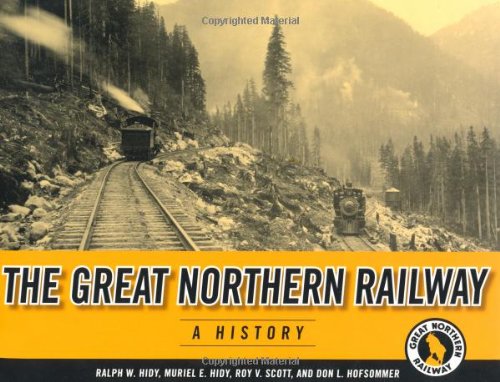
(Written by historians at Harvard Business School, Mississ...)
Written by historians at Harvard Business School, Mississippi State U., and St. Cloud State U. (Minn.), this history details the development and day- to-day affairs of this powerful business, and the careers of the main figures instrumental in its operation. This definitive work, first published by
http://www.amazon.com/gp/product/0816644292/?tag=2022091-20
(Law and Order at Caernarfon)
Law and Order at Caernarfon
http://www.amazon.com/gp/product/B00FBBTVOO/?tag=2022091-20
( "Katy Northwest will be of interest to scholars who are...)
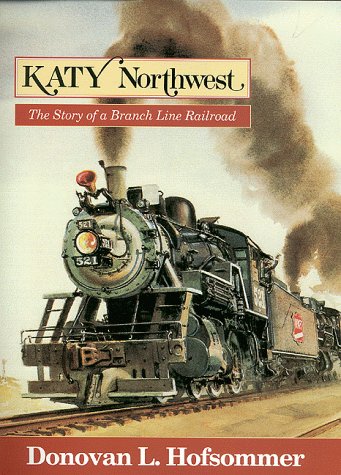
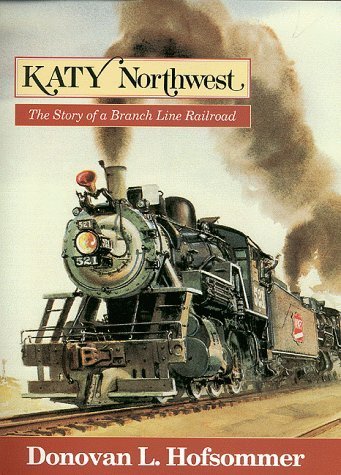
"Katy Northwest will be of interest to scholars who are concerned with the economic, social, and political ramifications... of all light railroad branch lines... Will be warmly received by rail buffs and by loyal friends of the Katy." —from the Foreword by John W. Barriger, Special Assistant, Federal Railroad Administration, and former president of the Katy "If you are coming to this book for the first time, dive in! If you're picking it up again after an absence, welcome back. The Northwest District may be gone, but it lives forever here." —Fred Finley More than just a history of a branch line railroad, this is a premiere book, with not only facts and figures, but also excellent historical writing. It details Katy Northwest's birth, maturation, and decline as well as the devastating effect of its death on the communities it served.
http://www.amazon.com/gp/product/0253336368/?tag=2022091-20
( Fearing the rapacious power of Chicago’s railroad syste...)
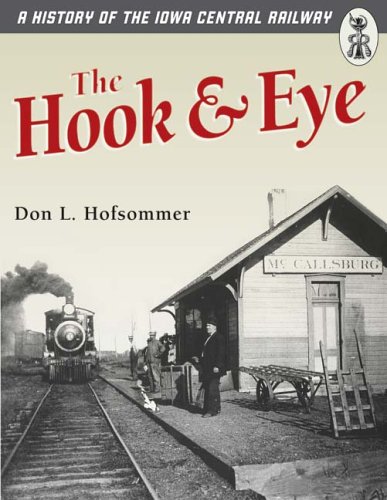
Fearing the rapacious power of Chicago’s railroad system in the mid-1900s, Iowa Central Railway supporters fought for a north-south route across the state that would link Minneapolis and St. Paul with St. Louis. Such a route would put the needs of Iowa’s citizens first and provide transportation for the state’s agricultural and industrial trade. Analyzing the origins, growth, and eventual dismantling of the Iowa Central Railway, which traversed the state from Ackley to Zearing and Mason City to Marshalltown, Don Hofsommer examines how this unremarkable, plain vanilla” railway was an example of the life cycle of the American railroad industry. The Hook & Eye demonstrates its symbiotic relationship with its customers. Born in ambition but never rising far above its obscure origins, the Iowa Central eventually fell to outside competition from railroads based in greater metropolitan areas and was made part of the Minneapolis & St. Louis Railway in 1912. Drawing the story from station records, annual reports, newspaper articles, and interviews with former employees, The Hook & Eye brings both the industry and human sides of railroading into sharp and memorable view. Don L. Hofsommer is a native Iowan and professor of history at St. Cloud State University.
http://www.amazon.com/gp/product/0816644977/?tag=2022091-20
( The Detroit, Michigan-based Grand Trunk Corporation was...)
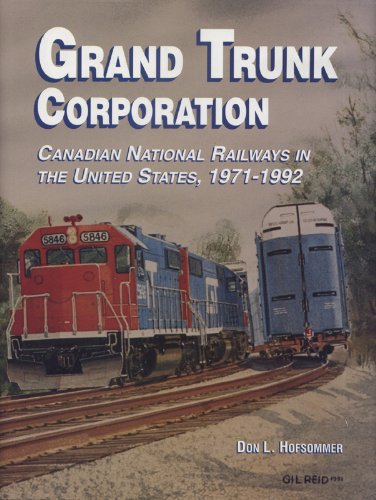
The Detroit, Michigan-based Grand Trunk Corporation was established more than two decades ago by Canadian National to oversee and maximize the potential of its railroad holdings in the United States. By making use of corporate records, oral histories, and archival material, Hofsommer uncovers the interesting and complex history of Grand Trunk from its inception in 1971 through 1992.
http://www.amazon.com/gp/product/087013406X/?tag=2022091-20
( With the recent revitalization of the Minneapolis Wareh...)
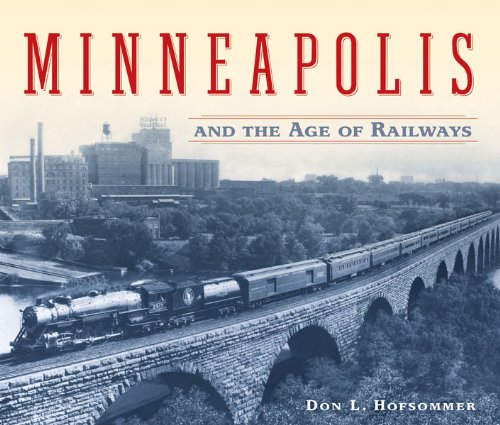
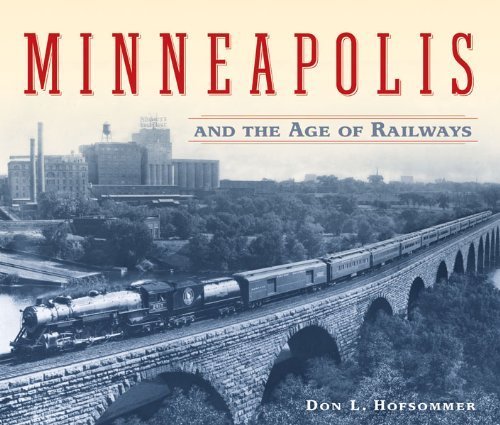
With the recent revitalization of the Minneapolis Warehouse District and the surge in construction of condominiums and other buildings near the banks of the Mississippi, the landscape of the city seems to change almost daily. Not so long ago, however, this newly desirable area was blanketed by railroads serving the lumber and flour mills and other industries powered by the enormous Falls of St. Anthony. In Minneapolis and the Age of Railways, Don Hofsommer presents Minneapolis from the 1860s into the 1950s, when railroads served as a unique link between city and countryside. Rails carried wheat and helped make Minneapolis the flour milling capital of the world; brought logs to Minneapolis to be processed into lumber that built towns and farms across the prairies; and delivered coal and all manner of manufactured goods and merchandise to Minneapolis, to its vast hinterland to the north and west, and beyond to the Rockies and the Pacific, making the growth of America’s northern heartland possible. Railroads also provided efficient, long-distance transportation for hundreds of thousands of people who traveled via Minneapolis. The Milwaukee Road and Great Northern passenger terminals in Minneapolis were vibrant places—the heart of the city—pumping passengers, mail, and express parcels into the nation’s steel-rail cardiovascular system. Illustrated with more than 200 period photographs and maps detailing the city and the tracks that crossed it, this remarkable book reflects a time not so long ago when the locomotive dominated the landscape and set the tempo for the nation—the age of railways.
http://www.amazon.com/gp/product/0816645027/?tag=2022091-20
(In "Minneapolis and the Age of Railways, "Don L. Hofsomme...)
In "Minneapolis and the Age of Railways, "Don L. Hofsommer presents Minneapolis from the 1860s into the 1950s, when railroads served as a unique link between city and countryside. Illustrated with more than 200 period photographs and maps, this remarkable book reflects a time when the locomotive dominated the landscape and set the tempo for the nation--the age of railways.
http://www.amazon.com/gp/product/B00FDVYQHY/?tag=2022091-20
http://www.amazon.com/gp/product/B0006CJ3UK/?tag=2022091-20
http://www.amazon.com/gp/product/B010EVLRXI/?tag=2022091-20
( The Iron Horse forever changed the American West, from ...)
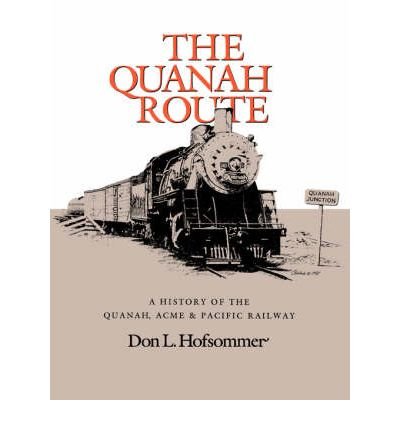
The Iron Horse forever changed the American West, from a wild frontier to a network of scattered settlements tied together by steel rails. Behind the romantic image of the galloping Iron Horse, however, lies a rich history of American business activity. Railway giants have dominated this history, but small companies such as the Quanah, Acme & Pacific Railway Company (QA&P), a short line that operated in four counties of northwestern Texas from near the turn of the century into the 1980s, had just as great an impact in their areas of operation as the giants did on the national scene. The QA&P developed in an era when railroads were tightly regulated by the Railroad Commission of Texas and the federal Interstate Commerce Commission. The in-depth historical analysis of an American short line railroad presented here is in essence the study of all such carriers in the era before deregulation. Fully illustrated with photographs and memorabilia, this volume covers the Quanah Route's birth, valiant struggle for life, and eventual demise in a changing regulatory and competitive environment. This then is a history not only of a railroad but also of its service area, particularly during one of the last great railroad construction booms, which took place in West Texas during the 1920s. Through the years of the QA&P's life, energetic men such as Sam Lazarus and Charles Sommer juggled political and financial concerns against the changing times, Lazarus making the deal by which the QA&P became a subsidiary of the St. Louis–San Francisco (Frisco) road. In the end, the "good roads movement," trucking industry, and growing American passion for the private automobile spelled the end of the railroads' golden age as the prime carrier of passengers and products. As traced by Don L. Hofsommer in the full archives of the QA&P, the history of this short line railroad embodies the pulse and pathos of a place through the changing times of the twentieth century.
http://www.amazon.com/gp/product/0890964378/?tag=2022091-20
http://www.amazon.com/gp/product/B00ZM3709O/?tag=2022091-20
(This book details the history of this major entrepreneuri...)
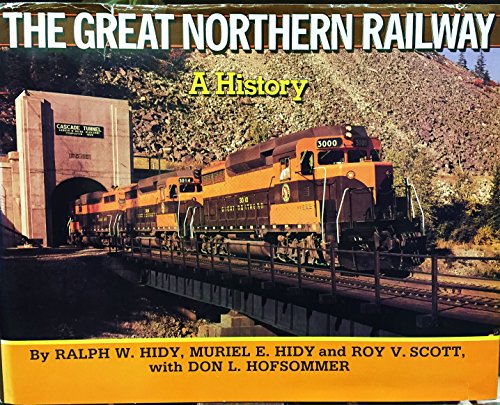
This book details the history of this major entrepreneurial enterprise from 1856, when its earliest predecessor received charter authority to 1970 when the 8,000 mile Great Northern became an integral part of the massive Burlington Northern. The authors examine the railway's early strategies and philosophy, relations with employees and vigorous campaigns to develop the service area. Informative, meticulously researched and handsomely illustrated, this book is a vibrant blend of business, railroad and regional history reflecting America's heritage.
http://www.amazon.com/gp/product/B002SFIKPC/?tag=2022091-20
Hofsommer, Donovan Lowell was born on April 10, 1938 in Fort Dodge, Iowa, United States. Son of Vernie George and Helma J. (Schager) Hofsommer.
Bachelor, University Northern Iowa, 1960. Master of Arts, University Northern Iowa, 1966. Doctor of Philosophy, Oklahoma State University, 1973.
Teacher Fairfield (Iowa) High School, 1961-1965. Instructor University Northern Iowa, Cedar Falls, 1965-1966, Lea College, Albert Lea, Minnesota, 1966-1970. Teaching assistant Oklahoma State University, Stillwater, 1970-1973.
Associate professor and department head Wayland College, Plainview, Texas, 1973-1981. Corporation historian Southern Pacific Company, San Francisco, 1981-1985. History consultant Burlington Northern Inc., Seattle, 1985-1987.
Visiting professor University Montana, Missula, 1986-1987. Executive director center Western studies Augustana College, Sioux Falls, South Dakota, 1987-1989. Professor history St. Cloud (Minnesota) State University, since 1989.
Consultant Dyanelectron and Dynarail, Pueblo, Colorado, 1979-1981, Grand Trunk Corporation, Detroit, 1988-1995. Member editorial board annals of Iowa, Iowa City, 1975-1994, R.R. history, Akron, Ohio, since 1975.
(This book details the history of this major entrepreneuri...)
( With the recent revitalization of the Minneapolis Wareh...)
( The Detroit, Michigan-based Grand Trunk Corporation was...)
( Fearing the rapacious power of Chicago’s railroad syste...)
( The Iron Horse forever changed the American West, from ...)
( The Iron Horse forever changed the American West, from ...)
( "Katy Northwest will be of interest to scholars who are...)
( "Katy Northwest will be of interest to scholars who are...)
(Written by historians at Harvard Business School, Mississ...)
(In "Minneapolis and the Age of Railways, "Don L. Hofsomme...)
(Law and Order at Caernarfon)
(Will be shipped from US. Used books may not include compa...)
With United States Army, 1960-1966. Member Oklahoma History Society (Wright Heritage award 1979), Railway and Locomotive History Society (Book award 1988, 2008, Senior Achievement award 1995), Western History Association, Organization American Historians, State History Society Iowa, American Association for State and Local History (Leadership History award 2006).
Married Sandra Louise Rusch, June 13, 1965. Children: Kathryn Anne, Kristine Beret, Knute Lars.
