

Background
Edmund M. Wheelwright was born in 1854 in Roxbury(now a part of Boston), Massachusetts, United States.
Edmund M. Wheelwright was born in 1854 in Roxbury(now a part of Boston), Massachusetts, United States.
He was graduated at Harvard in 1876. During the ensuing five years he studied architecture at Boston's "M.I.T." and the Ecole des Beaux Arts in Paris.
Upon his return to Boston he obtained a position as draftsman with the firm of Peabody & Stearns. Later he worked for McKim, Mead & White, and during a brief period with E. P. Treadwell in Albany.
In 1885 Mr. Wheelwright started practice in Boston under his own name. Five years later he joined Parkman B. Haven in partnership to organize the firm of Wheelwright & Haven, and during the nineties Edward A. Hoyt, a draftsman in the employ of the firm, became the third member of Wheelwright, Haven & Hoyt, and in the following years the partners carried on a large and successful practice.
After being appointed in 1891 to the position of City Architect, Mr. Wheelwright served in that office four years, engaged in designing a number of public schools, Hospitals, Fire Houses and Police Stations, in all of them maintaining a high standard of municipal architecture. Among the more important examples of his work was the Subway entrance on the Common at the corner of Park Street; new buildings at the Boston City Hospital, and the Hospital erected on Long Island in Boston Harbor; the Mechanics Arts High School, and buildings for the Agassiz, Andrews, Bowdoin and Cudworth Schools.
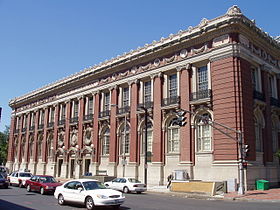
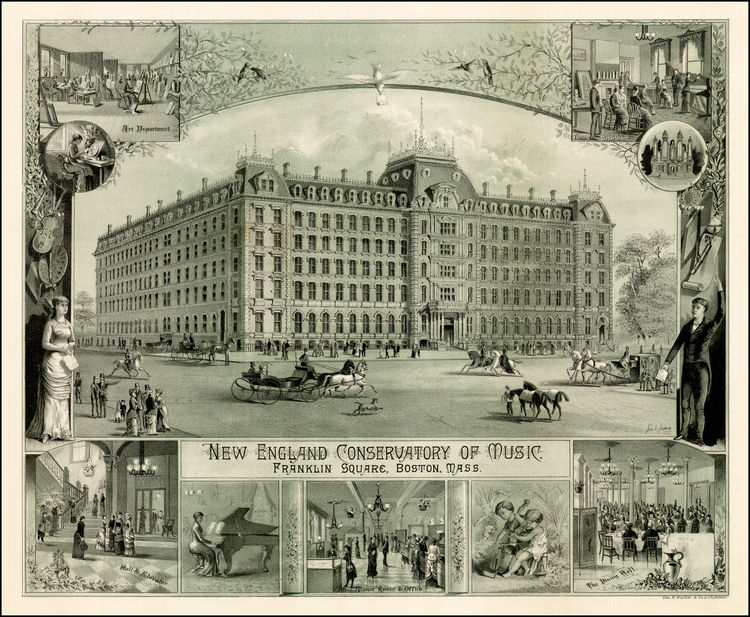
After resuming practice under the firm name he prepared plans for several noted public buildings in Boston, such as Horticulture Hall (1900); New England Conservatory of Music (1903); Jordan Hall; the new Opera House (an outstanding achievement), completed in 1908, and the State Historical Building in the Fenway. Independently Mr. Wheelwright designed many residences for prominent Bostonians, also served as Consulting Architect on a number of public projects, one of which was the Boston Museum of Fine Arts, designed by Guy Lowell. In 1900 he was appointed designer and Chief Engineer in charge of the erection of the new bridge across the Charles between Cambridge and Boston. Following its completion, he served in the same capacity on the Hartford (Conn.) Bridge, built over the course of several years at the cost of two million dollars. That was the last work in which he participated.
A prominent member of the architectural profession, Mr. Wheelwright was elected to Institute Fellowship in 1901, and served two years on the Board of Directors.
During a brief period Mr. Wheelwright worked with E. P. Treadwell in Albany.
Mr. Wheelwright joined Parkman B. Haven in partnership to organize the firm of Wheelwright & Haven.
During the nineties Edward A. Hoyt, a draftsman in the employ of the firm, became the third member of Wheelwright, Haven & Hoyt.
