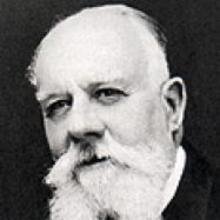
Background
Le Roy was born on June 18, 1870, in Paris. His father worked for the Compagnie Transatlantique for several years and then established his own business outfitting ships in Le Havre.


45 Rue d'Ulm, 75005 Paris, France
Le Roy studied at home under the guidance of a tutor and was admitted in 1892 to the École Normale Supérieure. He became an agrégé in 1895 and earned a doctor of science degree in 1898; his thesis attracted the attention of Henri Poincare.
45 Rue d'Ulm, 75005 Paris, France
Le Roy studied at home under the guidance of a tutor and was admitted in 1892 to the École Normale Supérieure. He became an agrégé in 1895 and earned a doctor of science degree in 1898; his thesis attracted the attention of Henri Poincare.

https://www.amazon.com/New-Philosophy-Henri-Bergson/dp/0526388277/ref=sr_1_1?dchild=1&keywords=%C3%A9douard+leroy&qid=1584784740&sr=8-1
1912

https://www.amazon.com/What-Dogma-Edouard-Roy/dp/1169037526/ref=sr_1_5?dchild=1&qid=1584784759&refinements=p_27%3AEdouard+Le+Roy&s=books&sr=1-5&text=Edouard+Le+Roy
1918

https://www.amazon.com/Les-chemins-ditalie/dp/B00859QCU0/ref=sr_1_3?dchild=1&qid=1584784759&refinements=p_27%3AEdouard+Le+Roy&s=books&sr=1-3&text=Edouard+Le+Roy
mathematician philosopher scientist
Le Roy was born on June 18, 1870, in Paris. His father worked for the Compagnie Transatlantique for several years and then established his own business outfitting ships in Le Havre.
Le Roy studied at home under the guidance of a tutor and was admitted in 1892 to the École Normale Supérieure. He became an agrégé in 1895 and earned a doctor of science degree in 1898; his thesis attracted the attention of Henri Poincare.
Until 1921 Le Roy taught mathematics classes that prepared students for the leading scientific schools. From 1924 to 1940 he was charge de conferences at the Faculty of Sciences in Paris.
Although trained as a mathematician, Le Roy's enthusiastic discovery of the "new philosophy" of Bergson, to which he devoted a book in 1912, led him to teach philosophy. Bergson appointed Le Roy his suppliant in the chair of modern philosophy at the College de France (1914-1920). Named professor in 1921, Le Roy taught there until 1941; several of his published works are transcriptions of his courses. He was elected to the Académie des Sciences Morales et Politiques in 1919, and he entered the Académie française as Bergson's successor in 1945. A Catholic and a scientist, Le Roy had, in his youth, put forth theses in the philosophy of religion and the philosophy of science that provoked lively polemics.
Although a fervent Catholic, he extended this conventionalist theory to revealed truths, which did not, according to him, withdraw any of their strength. He rejected in the domain of religious dogmas, abstract reasonings and speculative theology in favour of instinctive faith, heart and sentiment. He was one of those close to Bergson who encouraged him to turn to the study of mysticism, explored in his later works. His conventionalism led his works, charged of modernism, to be placed on the Index by the Holy See.
Le Roy's misgivings concerning religious dogmas arose because the dogmas seemed to him irreconcilable with a homogeneous system of rational knowledge. In a pragmatic and relativist conception of truth such incompatibility should not be significant. However, the criterion of truth, for Le Roy, was neither use nor coherence, but "life" itself, dynamic and self-developing. Scientific theory is useful distortion, religious teaching a source of moral action, and both are arbitrary in their choice of concepts and symbols. Genuine knowledge is a kind of self-identification with the object in its primitive reality, uncontaminated by the demands of practical need. Intuition, not discursive thought, is the instrument of such knowledge, and the criterion of truth is that one should have lived it; otherwise, according to Le Roy, one ought not to understand it. This, as L. Susan Stebbing rightly pointed out, altogether removes the criterion from rational criticism, since life is both truth and the criterion of truth.
In "Qu'est-ce qu'un dogme?" (La quinzaine, 16 Apr. 1905) Le Roy emphasized the opposition between dogma and the body of positive knowledge. Dogma, he asserted, has a negative sense: it excludes and condemns certain errors rather than determining the truth in a positive fashion. Above all a dogma has a practical sense - that is its primary value. Le Roy was thus involved in the quarrels precipitated by "modernist philosophy," which was condemned in the encyclical Pascendi by Pope Pius X in 1907, and his Le probleme de Dieu (1929) was placed on the Index in June 1931. In the philosophy of science, Le Roy had proclaimed, in articles in Revue de metaphysique et de morale (1899, 1900), that facts are less established than constituted and that, far from being received passively by the mind, they are to some extent created by it. These paradoxical statements excited a certain interest through Poincare's criticism of them in La valeur de la science (Paris, 1906, ch. 10).
While wishing to defend and justify the Bergsonian notion of creative evolution, Le Roy set forth his own philosophy of life, a "doctrine of authentically spiritualist inspiration" that sought a "restoration of finality" and respected the idea of creation. Le Roy's views were similar in many ways to those of his friend Teilhard de Chardin. According to Le Roy, there exists at the basis of life - as the major cause of its changes and progress - a psychic factor, a genuine power of invention. To recapture the activity of this factor one must consider the sole contemporary being - that is, Man - in which the power of creative evolution is still vital. Man must be observed in his capacity as inventor in order to return, by means of retrospective analogy, to the paleontological past. Biosphere and noosphere are the great moments of evolution.
Nothing is known of Le Roy's family.