

Background
Wolff, Edward Nathan was born on April 10, 1946 in Long Branch, New Jersey, United States. Son of Arthur Seymour and Ethel (Kalmenoff) Wolff.

(This text serves as a self-contained course on income dis...)
This text serves as a self-contained course on income distribution and poverty, with additional emphasis on issues of discrimination. Sections of the book revisit microeconomics and basic statistics. Also includes considerable detail on the role of labor markets as a source of income differences among individuals. The role of public policy on income/wealth inequality and poverty is also fully explored.
http://www.amazon.com/gp/product/0538845805/?tag=2022091-20

(Written by a leading scholar in the field, this textbook ...)
Written by a leading scholar in the field, this textbook provides a thorough introduction to the topic of income distribution and poverty, with additional emphasis on the issues of inequality and discrimination. Features an empirical flavor throughout and includes optional econometric studies Will appeal to a broad range of readers in various subject areas including economics, sociology, political science, and public administration International in its scope Can be used as a self-contained course on income distribution and poverty
http://www.amazon.com/gp/product/1405176601/?tag=2022091-20

http://www.amazon.com/gp/product/B010BCQP8W/?tag=2022091-20

(A vast new literature on the sources of economic growth h...)
A vast new literature on the sources of economic growth has now accumulated. This book critically reviews the most significant works in this field and summarizes what is known today about the sources of economic growth. The first part discusses the most important theoretical models that have been used in modern growth theory as well as methodological issues in productivity measurement. The second part examines the long-term record on productivity among Organisation for Economic Co-operation and Development (OECD) countries, considers the sources of growth among them with particular attention to the role of education, investigates convergence at the industry level among them, and examines the productivity slowdown of the 1970s. The third part looks at the sources of growth among non-OECD countries. Each chapter emphasizes the factors that appear to be most important in explaining growth performance.
http://www.amazon.com/gp/product/0521664411/?tag=2022091-20

http://www.amazon.com/gp/product/B010BCQWIU/?tag=2022091-20

http://www.amazon.com/gp/product/B014GFQM06/?tag=2022091-20

(This timely book explores the relationships between techn...)
This timely book explores the relationships between technological change, efficiency, productivity growth and performance. Focusing on the interplay among industries in modern economies, the essays in this volume combine pure theory and empirical applications to provide an input-output analysis of productivity growth that is both broad and in-depth. Thijs ten Raa and Edward N. Wolff lay out a conceptual framework for interrelating alternative productivity and performance measures, unifying input-output and productivity analyses and applying them to scenarios at both the national economy and industry levels. Topics discussed include growth accounting, international trade, outsourcing and productivity spillovers, labor and capital, and efficiency analysis. This fascinating volume offers some of the best work from two of the brightest and best-known minds in the field. Students, professors and researchers working in economic theory, international economics, labor economics and financial and monetary policy will find much of interest in this thoughtful and comprehensive book.
http://www.amazon.com/gp/product/1781003440/?tag=2022091-20

http://www.amazon.com/gp/product/B0087I8FPO/?tag=2022091-20

( David Dollar and Edward Wolff look at claims that a dei...)
David Dollar and Edward Wolff look at claims that a deindustrialized United States is on the road to secondrate status in the global marketplace and find them to be both unfounded and simplistic. Their systematic and empirical investigation of the mechanisms through which countries like Japan and Germany have caught up with the United States in terms of productivity and standard of living will inform public debate about which government policies are likely to improve a nation's competitiveness.Looking at productivity convergence from the industry and subindustry level, Dollar and Wolff also examine questions of the relationship of productivity growth in individual industries to convergence of overall productivity in developed countries, the identification of industries crucial for aggregate productivity growth, the sources of productivity growth within industries, the relationship between international trade and productivity convergence, and whether the same mechanics of convergence are at work in developing countries.The authors' findings reveal, among other things, that the slowness of U.S. productivity growth relative to other nations is largely due to forces pushing for convergence of aggregate productivity levels. Although other countries have been catching up with the U.S., there is no evidence that they will surpass the US. or that the U.S. has deindustrialized.Perhaps most important, Dollar and Wolff find that countries catch up by raising their productivity levels in all manufacturing industries, not by large shifts of their employment and output from low- to high-value-added sectors. The growing similarity of advanced economies in terms of overall productivity masks a continued high degree of specialization in particular industries. Today different countries are the productivity leaders in different industries. Accordingly, the authors recommend that public policy focus on institutions and policies to promote innovation in general, rather than in key industries, and on free trade rather than protectionism.David Dollar is Senior Economist at the World Bank. Edward N. Wolff is Professor of Economics at New York University.
http://www.amazon.com/gp/product/0262041359/?tag=2022091-20

(This book documents the growth of unproductive activity i...)
This book documents the growth of unproductive activity in the United States economy since World War II and its relation to the economic surplus, capital accumulation, and economic growth. Unproductive activities broadly consist of those involved in the circulation process, including wholesaling and retailing, banking and financial services, advertising, legal services, business services and many (though not all) government activities. The results indicate that the level of unproductive activity in the postwar economy has been a significant factor in the slowdown in the rate of capital accumulation, productivity growth and the overall growth rate. Here, the villain is shown to be the gradual but persistent shift of resources to unproductive activities. The consequence has been a reduction in new capital formation and productivity growth and an erosion in the rate of growth in per capita living standards. Moreover, the rise in unproductive activity is itself seen to be rooted in the logic of advanced capitalism. The forces of competition, which in the early stages of capitalism lead to rapid technical change and productivity growth, promote non-productive and even counterproductive activities in its more advanced stages.
http://www.amazon.com/gp/product/0521251516/?tag=2022091-20

(Book by Wolff, Edward N.)
Book by Wolff, Edward N.
http://www.amazon.com/gp/product/1932066012/?tag=2022091-20

(In the 1980s and early 1990s, a substantial number of U.S...)
In the 1980s and early 1990s, a substantial number of U.S. companies announced major restructuring and downsizing. But we don’t know exactly what changes in the U.S. and global economy triggered this phenomenon. Little research has been done on the underlying causes of downsizing. Did companies actually reduce the size of their workforces, or did they simply change the composition of their workforces by firing some kinds of workers and hiring others? Downsizing in America, one of the most comprehensive analyses of the subject to date, confronts all these questions, exploring three main issues: the extent to which firms actually downsized, the factors that triggered changes in firm size, and the consequences of downsizing. The authors show that much of the conventional wisdom regarding the spate of downsizing in the 1980s and 1990s is inaccurate. Nearly half of the large firms that announced major layoffs subsequently increased their workforce by more than 10 percent within 2 or 3 years. The only arena in which downsizing predominated appears to be the manufacturing sector—less than 20 percent of the U.S. workforce. Downsizing in America offers a range of compelling hypotheses to account for the adoption of downsizing as an accepted business practice. In the short run, many companies experiencing difficulties due to decreased sales, cash flow problems, or declining securities prices reduced their workforces temporarily, expanding them again when business conditions improved. The most significant trigger leading to long-term downsizing was the rapid change in technology. Companies rid themselves of their least skilled workers and subsequently hired employees who were better prepared to work with new technology, which in some sectors reduced the size of firm at which production is most efficient. Baumol, Blinder, and Wolff also reveal what they call the dirty little secret of downsizing: it is profitable in part because it holds down wages. Downsizing in America shows that reducing employee rolls increased profits, since downsizing firms spent less money on wages relative to output, but it did not increase productivity. Nor did unions impede downsizing. The authors show that unionized industries were actually more likely to downsize in order to eliminate expensive union labor. In sum, downsizing transferred income from labor to capital—from workers to owners. Downsizing in America combines an investigation of the underlying realities and causes of workforce reduction with an insightful analysis of the consequent shift in the balance of power between management and labor, to provide us with a deeper understanding of one of the major economic shifts of recent times—one with far-reaching implications for all American workers.
http://www.amazon.com/gp/product/0871540940/?tag=2022091-20

http://www.amazon.com/gp/product/B010BCQS0C/?tag=2022091-20
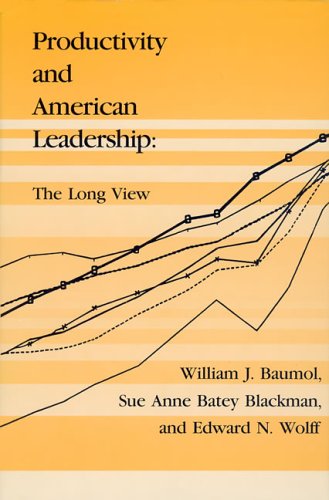
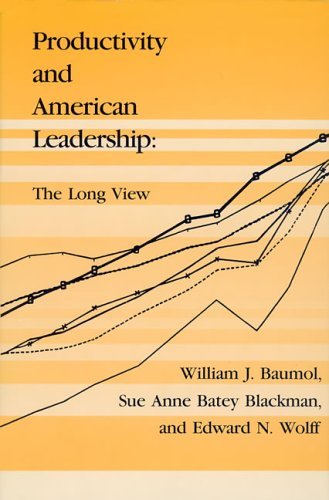
( Productivity and American Leadership examines and analy...)
Productivity and American Leadership examines and analyzes the long-run productivity performance of the United States, comparing it with that of the other industrialized nations. It shows that the U.S. record, both recent and over longer periods, is far better than is widely believed.William J. Baumol is Professor of Economics at Princeton University and New York University. Sue Anne Batey Blackman is Senior Research Assistant in the Department of Economics at Princeton University. Edward N. Wolff is Professor of Economics at New York University.
http://www.amazon.com/gp/product/0262521636/?tag=2022091-20

http://www.amazon.com/gp/product/B010BCQZKU/?tag=2022091-20

(Retirement Income: The Crucial Role of Social Security, E...)
Retirement Income: The Crucial Role of Social Security, EPI's major follow-up study to its 2002 report Retirement Insecurity, argues that a truly accurate assessment of Americans' retirement adequacy must consider all forms of wealth, including private pensions, housing, and financial assets in addition to Social Security, and how they have changed over time for different groups. This latest study finds that Social Security is more necessary than ever--not only is the program nearly universal, but its value has risen faster than other forms of retirement savings for households that need additional retirement benefits the most.
http://www.amazon.com/gp/product/1932066209/?tag=2022091-20
http://www.amazon.com/gp/product/B012YSWKGC/?tag=2022091-20
Wolff, Edward Nathan was born on April 10, 1946 in Long Branch, New Jersey, United States. Son of Arthur Seymour and Ethel (Kalmenoff) Wolff.
His 1974 Doctor of Philosophy dissertation at Yale University was entitled "Models of Production and Exchange in the Works of Adam Smith and David Ricardo".
Research associate, National Bureau Economics Research, New York City, 1974-1977; assistant professor, New York University, 1974-1979; associate professor, New York University, 1979-1984; professor, New York University, since 1984; managing editor, Review of Income and Wealth, since 1987. Consultant United Nations, 1981-1982, Committee Economics Development, New York City, 1981-1982, Institute Research Poverty, Madison, Wisconsin, 1984-1988, Institute Social Research, Ann Arbor, Michigan, 1982-1985, Jerome Levy Economics Institute, 1989-1991, 95-96, Economics Policy Institute, 1992-1995, 20th Century Fund, 1992-1993, Aspen Institute, 1993, World Bank,1994-1995.
(Retirement Income: The Crucial Role of Social Security, E...)
(Written by a leading scholar in the field, this textbook ...)
( David Dollar and Edward Wolff look at claims that a dei...)
(This book documents the growth of unproductive activity i...)
( Productivity and American Leadership examines and analy...)
(This text serves as a self-contained course on income dis...)
(This timely book explores the relationships between techn...)
(A vast new literature on the sources of economic growth h...)
(In the 1980s and early 1990s, a substantial number of U.S...)
(Book by Wolff, Edward N.)
(1994, Fourth printing. Paperback. Examines and analyzes t...)
Member American Economics Association, International Association Research Income and Wealth (county 1987-1994), International Institute Public Finance, International Input-Output Association (county since 1995), European Society Population Economists.
Married Jane Zandra Forman, November 27, 1977. Children: Spencer, Ashley.
