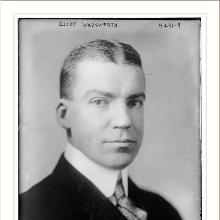
Eliot Wadsworth (1876–1959) was an American financier, engineer, and public official from Boston. He was a partner in the engineering firm Stone and Webster and served as assistant secretary of the Treasury in the 1920s. He held senior roles in the American Red Cross and Harvard University and represented American interests in international loan and relief matters.
Background
Eliot Wadsworth was born on September 10, 1876, in Boston, Massachusetts, the son of Oliver Fairfield Wadsworth and Mary Chapman Goodwin. Boston was then the leading commercial and cultural center of New England, a port city where banking, shipping, and the emerging electrical industry were expanding rapidly.
His early life in Boston preceded his schooling at Hale's School and his undergraduate studies at Harvard, which together prepared him for a career linking the city's business circles with national public service.
Education
Wadsworth attended Hale's School in Boston before entering Harvard University. Harvard, founded in 1636 in the Massachusetts Bay Colony, is the oldest institution of higher learning in the United States and was a central institution of elite American undergraduate education in the early twentieth century.
Harvard conferred on him the Bachelor of Arts degree in 1898. The university's alumni network later became one of the settings of his public career, through his service as president of the Harvard Alumni Association and on the Harvard Board of Overseers.
After graduating from Harvard, Wadsworth worked briefly for the Planters' Compress Company in East Boston. Cotton compress companies pressed loose cotton into dense bales to reduce the cost of shipping it.
He then joined the electrical engineering firm of Stone and Webster in Boston, becoming a partner in 1907. The firm was founded in 1889 as an electrical testing laboratory and consulting firm by Charles A. Stone and Edwin S. Webster, and it took the name Stone & Webster in 1893. Wadsworth retired at the end of 1916 because of pressing war work, but he remained on the board of directors.
Between 1914 and 1916 he spent considerable time in Russia and eastern Europe working for the European Relief Commission of the Rockefeller Foundation and the American Red Cross. The Rockefeller Foundation, chartered in 1913, was one of the principal American philanthropic bodies active in wartime European relief.
In 1916 he became vice-chairman of the Central Committee of the American Red Cross, a post he held until 1919. The American Red Cross was founded in 1881 by Clara Barton as the national humanitarian relief society of the United States, and his association with it continued for four decades. He served on the Central Committee from 1921 to 1942, as national treasurer from 1921 to 1926, and as chairman of the Retirement Board from 1937 to 1956. He represented the United States at Geneva in 1929 at the conference for revising the Red Cross Convention and in drafting the new Prisoners of War Convention, which followed the Geneva humanitarian law of the post-war era.
In 1919 Wadsworth became chairman of the executive committee of the Harvard Endowment Fund, helping to raise $15 million within two years. He served as president of the Harvard Alumni Association from 1920 to 1926 and sat on the Board of Overseers of Harvard for twelve years, becoming its president in 1929. The Board of Overseers is one of the two governing boards of Harvard University and oversees its academic and administrative affairs.
From 1921 to 1925, during the administrations of Warren Harding and Calvin Coolidge, Wadsworth served as assistant secretary of the Treasury. The Treasury Department, established in 1789, managed the nation's finances, and in that office he represented the United States at the 1923 Paris conference on the costs of maintaining American forces in Germany after the First World War. He also served as secretary to the World War Foreign Debt Commission from 1923 to 1925, negotiating with the British over their debt refunding agreement. The commission handled settlements of the debts that Allied governments had incurred during the war.
Wadsworth served in the Massachusetts House of Representatives from 1926 to 1932 as a representative from Boston. He chaired the Board of Commissioners of the Sinking Fund for the City of Boston from 1926 to 1929 and again from 1934 to 1940. Sinking funds were municipal reserves set aside to retire public debt.
From 1933 to 1939 he was president of the Boston Chamber of Commerce, and from 1934 to 1940 he was a director of the Chamber of Commerce of the United States. He chaired the American section of the International Chamber of Commerce from 1937 to 1945. The International Chamber of Commerce, founded in Paris in 1919, promoted business cooperation and trade across national borders.
In the fall of 1930 President Herbert Hoover sent Wadsworth to Santo Domingo to investigate conditions after a major hurricane. In 1931 Hoover appointed him chairman of the Committee on Cooperation with National Groups and Associations within the President's Organization on Unemployment Relief, an effort to address the Great Depression. In 1932 he represented American investors on the League Loans Commission in London, a body concerned with loans arranged under League of Nations auspices during the financial crisis of the early 1930s.
In the 1940s Wadsworth was treasurer and trustee of the Carnegie Endowment for International Peace, which Andrew Carnegie established in 1910. In 1950 President Harry S. Truman appointed him a member of the Loyalty Review Board of the Civil Service Commission, a post he held until 1953. The board reviewed loyalty cases within the federal employment program established in the postwar period.
As chairman of the executive committee of the Harvard Endowment Fund from 1919, he helped raise $15 million within two years for the university's endowment, a campaign that strengthened Harvard's financial resources during the post-First World War period.
His wartime relief and Red Cross activities brought him the Distinguished Service Medal from President Woodrow Wilson and decorations from the Belgian and Polish governments.
Politics
Wadsworth's public career was closely associated with the Republican Party. He served in the Massachusetts House of Representatives, was announced as the speaker at a Boston Young Men's Republican League meeting in 1931, and held federal appointments under Republican presidents Warren G. Harding, Calvin Coolidge, and Herbert Hoover.
The Republican Party of the 1920s, under Harding and Coolidge, emphasized fiscal restraint, reduced federal spending, protective tariffs, and the settlement of wartime debts. These priorities were closely related to the foreign loan and war debt work that Wadsworth carried out at the Treasury Department.
Hoover's administration relied on voluntary cooperation between government and private organizations in responding to the Great Depression, a method reflected in the committee Wadsworth chaired in 1931. Wadsworth's later service under the Democratic president Harry S. Truman, who appointed him to a federal loyalty board in 1950, shows that his federal work extended beyond a single administration.
Membership
Wadsworth's memberships centered on humanitarian, academic, and business organizations. The American Red Cross, which provided disaster relief and wartime assistance, gave him a central role in its Central Committee and its financial and retirement administration. His service on the Harvard Endowment Fund, the Harvard Alumni Association, and the Board of Overseers linked him to the university's fundraising and governance.
His business memberships reflected the growing importance of organized commerce in the 1930s. The Boston Chamber of Commerce represented the commercial interests of the city, while the Chamber of Commerce of the United States served as a national federation of business organizations. The American section of the International Chamber of Commerce connected American business with international trade cooperation. His trusteeship of the Carnegie Endowment for International Peace placed him within an organization devoted to international relations and peace.
Vice-chairman of the Central Committee; later member of the Central Committee, national treasurer, and chairman of the Retirement Board
American Red Cross
,
United States
1916 - 1956
Chairman of the Executive Committee
Harvard Endowment Fund
,
United States
1919
President
Harvard Alumni Association
,
United States
1920 - 1926
Member for twelve years; president of the board in 1929
Board of Overseers of Harvard University
,
United States
President
Boston Chamber of Commerce
,
United States
1933 - 1939
Director
Chamber of Commerce of the United States
,
United States
1934 - 1940
Chairman
American Section of the International Chamber of Commerce
,
United States
1937 - 1945
Treasurer and trustee
Carnegie Endowment for International Peace
,
United States
Connections
Wadsworth married Nancy Whitman Scull, the widow of Guy H. Scull, on July 10, 1922, and the couple had one daughter. During his years in Washington the couple kept a Boston address, and after returning to Boston they bought a Back Bay house that was remodeled to designs by the architectural firm of Bigelow and Wadsworth, in which his brother Philip Wadsworth practiced.
His sister, Lucy Wadsworth Sullivan, was the widow of Thomas Russell Sullivan. His parents were Oliver Fairfield Wadsworth and Mary Chapman Goodwin.
Father:
Oliver Fairfield Wadsworth
Mother:
Mary Chapman Goodwin
Wife:
Nancy Whitman Scull
Widow of Guy H. Scull; married Wadsworth on July 10, 1922
References
Harvard Crimson
Campus newspaper report announcing Wadsworth as the speaker at a Boston Young Men's Republican League meeting, identifying him as a former president of the Harvard Board of Overseers, a Boston representative in the Massachusetts General Court, and a former assistant secretary of the Treasury.
1931
Back Bay Houses
Architectural and ownership history of the Back Bay house the Wadsworths acquired after returning from Washington, which describes Wadsworth's associations with Stone and Webster, the American Red Cross, and the Treasury Department.