Eugene Dennis Indicts The Wall Street Conspirators
(This scarce antiquarian book is a facsimile reprint of th...)
This scarce antiquarian book is a facsimile reprint of the original. Due to its age, it may contain imperfections such as marks, notations, marginalia and flawed pages. Because we believe this work is culturally important, we have made it available as part of our commitment for protecting, preserving, and promoting the world's literature in affordable, high quality, modern editions that are true to the original work.
Eugene Dennis was an American communist politician. He was General Secretary of the Communist Party of USA from 1945 to 1959.
Background
Eugene Dennis was born Francis Xavier Waldron, Jr. , on August 10, 1905, in Seattle, Washington. He was the son of Francis Xavier Waldron and Nora Vieg. His mother was the daughter of Norwegian immigrants; his father, of Irish descent, had come to Washington around 1900, attracted by the lure of financial success. He never realized this dream, and his bitterness and economic failures influenced his son's life.
Career
Having to work to help support the family, young Waldron (he assumed the name Eugene Dennis in 1935) was attracted to labor radicalism and in 1926 joined the Communist party. Active in Communist party work in Los Angeles and head of the party's Trade Union Unity League, Dennis personally experienced the antiradicalism and bitter antiunionism of Los Angeles employers and political leaders. He was frequently arrested for leading demonstrations among the unemployed, organizing migrant farm workers and longshoremen, or recruiting members to the Communist party. Between November 29, 1929, and March 8, 1930, Dennis was arrested, released, and rearrested six times. He was eventually tried and convicted, on April 14, 1930, on the charge of attempting to riot, fined $500, and sentenced to 180 days in prison.
In June 1930, Dennis went underground rather than serve this sentence, leaving his wife Peggy and his infant son Tim and traveling to New York. In January 1931, he advised Peggy of his imminent departure for the Soviet Union, and she and Tim joined him for the move. Owing to his fugitive status, Dennis took out a passport under the name of Paul Walsh. Dennis attended the Lenin School in Moscow. He was soon assigned to the Comintern's Far Eastern Section and for the next four years was engaged in covert revolutionary activities in the Philippines, South Africa, and China.
In January 1935 the Dennises returned to the United States without their son, fearing that his fluency in Russian might attract undesired attention. Tim eventually became a Soviet citizen and a prominent Soviet Communist party official. Upon returning to the United States, Dennis was assigned as state secretary of the Wisconsin Communist party and, from 1935 to 1937, helped promote good relations with other progressive labor and political groups. Dennis next served as the United States Communist party's representative to the Comintern in 1937. He returned to the United States in January 1938 and was appointed the Communist party's national secretary for political and legislative affairs. In 1941 he again served as the United States Communist party's Comintern representative but returned after the German invasion of the Soviet Union on June 22.
With the end of World War II, and the demotion of Earl Browder as Communist party leader in April 1945, followed by Browder's expulsion, Dennis aligned with William Z. Foster and in February 1946 became the party's general secretary.
In conjunction with Foster, Dennis assumed a crucial role in the United States Communist party's adoption of an increasingly more sectarian strategy of militant radicalism and abject pro-Sovietism - a strategy, given the prevailing climate of opinion, that isolated American Communists and increased their vulnerability to efforts by the FBI, the Truman administration, and the McCarthyites to link Communism with treason.
Ironically, and inadvertently, Dennis helped to popularize the U. S. Communist party's subversive character.
Requesting the opportunity to testify in opposition to legislation that the House Committee on Un-American Activities had drafted to outlaw the Communist party, he appeared before the committee on March 26, 1947. Never permitted to read his prepared statement, Dennis was questioned instead about his personal background. Refusing to answer these questions, he was served with a subpoena and was ordered to appear on April 9. Dennis instead sent a lawyer to challenge the committee's authority. As a result, on June 27, 1947, he was sentenced to one year in prison for contempt of Congress. Before Dennis could serve his sentence, he was indicted on July 20, 1948, along with eleven other Communist party leaders, for violation of the Smith Act by conspiring, teaching, and advocating the forcible overthrow of the United States government.
The trial, which began on January 17, 1949, and lasted until October 21, 1949, posed complex procedural issues, the more so because the indictment focused on the political activities of the Communist party. Dennis' dismissal of his attorneys so that he could act as his own counsel symbolized the Communists' strategy. Rather than focusing on First Amendment principles, the defense sought to portray the various cited activities of the party leadership as intended to create a better society. These efforts to justify the party's history were frustrated by Judge Harold Medina's rulings of relevance, which the defense bitterly challenged and for which they received contempt citations after the completion of the trial. Dennis was convicted, fined $10, 000, and given a five-year prison sentence. On August 1, 1950, the United States Court of Appeals upheld this ruling, as did the United States Supreme Court on June 4, 1951, in Dennis v. United States. Dennis began serving his sentence for his contempt-of-Congress conviction on May 12, 1950, during the lengthy appeal process.
In the interim, fearing the imminence of war and "fascist" repression, the Communist leadership decided to go underground. Pursuant to this decision, five of the eleven convicted Communist leaders would not report on July 2, 1951, to begin serving their prison sentences. Dennis was to have been among them, but his inability to make an arranged contact led to his imprisonment. While in prison, Dennis maintained contact with Communist activities through personal meetings and correspondence with Peggy. Protesting the censorship of his mail, he won permission to comment on current events. Subject to the terms of his parole upon his release in March 1955, he did not resume an active leadership role in the party until 1956. By going underground the party leaders had denied themselves martyrdom for First Amendment rights and had become further isolated from the political mainstream.
The years 1956-1957, accordingly, became crucial for the party's future with Dennis' and other Communist leaders' return to active participation. International developments further complicated this internal crisis - notably, Soviet Premier Nikita Khrushchev's denunciation of Stalin's "crimes" and the "cult of personality, " and the outbreak in October 1956 of the Hungarian Revolution and its suppression by Soviet tanks. These developments deeply divided the party. In this internal conflict Dennis advocated the need for reexamination, for adopting a strategy based on the principle of "American Communism, " but also hesitated to adopt an independent line toward the Soviet Union. Ultimately he sided with William Foster's "left" faction, but his ambivalent reformism contributed to the party's further isolation and to defections of many members. Although national chairman at the time of his death in New York City, Dennis presided over a virtually defunct organization.
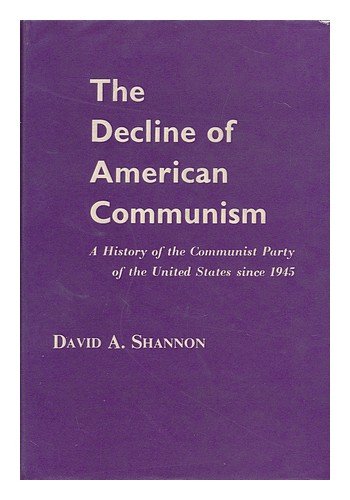
Dennis' career partially explains the decline of American Communism. Owing to his ideological and organizational identification with the Soviet Union, he was incapable of intelligently confronting the complex problems besetting American Communism during the cold war years. Instead, his personal history unwittingly served to confirm the subservience of the American Communist party to Moscow.
Achievements
Eugene Dennis is best remembered as named party in Dennis v. United States, a famous McCarthy Era Supreme Court case. He also was identified in the Venona project as being a source for Soviet intelligence during World War II.
While an instructor at a Communist summer camp in Woodland, Washington, in June 1928, Dennis met the recently married Regina (Peggy) Karasick Schneiderman. They fell in love and, upon completion of the camp session, Peggy left her husband amicably (they filed for divorce in 1936). Never legally married, Peggy and Dennis lived together until his death; they had two children.