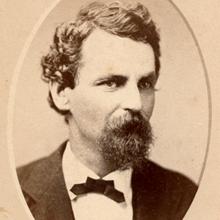
Francis entered the United States Military Academy at West Point. He was graduated in 1855, assigned to a second-lieutenancy in the artillery.
Gallery of Francis Nicholls
6823 St Charles Ave, New Orleans, LA 70118, United States
Francis studied in the law school of the University of Louisiana, now of Tulane University, but, tempted by the offer of an exceedingly large fee, he left the law school before graduation, passed his examination, and won the case.
6823 St Charles Ave, New Orleans, LA 70118, United States
Francis studied in the law school of the University of Louisiana, now of Tulane University, but, tempted by the offer of an exceedingly large fee, he left the law school before graduation, passed his examination, and won the case.
Francis Redding Tillou Nicholls was an American governor and chief justice of Louisiana. He also served in the Confederate Army during the American Civil War.
Background
Francis Redding Tillou Nicholls was born on August 20, 1834 in Donaldsonville, Louisiana, United States. He was the fifth and youngest son of Louisa Hannah Drake Nicholls and Thomas Clark Nicholls, a member of the legislature and judge of the court of appeals. He was the descendant of Edward Church Nicholls who, when disinherited for refusing to become a Roman Catholic priest, emigrated from Cornwall, England, to Maryland and later removed to Louisiana.
Education
Francis received his preparatory training at Jefferson Academy in New Orleans, and then, more by accident than because of military taste entered the United States Military Academy at West Point. He was graduated in 1855, assigned to a second-lieutenancy in the artillery.
He studied in the law school of the University of Louisiana, now of Tulane University, but, tempted by the offer of an exceedingly large fee, he left the law school before graduation, passed his examination, and won the case.
Francis Nicholls served in Florida in the Seminole campaign and then was sent to the lonely outpost of Fort Yuma, California. The resignation of his commission in 1856 may have been due to overhearing the regimental physician to predict his death unless he left that climate.
The outbreak of the Civil War found him a counselor-at-law in Napoleonville, practicing with his brother Lawrence, and already attracting attention. Although he did not favor secession when confronted with the necessity of a choice he chose to go with his state.
He entered the Confederate army as captain of a company of infantry, the Phoenix Guards, that he and a brother raised in Ascension and Assumption parishes, but was promptly chosen as lieutenant-colonel of the 8th Louisiana Regiment. Ordered to Virginia he participated in the first battle of Manassas and saw service subsequently with Taylor's brigade in northern Virginia.
In the spring of 1862, taking part in Stonewall Jackson's Valley Campaign, he fought at Front Royal and Winchester, in which latter battle he was taken prisoner and sustained a wound that cost his left arm.
By the following September, when he was exchanged, he had been commissioned colonel of the newly organized 15th Louisiana, but before he could join it he was promoted to the rank of brigadier-general.
Although he had lost one arm, he was given command of the 2nd Louisiana brigade. This command he led gallantly in the battle of Chancellorsville, where his horse was shot from under him and his left foot torn off by a shell. He was recognized in Lee's report and rewarded by Davis with the offer of a major-generalship, which he was too conscientious to accept since his days of active service at the front were ended. After his convalescence he was placed in command of the post at Lynchburg and on July 28, 1864, was made superintendent of the conscript bureau of the Trans-Mississippi Department, where he served until the close of the war.
He resumed his practice in Napoleonville until his state again demanded his fighting services, this time in the political arena, for his friends nominated for governor at the Democratic convention in 1876 "all that is left of General Nicholls." His task was to rid the state of negro and Carpet-bag rule.
When the returning-board declared his Republican opponent, Packard, elected, the grim warrior ignored the decision, established a de facto government, and was ultimately recognized by the federal authorities after a period of dual government.
When a group of city politicians obtained control of his party and succeeded in calling a constitutional convention in 1879 that reduced his term to three years, he declined to be a candidate again and took up his profession in New Orleans. It was during this period of eight years of semi-retirement from public life that he was appointed by President Cleveland to the board of visitors for West Point.
In the moral and economic crisis of 1888, while the Louisiana lottery company was bargaining for an extension of its charter by specious offers of revenue without taxation to a debt-ridden state, the people seeking a man with the requisite moral courage and political daring to lead the fight turned once more to him for their gubernatorial candidate. He was elected in the most bitter campaign of Louisiana's history and during his term of office, 1888 to 1892, succeeded in destroying the lottery. His third period of service, which covered almost the entire remainder of his life, lay in the field of jurisprudence.
In 1892 Francis accepted an appointment as chief justice of the supreme court of Louisiana for a term of twelve years. In accordance with the provision of the constitution of 1898 that the judge senior in date of appointment should hold the chief post, a change he recognized as an effort to improve the system, he became associate justice upon his reappointment in 1904 and served until 1911 when ill-health compelled his retirement. He enjoyed the unusual honor of continuing on the pay-roll.
In his nineteen years on the bench, he wrote voluminous reports, lucid and painstakingly elaborate, through which he molded Louisiana constitutional law. He spent the year after his retirement on his plantation near Thibodeaux.
Francis Redding Tillou Nicholls is known for his military service during the American Civil War, commanding the District of Lynchburg, he later led a brigade in the Chancellorsville Campaign, which led him to promotion to Brigadier General.
He also distinguished himself as a 28th Governor of Louisiana. During his tenure, a de facto government was organized, which eventually was recognized by the federal government.
Religion
Francis was a member of the Episcopal Church.
Politics
Nichols was a Democrat. During his term as a governor of Lousiana he battled political corruption, which was epitomized by Samuel James, the operator of the convict lease system, state Treasurer Edward A. Burke, and Lieutenant Governor Louis A. Wiltz, who supported the corrupt Louisiana Lottery.
Personality
One-armed and one-legged Nicholls stumped the state, inspiring courage and awakening enthusiasm.
In the public service that was thrust upon him he served his state well and gained from his fellow citizens a degree of respect rarely accorded.
Connections
Nicholls married Caroline Zilpha Guion, the daughter of George Seth Guion, on April 26, 1860. The couple had six children.