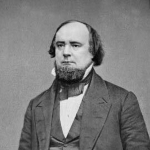
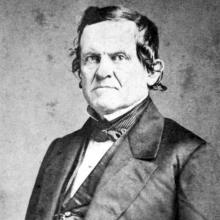
Background
Francis was born on April 7, 1805 in St. Paul's Parish, Colleton District, South Carolina, United States. He was the son of Susannah Smith Wilkinson and Governor Andrew Pickens and the grandson of Andrew Pickens.


Athens, GA 30602, United States
Francis was educated at Franklin College, Georgia, now a part of the University of Georgia.

Columbia, SC 29208, United States
Francis was educated at Franklin College, Georgia, now a part of the University of Georgia, and at the South Carolina College (University of South Carolina).
Athens, GA 30602, United States
Francis was educated at Franklin College, Georgia, now a part of the University of Georgia.
Columbia, SC 29208, United States
Francis was educated at Franklin College, Georgia, now a part of the University of Georgia, and at the South Carolina College (University of South Carolina).


https://www.amazon.com/Pickens-delivered-meeting-district-Edgefield/dp/B00480PKIA?SubscriptionId=AKIAJRRWTH346WSPOAFQ&tag=prabook-20&linkCode=sp1&camp=2025&creative=165953&creativeASIN=B00480PKIA
1851
congressman minister politician
Francis was born on April 7, 1805 in St. Paul's Parish, Colleton District, South Carolina, United States. He was the son of Susannah Smith Wilkinson and Governor Andrew Pickens and the grandson of Andrew Pickens.
Francis was educated at Franklin College, Georgia, now a part of the University of Georgia, and at the South Carolina College (University of South Carolina), withdrawing from the latter institution in 1827 while a senior because of dissatisfaction with mess hall regulations. He subsequently studied law at Edgefield under Eldred Simkins.
Francis Pickens was admitted to the bar in 1828, became Eldred Simkins' partner. Inheriting wealth from both parents and through his wife, he established near Edgefield Court House "Edgewood," a large estate with several hundred slaves. Surrounded by a large library and the luxuries of a Southern gentleman, he entertained lavishly.
While still in college he began his public career by writing a series of anonymous letters to the Charleston Mercury upholding Thomas Cooper's doctrines of state sovereignty under the pseudonym of "Sydney." In 1830 in anonymous letters to the Edgefield Carolinian under the pseudonym of "Hampden," he declared that the time had come for South Carolina to put its nullification principles in action.
In 1832 he was elected to the state legislature. There he gained distinction by replying to Jackson's nullification proclamation and by defending the right of the state to exact an oath of allegiance from its officers. To defend the state against threats of federal coercion he raised, among his Edgefield constituents, a contingent of 2, 158 men. In December 1834 he succeeded George McDuffie in Congress, where he served until March 1843.
He became a member of the state Senate. He was a leader of the South Carolina secession movement growing out of dissatisfaction with the compromise measures of 1850. He was a delegate to the Nashville Convention of June 1850, where he declared, "Equality now! Equality forever! or Independence!".
Pickens was the presiding officer of the state convention of 1852 and drew up its ordinance favoring secession. He cooperated with James L. Orr and the other National Democrats and in 1856 presided over the state convention to send delegates to the convention that nominated Buchanan. In 1857 he was defeated for the United States Senate by the extremist, James H. Hammond, and in 1859 urged that South Carolina fully participates in the National Democratic Convention of 1860.
Although he had previously refused missions to France and England, in 1858 he accepted Buchanan's proffer of the Russian mission. He served in St. Petersburg for two years without special distinction. Foreseeing a crisis in South Carolina, he resigned in the fall of 1860 and returned home.
He was nominated for governor by the conservative secessionists. The legislature, after three days of balloting, elected him, and on December 17 he began his two-year term. In his inaugural address, he averred that the North in electing Lincoln had committed "the great overt act" and that South Carolina was ready for no compromise short of secession.
Pickens clearly foresaw that the safety of South Carolina as an independent government was dependent upon the possession of the Charleston forts and immediately asked Buchanan to surrender Fort Sumter. This demand, however, was withdrawn when the governor was informed from Washington that the status of the forts would not be disturbed. Believing it a breach of the agreement with Buchanan, he was angered when Major Anderson, on December 26, concentrated his garrisons in Fort Sumter. When Anderson refused to reoccupy his former positions, the government seized the evacuated forts and the federal arsenal and strengthened the harbor batteries so as to put Sumter at their mercy in case of hostilities. He was responsible for the firing of the first guns of the war when, on January 9, Morris Island batteries prevented the passage of the Star of the West, a ship sent to relieve Sumter. When pressed by Anderson to deny responsibility for this act, he replied with a justification and sent a messenger to Washington demanding the surrender of the fort. However, on the suggestion of Southern leaders, this demand was not delivered.
He then became convinced that the fort should be immediately reduced. To forestall rash action on his part the newly created Confederate government, on February 12, took over the responsibility for all decisions relating to the forts. Alarmed over the capture of Port Royal in November 1861 and the apparent inability of the governor to provide adequately for the defense of the state, the convention that had passed the ordinance of secession erected in December 1861 an executive council composed of the governor and four others. Although the executive council was unpopular, it was not abolished until the end of his term of office in 1862.
Francis Pickens retired to his Edgefield estate, emerging in the public eye only once more to urge the state constitutional convention of 1865 to accommodate the state to President Johnson's reconstruction plans.
Francis Wilkinson Pickens was the Governor of South Carolina when that state became the first to secede from the United States. Under his administration, the state seceded and demanded the surrender of the Federal forts in Charleston harbor. His speeches on foreign relations, treasury reforms, and in favor of slavery and state rights placed him among the leaders in political life in the country. Pickens was a member of the South Carolina constitutional convention called in 1865. During the convention, Pickens introduced a motion to repeal the Ordinance of Secession.
Pickens bitterly protested against the acceptance of petitions asking the abolition of slavery in the District of Columbia and warned the South of the danger from the growth of abolitionist sentiment in 1844.
Through the study of Aristotle, Rollin, the classic orators, and the state-rights doctrines of Thomas Cooper Francis became passionately fond of the type of republicanism most acceptable in his state.
Quotations: "If we do not succeed constitutionally and peaceably I am free to confess that I am for any extreme, even 'war up to the hilt'."
Francis was proud of his ancestors, his own abilities, dogmatic in beliefs, impressive in speech, but prudent in action.
Pickens married Margaret Eliza, the daughter of Eldred Simkins. His first wife died in 1842. He then married Marion Antoinette Dearing of Georgia. After the death of his second wife, he married in 1858 Lucy Petway Holcombe, the daughter of Beverly Lafayette Holcombe, a Virginian who had emigrated to Texas. Her influence was responsible for his acceptance of the Russian mission. Beautiful and accomplished, she made a splendid appearance in the official circles of St. Petersburg and of the Confederacy.

1779-1838
1788-1810
1824-1853
1808-1842
1808-1878
1832-1899
unknown-1863
1833-1900

1836-1916
1839-1842
1846-1866
1859-1893