Background
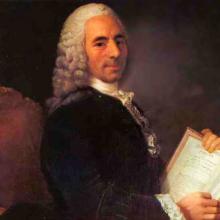
QUESNAY, François was born in 1694 in Mèrè, France.

QUESNAY, François was born in 1694 in Mèrè, France.
The founder of the physiocratic school, he did not write on economics until he was in his sixties. His two Encyclopédie articles introduced the characteristic argument that only agriculture could produce a ‘produitnet’. Despite his position close to the seat of power, he wrote articles critical of the régime, some of which were collected in A Physiocratie.
Arguing from a concept of natural laws, in effect a description of the elements of a free enterprise system, he developed a version of society in which a strong monarch regulates affairs so that the natural order of things can operate freely. Because farmers and landowners were considered the truly productive classes in the physiocratie system, there was a counterbalancing disregard for the contributions of the
merchant and industrialist. The criticism of privileged and unproductive groups, which were closely associated with the monarchy as it existed, was what made physiocracy a somewhat subversive doctrine.
His Tableau économique was first hailed by Marx, and has since come to be regarded as a crude version of input-output analysis, pointing towards general equilibrium theory. Doctor; Consulting physician to Louis XV.
Évidence
Recherches sur l'évidence des vérites geometriques
Projet de nouveaux éléments de géometrie
Maximes générales de gouvernement economique d'un royaume agricole
Tableau économique avec son explication, ou extrait des économies royales de Sully
Dialogue sur le commerce et les travaux des artisans
He was supportive of the meritocratic concept of giving scholars political power, without the cumbersome aristocracy that characterized French politics, and the importance of agriculture to the welfare of a nation. Gregory Blue writes that Quesnay "praised China as a constitutional despotism and openly advocated the adoption of Chinese institutions, including a stardardized system of taxation and universal education."