

Background
He was born on February 12, 1893 in Sedalia, Missouri, United States, the son of Louis Tecumseh Shannon, a tenant farmer, and of Sarah Margaret Sparks.

https://www.amazon.com/farmers-frontier-agriculture-1860-1897-Economic/dp/B0007EC92G?SubscriptionId=AKIAJRRWTH346WSPOAFQ&tag=prabook-20&linkCode=sp1&camp=2025&creative=165953&creativeASIN=B0007EC92G

(This is a new release of the original 1947 edition.)
This is a new release of the original 1947 edition.
https://www.amazon.com/Civil-War-Letters-Onley-Andrus/dp/1494023970?SubscriptionId=AKIAJRRWTH346WSPOAFQ&tag=prabook-20&linkCode=sp1&camp=2025&creative=165953&creativeASIN=1494023970
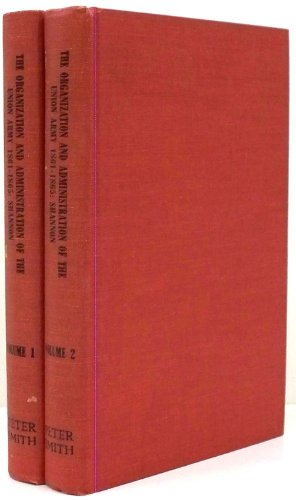
(1965 reprint of 1928 edition, in 2 volumes. Volume I, 323...)
1965 reprint of 1928 edition, in 2 volumes. Volume I, 323 pages; volume II, 348 pages.
https://www.amazon.com/Organization-Administration-Union-Army-1861-1865/dp/0685227367?SubscriptionId=AKIAJRRWTH346WSPOAFQ&tag=prabook-20&linkCode=sp1&camp=2025&creative=165953&creativeASIN=0685227367
He was born on February 12, 1893 in Sedalia, Missouri, United States, the son of Louis Tecumseh Shannon, a tenant farmer, and of Sarah Margaret Sparks.
He received a B. A. at Indiana State Teachers College in 1914 and an M. A. at Indiana University in 1918, and took his Ph. D. at the University of Iowa under Arthur Meier Schlesinger in 1924.
While a student he taught in grade school and was principal of a high school in Indiana. He began his college teaching at Iowa Wesleyan in 1919, moved to Iowa State Teachers College in 1924, and to Kansas State College of Agriculture in 1926, where he remained until 1939. In that year he joined the Department of History at the University of Illinois, where he taught until retiring in 1961.
He accepted summer appointments at Ohio State, West Virginia, Missouri, Harvard, Columbia, Wisconsin, Stanford, and South Carolina and a visiting professorship at Williams (1938 - 1939).
Shannon's first major work was The Organization and Administration of the Union Army, 1861-1865 (1928). Shannon's next work was Economic History of the People of the United States (1934). Shannon revised this text in 1940 and retitled it America's Economic Growth.
Shannon joined Henry David, Harold U. Faulkner, Louis M. Hacker, and Curtis P. Nettels in planning the nine-volume Economic History of the United States. The Farmer's Last Frontier, Agriculture, 1860-1897 (1945) was the first to appear. The Farmer's Last Frontier treats pioneering farm-making, marketing problems, credit relations, economic cycles, and the difficulties that tenants and farm workers faced.
His posthumous The Centennial Years (1967), which covered American political and economic developments from 1878 to 1895, was a synthesis of his early writings. Shannon was active in professional organizations, reading papers at meetings, serving on committees, and judging manuscripts. In 1953 he was elected president of the Mississippi Valley Historical Association.
He died in Wickenburg, Arizona.
Fred Albert Shannon was famous as the author of a two-volume book The Organization and Administration of the Union Army, 1861-1865, which covered the history of the Union Army. He won the Justin Winsor Prize of the American Historical Association and the Pulitzer Prize for History for the book in 1929. He also was an editor and contributor to the Holt, Rinehart and Winston series The Economic History of the United States.
(This is a new release of the original 1947 edition.)
(1965 reprint of 1928 edition, in 2 volumes. Volume I, 323...)
He approved of government control of trusts and government efforts to assure that the public lands should not be monopolized by capitalists at the expense of frontier farmers trying to develop their homesteads in the West.
He had little respect for the rich and wellborn in American life and delighted in scorning them and their works.
He was a member of the American Historical Association.
Shannon was a rough-hewn midwesterner who had a great fund of stories and anecdotes that, combined with his earthy humor, made him an entertaining lecturer. The logic of his analysis, his critical judgment, and his immense knowledge of bibliography were apparent in everything he wrote.
On November 26, 1914, he married Edna May Jones. They had five children.
