New York Law School. Photo: Leonora1805, CC BY-SA 3.0, via Wikimedia Commons (https://commons.wikimedia.org/wiki/File:New_York_Law_School_main_entrance.jpg)
College/University
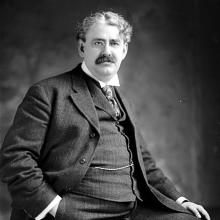
Gallery of Fred W. Mulkey (Frederick Mulkey)
University of Oregon. Photo: No machine-readable author provided. Adam850~commonswiki assumed (based on copyright claims)., Public domain, via Wikimedia Commons (https://commons.wikimedia.org/wiki/File:UofOsign.JPG)
Career
Gallery of Fred W. Mulkey (Frederick Mulkey)
United States Senate. Photo: United States Senate, Public domain, via Wikimedia Commons (https://commons.wikimedia.org/wiki/File:United_States_Senate_Floor.jpg)
New York Law School. Photo: Leonora1805, CC BY-SA 3.0, via Wikimedia Commons (https://commons.wikimedia.org/wiki/File:New_York_Law_School_main_entrance.jpg)
University of Oregon. Photo: No machine-readable author provided. Adam850~commonswiki assumed (based on copyright claims)., Public domain, via Wikimedia Commons (https://commons.wikimedia.org/wiki/File:UofOsign.JPG)
United States Senate. Photo: United States Senate, Public domain, via Wikimedia Commons (https://commons.wikimedia.org/wiki/File:United_States_Senate_Floor.jpg)
Frederick William Mulkey was an American lawyer and Republican politician from Portland, Oregon. He served twice as a United States senator, in 1907 and 1918, filling vacancies caused by the deaths of John H. Mitchell and Harry Lane. He also held municipal, taxation, and public-docks offices in Oregon.
Background
Frederick William Mulkey was born in Portland, Oregon, on January 6, 1874, to Marion Francis Mulkey and Mary Elizabeth Porter Mulkey. His paternal family belonged to the pioneer history of Oregon; his grandfather Johnson Mulkey emigrated west with his family and established a donation land claim in Benton County.
Mulkey was raised in Portland and attended the city's public schools. His father was a Portland lawyer and public official, and his uncle Joseph Norton Dolph represented Oregon in the United States Senate. This family setting connected Mulkey with the legal and political institutions of the state during the period when Portland was developing as Oregon's principal commercial center.
Education
Mulkey attended the Portland Public Schools before continuing his education at the University of Oregon in Eugene. The university, founded in 1876, was Oregon's principal public institution of higher education and served the state's developing professional and civic leadership. He graduated with a bachelor of laws degree in 1896.
He later studied at New York Law School in New York City and received a law degree in 1899. The school, founded in 1891, was an urban professional institution devoted to practical legal education during a period of rapid expansion in American legal practice. Mulkey's legal training was followed by admission to the Oregon bar in 1898 and a career in Portland law and public service.
Mulkey began his professional life in Portland legal practice after passing the Oregon bar in 1898. His legal education included the University of Oregon and New York Law School, and his work placed him within the expanding professional life of Portland at the turn of the twentieth century.
He entered the Portland City Council in 1900 and served as its president in 1901. He then chaired the Oregon State Tax Commission from 1905 to 1906, applying his legal and public-administrative experience to questions of taxation during the Progressive Era, when state governments were developing more systematic fiscal institutions.
On November 6, 1906, Mulkey was elected as a Republican to the United States Senate to fill the vacancy caused by the death of John H. Mitchell. He served from January 23 to March 3, 1907, and was among the early Oregon senators chosen through the state's direct-primary system before formal election by the legislature. He was not a candidate for reelection and returned to legal practice in Portland.
From 1911 to 1916, Mulkey chaired Portland's Commission of Public Docks. The commission had been created during a period of civic efforts to establish publicly controlled waterfront facilities and improve Portland's harbor for commerce and shipping. His role connected his public career with the city's long-term development of dock and terminal infrastructure.
Mulkey was elected to the Senate again on November 5, 1918, to fill the unexpired term of Harry Lane, who had died in 1917. He served from November 6 to December 17, 1918, when he resigned to allow Charles L. McNary to take office early and gain a seniority advantage. Mulkey then returned to Portland legal practice and chaired the Multnomah County Tax Supervising and Conservation Commission from 1921 to 1924.
Mulkey was elected to the United States Senate in 1906 under Oregon's direct-primary system, becoming one of the early senators selected through a process in which voters expressed their preference before the legislature completed the formal election required by the Constitution.
As chairman of Portland's Commission of Public Docks from 1911 to 1916, Mulkey participated in the development of publicly controlled waterfront facilities during the city's effort to improve harbor administration and commercial dock infrastructure.
In 1918, Mulkey replaced Charles L. McNary for the unexpired Senate term created by Harry Lane's death and resigned after several weeks to permit McNary to take office early and obtain a seniority advantage.
Religion
Mulkey was a Baptist. His affiliation placed him within a Protestant tradition that emphasizes the authority of Scripture, personal faith, baptism, congregational life, and the importance of Christian moral conduct.
Baptist churches in the United States encompassed a wide range of theological and organizational currents during Mulkey's lifetime, while generally emphasizing believer's baptism and the independence of local congregations. His public biography identifies the affiliation but does not document specific religious offices or practices.
Politics
Mulkey was a Republican whose political career developed during the Progressive Era, when the party included both traditional advocates of limited government and reformers concerned with taxation, public administration, and civic infrastructure.
He served in Portland municipal government, chaired the Oregon State Tax Commission, and represented Oregon in the United States Senate during two brief periods. His public work included taxation and the development of publicly controlled docks, issues associated with the era's interest in more systematic administration and public oversight.
Mulkey's first Senate election followed Oregon's direct-primary system, under which voters expressed their choice before the state legislature formally elected the senator in accordance with the constitutional procedure then in force. His second Senate term filled the vacancy created by the death of Harry Lane; he resigned in December 1918 to permit Charles L. McNary to assume the succeeding term with an early seniority advantage.
Connections
Mulkey was the son of Marion Francis Mulkey and Mary Elizabeth Porter Mulkey. His father was a Portland lawyer and public official, while his mother was from New Haven, Connecticut. Mulkey's uncle was Joseph Norton Dolph, who served as a United States senator from Oregon.
Mulkey was buried at River View Cemetery in Portland after his death on May 5, 1924.
Father:
Marion Francis Mulkey
He was a Portland lawyer and public official.
Mother:
Mary Elizabeth Porter Mulkey
She was from New Haven, Connecticut.
Uncle:
Joseph Norton Dolph
He served as a United States senator from Oregon.
References
Biographical Directory of the United States Congress, 1774–2005
Provides Mulkey's congressional biography, education, admission to the Oregon bar, municipal and state offices, two Senate terms, public-docks chairmanship, county tax commission chairmanship, death, and burial.
2005
States in the Senate: Oregon Senators
Documents Mulkey's two periods of service as a Republican senator from Oregon, including the dates of his 1907 and 1918 terms and his 1918 resignation.
History of Oregon, Volume III
Provides biographical and family context concerning Mulkey's Portland origins, the Mulkey family's migration to Oregon, his legal education, and his public career.