Background
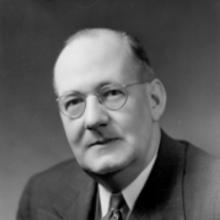
Frederick Payne was born in Lewiston, Maine, to Frederick and Nellie (née Smart) Payne.

Frederick Payne was born in Lewiston, Maine, to Frederick and Nellie (née Smart) Payne.
He studied at the Bentley School of Accounting and Finance in Boston, Massachusetts, graduating in 1925.
He previously served as the 60th from 1949 to 1953. He received his early education at public schools in his native city, graduating from Jordan High School. As a child, he worked as a newsboy, grocery clerk, theater usher, and dishwasher.
Payne then worked as a financial manager and chief disbursing officer for the Maine & New Hampshire Theaters Company, which operated 132 movie theaters in New England.
He began his political career as mayor of Augusta, serving from 1935 to 1941. In 1940, he unsuccessfully ran for the Republican nomination for, losing to state Senator Sumner Sewall.
After Sewall was elected governor, he named Payne as the state finance commissioner and budget director He resigned in 1942 in order to serve with the United States. Air Force during World World War II, reaching the rank of a lieutenant colonel.
Following his military service, he worked as manager of Waldoboro Garage Company from 1945 to 1949.
He was later re-elected in 1950, defeating Democrat Earl Grant by 61%-39%. During his tenure, he created a two-percent sales tax, expanded the Maine Development Commission, and began a long-range highway modernization program financed by a $27 million bond issue. During Payne"s second term as governor, he was accused of accepting a bribe involving the state liquor industry.
A wine bottler claimed he paid $12,000 to a Boston promotion man for the latter"s supposed influence with Payne and the state liquor chairman.
However, after testifying before a special investigating committee, Payne was cleared of all charges. In 1952, Payne was elected to the United States. Senate.
He defeated incumbent Senator Owen Brewster in the Republican primary, and went on to defeat Democrat Roger P. Dube in the general election. During the late 1950s, after a series of lurid magazine articles and Hollywood films helped to sensationalize youth gangs and violence, Payne supported legislation to ban automatic-opening or switchblade knives.
During congressional hearings, Payne suggested that he believed immigrants to be the source of gang violence: "Isn"t it true that this type of knife, switchblade knife, in its several different forms, was developed, actually, abroad, and was developed by the so-called scum, if you want to call it, or the group who are always involved in crime?" The ban on switchblade knives was eventually enacted into law as the Switchblade Knife Acting of 1958.
Senator Payne and other congressmen supporting the Switchblade Knife Acting believed that by stopping the importation and interstate sales of automatic knives (effectively halting sales of new switchblades), the law would reduce youth gang violence by blocking access to what had become a symbolic weapon. However, while switchblade imports, domestic production, and sales to lawful owners soon ended, later legislative research demonstrated that youth gang violence rates had in fact rapidly increased, as gang members turned to firearms instead of knives. Payne was soundly defeated for reelection in 1958 by the Democrat, Editor Muskie.
He died in 1978 in Waldoboro, Maine, aged 73.
A member of the Republican Party, he served as a from Maine from 1953 to 1959.