


Background
Wu Furen was born in 152. Her family migrated sometime earlier from the city of Wu (near present-day Suzhou) to Qiantang, where she lived in an extended family with her younger brother Wu Jing after their parents' death.
Wu Furen was born in 152. Her family migrated sometime earlier from the city of Wu (near present-day Suzhou) to Qiantang, where she lived in an extended family with her younger brother Wu Jing after their parents' death.
In 174 the nineteen-year-old military man Sun Jian asked for Furen Wu hand in marriage. However, her relatives were against this marriage. Lady Wu persuaded them she would take full responsibility if the marriage turned out to be a disaster. So, she finally married Sun Jian and bore him four sons and a daughter.
Sun Jian generally took his family with him as he pursued his military career, remaining always loyal to the Han dynasty. In 184, they were in Shouchun, where he assumed a high military command in the major campaigns to put down the Yellow Turban peasant rebellion. Two years later, Sun Jian was appointed to court as a gentleman-consultant and his family joined him at the northern capital of Luoyang. Lady Wu and her children then moved to Changsha Commandery, one of the key areas of the Han empire, when he was appointed grand administrator, a high-ranking position outside the capital.
In 190, however, Sun Jian led his army against the frontier general Dong Zhuo, who was attempting to usurp the authority of Han, and Lady Wu and her children were sent to live in Shu county. There, the prominent local Zhou family put them up in a large house and Lady Wu’s oldest son, Sun Ce, began his lifelong friendship with the future general Zhou Yu. Meanwhile, Sun Jian joined forces with Yuan Shu, a gentry commander loyal to Han, and in 191 captured Luoyang. He was killed in a night battle toward the end of that year but his body was eventually returned to his family and he was buried at Qu’e in Danyang Commandery (present-day Danyang District, Jiangsu Province). Lady Wu and her children moved to Jiangdu County in Guangling on the northern bank of the Yangzi, south of the present-day city of Yangzhou.
Between 194 and 199, Sun Ce embarked on a series of conquests in the Jiangdong (or Wu) region to seize territories from the local governors and warlords in the area. He left his mother and family members in Qu'e County, but later had them relocated to Liyang County and Fuling County consecutively. After Sun Ce had conquered Wu and Kuaiji commanderies, he relocated his family to Wu County, which was Lady Wu's hometown.
Sun Ce was assassinated in 200 CE by the servants of Xu Gong, a commandery administrator whom he killed earlier. He was succeeded by his younger brother, Sun Quan, who was still young when he took over the reins of power. Before her death in 202, Lady Wu summoned Zhang Zhao, Dong Xi, and others and instructed them to help Sun Quan in governing the territories in Jiangnan. She was buried at Gaoling. In 229, when Sun Quan declared himself Emperor and established the state of Eastern Wu, he granted his mother the posthumous title "Empress Wulie".
Lady Wu was known for her wisdom and shrewdness in politics.
Furen Wu was the wife of Sun Jian. She bore Sun Jian four sons and a daughter – Sun Ce, Sun Quan, Sun Yi, Sun Kuang, and Lady Sun.
Wu Jing was a military general who lived during the late Eastern Han dynasty of China.

Sun Jian was a military general and warlord who lived during the late Eastern Han dynasty of China.

was a military general and warlord who lived during the late Eastern Han dynasty of China.
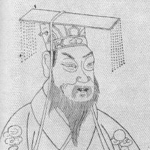
Sun Quan was the founder of the state of Eastern Wu during the Three Kingdoms period.
Sun Yi was a younger brother of Sun Quan, the founding emperor of the state of Eastern Wu in the Three Kingdoms period of China.
Sun Kuang was a younger brother of Sun Quan, a Chinese warlord who lived during the late Eastern Han dynasty and became the founding emperor of the state of Eastern Wu in the Three Kingdoms period.

Sun Ren was a Chinese noble lady who lived during the late Eastern Han dynasty.
