Background
Geula Cohen was born on December 25, 1925 in Tel Aviv to a Mizrahi Jewish family (from Yemen, Morocco, and Turkey) during the Mandate era. She was the daughter of Miriam and Yosef Cohen.

Geula Cohen

Emblem of Israel, alternative as used on the website of the Knesset of Israel.

1973
Logo of the Likud Party

1979 - 1992
Logo used during the 1992 Israeli Election by the right-wing, Tehiya Party
Logo of the Likud Party
Logo used during the 1992 Israeli Election by the right-wing, Tehiya Party
Emblem of Israel, alternative as used on the website of the Knesset of Israel.


(Ha'hitnakshut B'lord Moyne (The Assassination of Lord Moy...)
Ha'hitnakshut B'lord Moyne (The Assassination of Lord Moyne) [Geula Cohen and Anshel Shpielman].
https://www.amazon.com/Hahitnakshut-Blord-Moyne-Assassination-Lord/dp/B085NF4VB2/ref=sr_1_2?dchild=1&keywords=cohen+geula&qid=1612456491&s=books&sr=1-2

(ORIGINALLY WRITTEN IN HEBREW AND APPEARING NOW IN ENGLISH...)
ORIGINALLY WRITTEN IN HEBREW AND APPEARING NOW IN ENGLISH FOR THE FIRST TIME, WOMAN OF VIOLENCE IS AN EXTRAORDINARY WOMAN'S CONTRIBUTION TO ONE OF THE MAJOR THEMES OF THE TWENTIETH CENTURY, GEULA COHEN WAS A RANKING MEMBER OF THE NOTORIOUS STERN GANG IN ITS FIGHT AGAINST THE BRITISH FOR A FREE PALESTINE. HER MEMBERS EXPLODE WITH THE FEROCIOUS INTENSITY OF HER TERRORIST FAITH, HER INFLEXIBLE IDEALISM. WOMAN OF VIOLENCE IS NO APOLOGIA, NO EASY BALM FOR A TROUBLED CONSCIENCE, IT IS INSTEAD, AN OPEN AND INTIMATE PORTRAIT OF A WOMAN, AND THE CONDITIONS THAT DROVE HER UNDERGROUND TO EMBRACE A PHILOSOPHY OF VIOLENCE AND TERROR. DAVID BEN-GUIRON READ WOMAN OF VIOLENCE. HE WROTE TO GEULA COHEN: AT A QUARTER PAST NINE THIS MORNING, WITH BATED BREATH. I REACHED THE LAST PAGE OF YOUR STORY...I LOVED THROUGH THE EVENTS YOU RELATE AS I PERSONALLY HAD EXPERIENCED THEM.
https://www.amazon.com/Woman-violence-Memoirs-terrorist-1943-1948/dp/B0007E09NC
journalist politician publisher writer
Geula Cohen was born on December 25, 1925 in Tel Aviv to a Mizrahi Jewish family (from Yemen, Morocco, and Turkey) during the Mandate era. She was the daughter of Miriam and Yosef Cohen.
She studied at the Levinsky Teachers Seminary, and earned a master"s degree in Jewish Studies, Philosophy, Literature and Bible at the Hebrew University of Jerusalem.
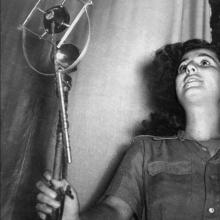
In 1942 she joined the Irgun, and moved to Lehi the following year. A radio announcer for the group, she was arrested by the British military authorities in 1946 while broadcasting in Tel Aviv.
She was also editor of the Lehi newspaper Youth Front. After Israeli independence in 1948, she contributed to Sulam, a monthly magazine published by former Lehi leader Israel Eldad.
From 1961 to 1973, she wrote for the Israeli newspaper Maariv and served on its editorial board.
In 1972, Cohen joined Menachem Begin's Herut party, then part of the Gahal alliance, and was elected to the Knesset the following year, by which time Gahal had become Likud. Between 1974 and 1992, she served as a member of Knesset, initially for Likud.
She changed her political affiliation to Tehiya in 1979.
In June 1990, following a coalition crisis, she was appointed to the cabinet as Deputy Minister of Science and Technology.
In the 1992 elections she rejoined Likud and remained active in right-wing politics.
(Ha'hitnakshut B'lord Moyne (The Assassination of Lord Moy...)
(ORIGINALLY WRITTEN IN HEBREW AND APPEARING NOW IN ENGLISH...)
Cohen opposed territorial concessions. She was a vocal critic of the Camp David Accords in 1978 and of Israel's unilateral disengagement plan from Gaza in 2005. She described herself as a "woman of violence" in the pursuit of political ends.
Cohen and Moshe Shamir left Likud in 1979 to found a new right-wing party Banai, later Tehiya-Bnai, and then Tehiya. The new party was a strong supporter of Gush Emunim and included prominent members of Israeli settlements in the West Bank and Gaza such as Hanan Porat and Elyakim Haetzni.
The new party was strongly affiliated with the extra-parliamentary movement of Gush Emunim, and included prominent members of Israeli settlements in the West Bank and Gaza such as Hanan Porat and Elyakim Haetzni.
“Until her final day she fought for to keep the homeland whole, the unity of the nation and the ingathering of the exiles, but she never, for a moment, stopped being a loving and beloved mother and grandmother,” her son Hanegbi said.
Her father immigrated to Eretz Israel from Yemen and her mother was born in Eretz Israel to a family that had arrived there in the 19th century from North Africa.
Cohen married former Lehi comrade Emanuel Hanegbi.

Tzachi Hanegbi is an Israeli politician and national security expert. A member of Likud, Hanegbi is currently Minister of Settlement Affairs and also previously served as Minister of Agriculture and Rural Development and Minister of Regional Cooperation.