

Background
Giuseppe Degli Aromatari was born on March 25, 1587, in Assisi, Italy, and was the son of Favorino Aromatari and Filogenia Paolucci.
Giuseppe degli Aromatari - G. Catanzaro, O. Ciacci, F. Santucci - Tipografia Porziuncola.
A memorial plate dedicated to Giuseppe degli Aromatari.
AROMATARI Giuseppe degli, 1587-1660.


Botanist embryologist physician scientist
Giuseppe Degli Aromatari was born on March 25, 1587, in Assisi, Italy, and was the son of Favorino Aromatari and Filogenia Paolucci.
Aromatari was brought up by his paternal uncle, Renier Aromatari, a learned and wealthy physician. He studied philosophy and medicine in Perugia, Montpellier, and Padua, where he attended Fabricius’ lectures. He graduated with his Doctor of Medicine degree in 1605 and remained at Padua until 1610.
After graduating with the M.D. degree in 1605, Aromatari remained at Padua until 1610 when he settled at Venice to practice medicine. His fame soon caused him to be requested as a personal physician by King James I of England and by Pope Urban VIII, but Aromatari declined. He died of a stone in the urinary bladder and was buried in the Church of Saint Luke in Venice.
From 1609 until 1613, he was involved in a literary debate with the poet Alessandro Tassoni over the work of Petrarch. At an advanced age, he wrote and published an anthology of passages from the classics. Aromatari is remembered today, however, for his hypothesis of the preformation of the germ. He also investigated the so-called permeability of the interventricular septum of the heart; but on this subject no writing exists.
In 1625 Aromatari published at Venice his famous Epistola de generatione plantarum ex seminibus (“Letter on the Generation of Plants from Seeds”). Addressed to a friend, Bartholomeo Nanti, the work was only four pages long, but it immediately made Aromatari famous. It was reprinted in 1626 at Frankfurt; and it was included by Richter in his Epistolae selectae in 1662, and by Junge in Opuscula botanicophysica in 1747.
In the beginning of the seventeenth century, animal generation was studied in Padua; it is possible that Aromatari was induced to study the problems of generation by reading the works of Volcher Coiter or Ulisse Aldrovandi on generation.
Aromatari was unaware of the sexuality of plants, demonstrated in 1694 by Rudolph Camerarius. Aromatari thought that a single plant, as a hermaphrodite, produced both the ova (seeds) and the semen prolificum (pollen). However, on the precise problem of embryogenesis, he first advanced the hypothesis of the preformation of the germ: “In the aforesaid seeds, the plant exists already made... the plant arises from the seed, but it is not generated in the seed; we think that likely the chick is sketched in the egg, before it is brooded by the hen.” Aromatari’s priority on the doctrine of the preformation of the germ was acknowledged by William Harvey in his De generatione animalium.
He died on July 16, 1660 in Venice, Italy.

Aromatari’s main achievement was in the development of hypothesis of germinal preformation, which became the new idea of the seventeenth century, and was developed later in the famous works of Marcello Malpighi, Jan Swammerdam, and Charles Bonnet, the greatest theorists of preformation in animal generation. Therefore, Aromatari’s Epistola marks the origin of an idea of great importance in the history of embryology.
Aromatari’s famous work titled Epistola de generatione plantarum ex seminibus published in 1625 marks the origin of an idea of great importance in the history of embryology.
Aromatari affirmed that the seeds of plants are composed of two parts: a smaller part, the germ, which contains, in miniature, all parts of the future plant; and a larger part, which is destined as nourishment for the germ and therefore comparable to the yolk of an egg. He was also explicit on two other fundamental points: he denied, absolutely, the spontaneous generation of all living species (animal and vegetable) and postulated that each living kind is born from the seed (plants) or the egg (animals) of the same kind.
When Aromatari published at Venice his famous Epistola de generatione plantarum ex seminibus in 1625, it was addressed to a friend, Bartholomeo Nanti.
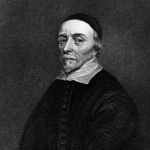
Harvey acknowledged Aromatari’s priority on the doctrine of the preformation of the germ.
