

Background
Guillermo Lorca was born on March 14, 1984, in Santiago, Chile. Guillermo Lorca was born in 1984 in Santiago, Chile. He is a son of a writer Beatriz García-Huidobro.

Guillermo Lorca. Photo by Veronica Ortiz.

Av Libertador Bernardo O'Higgins 340, Santiago, Región Metropolitana, Chile
The Pontifical Catholic University of Chile where Guillermo Lorca received a Bachelor of Arts degree in 2006.

2011
Guillermo Lorca with his work ‘Gansos’.

Guillermo Lorca in the studio.

Guillermo Lorca with his paintings in the background.

Guillermo Lorca with his large-scale canvases.

Guillermo Lorca at work in the studio

Guillermo Lorca contemplating one of his works.

Guillermo Lorca

Guillermo Lorca in his studio.

Guillermo Lorca

Guillermo Lorca with a singer Esperanza Restucci.

Av Vitacura 2680, Las Condes, Región Metropolitana, Chile
Guillermo Lorca speaking at Sala de Arte CCU in Santiago, Chile.
2011
Guillermo Lorca with his work ‘Gansos’.
Av Libertador Bernardo O'Higgins 340, Santiago, Región Metropolitana, Chile
The Pontifical Catholic University of Chile where Guillermo Lorca received a Bachelor of Arts degree in 2006.
Guillermo Lorca in the studio.
Guillermo Lorca with his paintings in the background.
Guillermo Lorca with his large-scale canvases.
Guillermo Lorca at work in the studio
Guillermo Lorca contemplating one of his works.
Guillermo Lorca
Guillermo Lorca in his studio.
Guillermo Lorca
Guillermo Lorca with a singer Esperanza Restucci.
Av Vitacura 2680, Las Condes, Región Metropolitana, Chile
Guillermo Lorca speaking at Sala de Arte CCU in Santiago, Chile.
Guillermo Lorca with a dog.
Guillermo Lorca
Guillermo Lorca

Beatriz Garcia-Huidobro, Guillermo Lorca's mother.

Matías Movillo, one of Guillermo Lorca’s mentors.
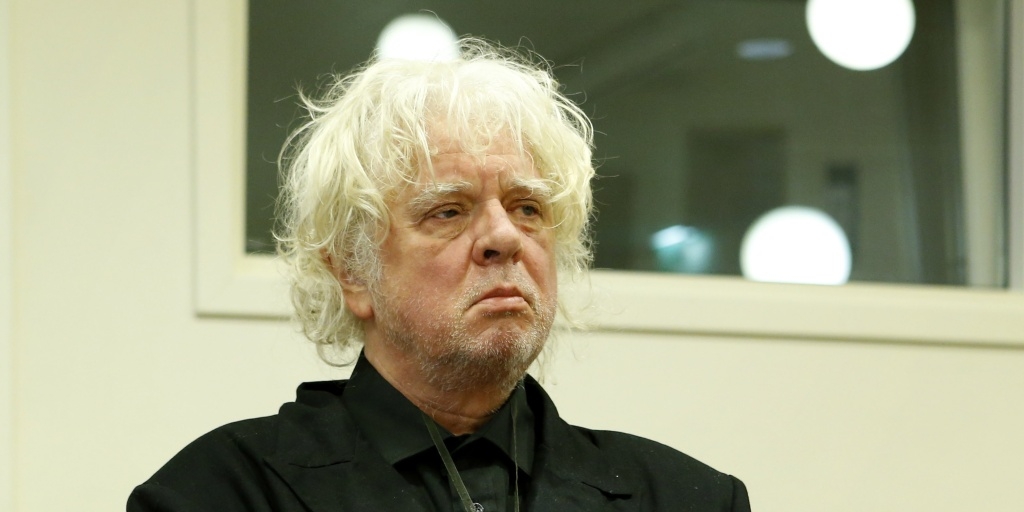


Guillermo Lorca was born on March 14, 1984, in Santiago, Chile. Guillermo Lorca was born in 1984 in Santiago, Chile. He is a son of a writer Beatriz García-Huidobro.
Guillermo Lorca started to study art in 2000 as an apprentice of a Chilean artist Sergio Montero. Three years later, he entered the Pontifical Catholic University of Chile. He graduated in 2006 with a Bachelor of Arts degree.
Lorca then learned some painting techniques from Matías Movillo who introduced his pupil to Baroque painters, including Diego Velázquez.
In 2007, Guillermo Lorca developed his artistic skills assisting a Norwegian artist Odd Nerdrum not far from Oslo.
The start of Guillermo Lorca’s career can be counted from the early 2000s when he took part in his first exhibitions. The group show at the Chilean National Fine Arts Salon (Salón Nacional de Bellas Artes) in 2002 was followed by his first solo show at Gallery Matthei, Santiago, five years later.
From the very beginning of his professional path, Lorca attacked the large-scale form of art. At the age of twenty, he produced a 40-meter mural for the Viña Tabalí in the city of Ovalle.
The second solo exhibition of his works was held at Sala de Arte CCU in Santiago. The six mural portraits by which Lorca decorated Baquedano Metro Station in Santiago can still be viewed by subway passengers.
In addition to the exhibitions in Venice, Barcelona, Vienna, Miami, and Mexico City, Guillermo Lorca has also played himself in a movie 2013 ‘Summer of the Flying Fish’ by Marcela Said.
Nowadays, Lorca lives and works in Santiago.
Guillermo Lorca is an accomplished artist who gained the affection of art critics and art amateurs in spite of being a quite young representative of figurative art.
In 2010, he was included in the list of the 100 young leading persons of Chile. Four years later, he became the youngest painter to demonstrate his artworks at the Chilean National Museum of Fine Arts.
Guillermo Lorca doesn’t consider himself as a realistic painter putting the content of his works, the story that they tell, ahead of their realistic appearance.
Quotations:
"I think that although painting cannot replicate that phenomenon exactly, my idea was to find something that had a bit of that spirit, and I found it in a realistic painting. It evokes and holds its own narrative and it tries to appeal to the most basic human feelings."
"First I think about what I’m about to paint, spontaneously I get the images of something that brings me a certain sensation, then comes the object to my mind and I always have a visual record of things that have caught my attention. I’m inspired by Contemporary Art, Internet, old masters… I start making sketches and notes on paper, and then I realize that those symbols cannot be just random, and I have to ensure that the work does not end in itself, because when something is excessively narrative, the box simply closes itself."
"It is very complicated to put together many different elements that function together as. That is a great challenge, it was my biggest one and that’s where I entertain myself."
Guillermo Lorca’s paintings were influenced by such representatives of classical art as Diego Velázquez, Rembrandt, Caravaggio, Lucian Freud, Gottfried Helnwein and Frank Auerbach. Lorca often refers to the original techniques of the great masters on his canvases.


