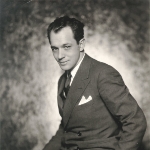
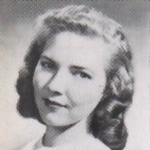
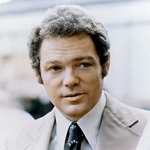
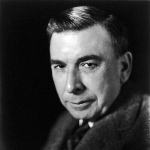
Helen Hayes, Fred Astaire and Efrem Zimbalist Jr. attend a showing of their television movie 'A Family Upside Down' at the Directors' Guild Theatre on March 28, 1978 in Los Angeles, California.
Where the Truth Lies: A Novel of Glamour and Murder in Hollywood
(Returning from New York to attend the Oscar ceremonies, b...)
Returning from New York to attend the Oscar ceremonies, beloved actress Hallie Harper finds herself at the center of a murder that takes place at the Academy Awards while millions watch the live television broadcast.
(The actress looks back on her ninety years of life, discu...)
The actress looks back on her ninety years of life, discussing her successful career as a child star, her Academy Award-winning film, and her leading men.
(Stella and Victor meet in Europe, fall deeply in love, an...)
Stella and Victor meet in Europe, fall deeply in love, and marry soon thereafter. Then they sail back to the States to meet Victor's family, and the honeymoon is over: Victor's family, dominated by his manipulative mother, finds Stella - a free spirit - pretentious and aloof. Their marriage starts to fall apart when Victor begins siding with his family instead of his wife.
(The story takes place in Scotland, where plain Maggie Wyl...)
The story takes place in Scotland, where plain Maggie Wylie's family, fearing she may become a spinster, finances young John Shand's studies in return for his agreement to marry her in five years. Recognizing his ambitions, Maggie helps to guide his career without his realizing it. He honors his commitment, even though he does not feel real love for her as she does for him. Will he succumb to the wiles of young aristocratic beauty Sybil, or learn to appreciate Maggie's true worth?
(The only person that Vanessa wants to marry is Benjamin a...)
The only person that Vanessa wants to marry is Benjamin and they are finally engaged. When a fire sweeps through her father's house, Benjie is able to save Vanessa, but he cannot save her already dead father. Since Vanessa blames him for her father's death, they separate and Benjie marries Marion, the barmaid. After realizing that she was mistaken, Vanessa finds that he is married and she then reluctantly accepts the proposal of Ellis. However, Ellis is slowly going insane and Vanessa is not told. With her married life becoming intolerable, she tries to leave Ellis, but she cannot divorce him as long as he is insane.
("Dakota" Smith (William Terry), a young soldier on a pass...)
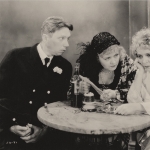
"Dakota" Smith (William Terry), a young soldier on a pass in New York City, visits the famed Stage Door Canteen, where famous stars of the theatre and movies appear and host a recreational center for servicemen during the war. Dakota meets a pretty young hostess, Eileen Burke (Cheryl Walker), and they enjoy the many entertainers and a growing romance.
(Dramatically moving and fascinating story of an American ...)
Dramatically moving and fascinating story of an American family who is faced with a crisis when the mother's favorite son becomes warped in his ideology and threatens all ideals they stand for.
(An opportunistic Russian businessman tries to pass a myst...)
An opportunistic Russian businessman tries to pass a mysterious impostor as the Grand Duchess Anastasia. But she is so convincing in her performance that even the biggest skeptics believe her.
(Various celebrities and news-media figures discuss the po...)
Various celebrities and news-media figures discuss the polarization of politics between the Western Allies of the United States and the Soviet bloc, pointing out the need for vigilance and action to protect democracy in the United States and abroad.
(Oscar winner Helen Hayes and Burt Lancaster lead an all-s...)
Oscar winner Helen Hayes and Burt Lancaster lead an all-star cast in this gripping film about the manager of an international airport who struggles to rescue a bomb-damaged jetliner.
(Major Palgrave, an idiosyncratic but charming mystery wri...)
Major Palgrave, an idiosyncratic but charming mystery writer, reveals to Miss Marple that one of the guests at a Caribbean resort they're staying at is a Bluebeard-type wife murderer.
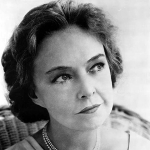
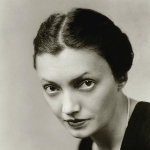
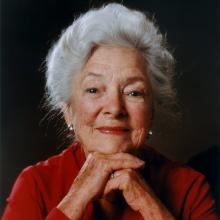
Helen Hayes was an American actress who was widely considered to be the "First Lady of the American Theatre" in tribute to her long and successful career and the dignity and generosity with which she conducted her offstage life.
Background
Ethnicity:
Hayes' mother was of Irish ancestry, while her father had English and Welsh roots.
Helen Hayes was born on October 10, 1900 in Washington, District of Columbia, United States. She was the only child of a traveling salesman, Francis van Arnum Brown, and his wife, Catherine Estelle ("Essie") Hayes, a homemaker and sometime actress.
Education
While Hayes' mother pursued her stage aspirations in repertory touring shows, Helen was brought up largely by her beloved grandmother "Graddy" Hayes, who had considerable influence on the child. She was entranced by her Irish grandmother's animated storytelling and mimicry and by the stage plays and silent films to which she was taken. She was enrolled at the age of five at the Sacred Heart Academy (which was at the Shrine of the Sacred Heart) and in Miss Minnie Hawks' dancing classes and studied subsequently at the Cook School, the John Eaton School (now John Eaton Elementary School), and in New York City at the Dominican Academy. Later in her career, the Sacred Heart nuns tutored her when she returned to Washington between New York theatrical engagements.
In 1956, Helen Hayes received an honorary Doctor of Fine Arts degree from Princeton University. She also received many other honorary degrees - from Columbia University, Brown University, New York University, and others.
After an apprenticeship with Washington's Columbia Theatre stock company, Helen Hayes Brown debuted on Broadway with actor-producer Lew Fields in the musical Dutch one month after her ninth birthday. She was an immediate sensation and continued with the show on tour. For Vitagraph Studios in New Jersey, she appeared in short silent films, which at the time were generally disdained by other Broadway performers. More roles at home with the Columbia Players and the Poli Theatre Players followed, with Helen, now appearing as "Helen Hayes," playing children and adolescents, sometimes in a new show each week. In 1917, she graduated from Sacred Heart Academy, made another film, appeared on Broadway in The Prodigal Husband, toured with that show, and opened in Rochester, New York, in the title role oí Poly anna, which she then toured with across the country. Newspaper reviews of her performances at this time were almost all ecstatically positive. More New York appearances followed, as well as a season with a new repertory company at the "Theater of Presidents" (the National Theater), three blocks from the White House. It was there that Hayes had seen her first play. Like many child actors of her time, she played male as well as female roles.
Hayes moved easily from youth roles to ingenue performances and became popular as a sweet, coquettish maiden. Estelle Hayes Brown became her daughter's full-time chaperone, coach, companion, and career guide, as Helen began formal acting lessons with several distinguished New York mentors, including Frances Duff Robinson and Constance Collier. She studied interpretive dance with Florence Fleming Noyes and - perhaps in part for its press value - took boxing lessons. As her acting developed, Hayes combined a certain studied grace with her winsome personality, her exceptional powers of observation, and her ability to bring honest emotion to the stage. An actors' strike in 1919, in which Hayes did not participate, closed most New York theaters. It was not until 1924 that an enlightened Hayes rebelled against her producers and joined the new Actor's Equity union. Over the ensuing years, she became increasingly active in support of a host of humanitarian projects, patriotic endeavors, and charities.
At the age of twenty, Hayes received her first-star billing in Bab. She then began to appear on Broadway or on tour almost every year for decades. She sparkled as the sweet yet impish darling in light romantic comedies, many tailored to her talents. Among her successes were To the Ladies (1922), We Moderns (1924), Dancing Mothers (1924), and Young Blood (1925). She next moved into classic theater, effectively in the eighteenth-century Irish-born playwright Oliver Goldsmith's She Stoops to Conquer (1924) and less successfully in the nineteenth-century Irish dramatist George Bernard Shaw's Caesar and Cleopatra. Critics found her Cleopatra to be too much of a contemporary flapper. The following year, however, Hayes appeared as Maggie Wylie in the turn-of-the-century Scottish playwright and novelist James M. Barrie's What Every Woman Knows, creating a role to which she returned frequently over the years, always with success. In 1927, she portrayed the doomed heroine of Coquette in a spectacular three-year run on Broadway and on tour. By that time, she was widely acclaimed as one of America's leading young players in both comedy and serious drama.
From the late 1920s onward, while constantly appearing in live theater, Hayes also pursued a rigorous schedule in radio as the star and eventually the producer of several series of performances. She reprised her great stage successes on the air and essayed new scripts and classical roles as well. It was for a radio show that she was dubbed the "First Lady of the American Theater," a title she bore with dignity for the next sixty years.
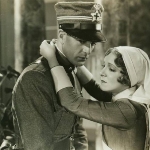
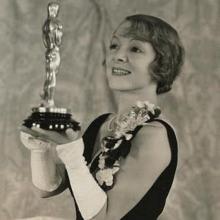
In 1931, Hayes made her screen debut in an adaptation of the melodramatic play The Lullaby, a performance which earned her the Academy Award in 1932 for best actress. In 1932, she had another film success with A Farewell to Arms, in which she played opposite Gary Cooper. The following year, she made four more films, starring opposite Ramon Navarro, Robert Montgomery, John Barrymore, and Clark Gable. She was not, however, particularly comfortable either in Hollywood or in front of the cameras, and she returned eagerly to Broadway to score a triumph in the title role in American dramatist Maxwell Anderson's Mary of Scotland in 1934. The following year, she created perhaps her greatest stage success as another queen in Victoria Regina. Numerous awards and an invitation to the White House ensued in the wake of her astounding portrait, which moved from maiden princess to elderly monarch. She reputedly played the final scenes with apple slices in her cheeks to complete the appearance of advanced age.
In 1939, Hayes appeared in Ladies and Gentlemen, a play written by her husband with Ben Hecht. As a patriotic gesture during World War II, she played Harriet Beecher Stowe in Harriet on Broadway and on tour, from 1943 to 1945. In 1947, the Antoinette Perry ("Tony") Awards were established in New York and Hayes won the first award ever given for best actress for her performance in Happy Birthday.
After the death of her husband, Hayes fulfilled an obligation to appear opposite Ingrid Bergman in the film Anastasia (1956). She continued to appear on the stage occasionally until 1971, when she made her final live theatrical appearance at Catholic University in Washington, D.C., in the American playwright Eugene O'Neill's Long Day's Journey into Night.
While Hayes's performances were her signal artistic creation, she also wrote or co-authored a number of books, including Star on Her Forehead with Mary Kennedy (1949), A Gift of Joy with Lewis Funke (1965), Twice over Nightly with Anita Loos (1972), A Gathering of Hope (1983), Our Best Years with Marion Glasserow Gladney (1984), Where the Truth Lies with Thomas Chastain (1988), and My Life in Three Acts with Katherine Hatch (1990).
During her long and remarkable career, Hayes met the demands of the melodramatic style of the early twentieth century and pleased Broadway audiences for more than fifty years. She had noteworthy award-winning successes in radio, television, and film. She maintained a public persona of impeccable repute, gave of herself unsparingly to myriad public causes, and was an inspiration through her life, her acting appearances, and her books.
She made appearances in television and films, winning an Academy Award as best supporting actress in 1971 for Airport. A Broadway theater was named for her and, when it was razed, another theater was named in her honor. Her likeness, painted by Furman Finck, was received by the National Portrait Gallery in Washington, D.C. The former Rockland County Hospital, established in 1900 in West Haverstraw, New York, was renamed the Helen Hayes Hospital in 1974 in recognition of her nearly fifty years of "voluntary support and leadership of its mission." She did more than 600 broadcasts of a radio show for senior citizens, received some thirty honorary degrees, and made countless public appearances.
Hayes was the first person to win the Triple Crown of Acting. She also received the Presidential Medal of Freedom from then-President Ronald Reagan and was awarded the National Medal of Arts. Helen was one of only thirteen people to win all four main American entertainment awards - Emmy, Grammy, Oscar and Tony Award.
In 1960, Helen received a star on the Hollywood Walk of Fame.
(A nanny rescues a top-secret microfilm hidden in a dinosaur.)
1975
Religion
Hayes had been denied communion from the Church for the duration of her marriage to Charles MacArthur because he was a divorced Protestant.
Politics
Hayes attended many Republican National Conventions.
Views
Hayes donated money to a number of organizations, including the Riverside Shakespeare Company of New York City. In 1981, she became a founding member of the company's Board of Advisors. Helen was also a member of the board of directors for the Greater New York Council of the Girl Scouts of the United States. Hayes did charity work with Helen Hayes Hospital, a physical rehabilitation hospital located in West Haverstraw, New York. She raised money for organizations, fighting asthma.
Quotations:
"We relish news of our heroes, forgetting that we are extraordinary to somebody too."
"If you rest, you rust."
"Legends die hard. They survive as truth rarely does."
"Age is not important unless you're a cheese."
"Childhood is a short season."
"The truth is that there is only one terminal dignity - love. And the story of love is not important - what is important is that one is capable of love. It is perhaps the only glimpse we are permitted of eternity."
"From your parents you learn to love and laughter and how to put one foot before the other. But when books are opened you discover that you have wings."
"The hardest years in life are those between ten and seventy."
"When traveling with someone, take a large dose of patience and tolerance with your morning coffee."
"People who refuse to rest honorably on their laurels when they reach retirement age seem very admirable to me."
"I cry out for order and find it only in art."
"Every human being on this earth is born with a tragedy, and it isn't original sin. He's born with the tragedy that he has to grow up... a lot of people don't have the courage to do it."
"Everybody starts at the top and then has the problem of staying there. Lasting accomplishment, however, is still achieved through a long, slow climb and self-discipline."
"One has to grow up with good talk in order to form the habit of it."
"I'm a boss by nature. I'm bossy. I'm not imperious, but I don't really want people to curtsy low before me and back out of rooms, but I do like to run things."
"Actors cannot choose the manner in which they are born. Consequently, it is the one gesture in their lives completely devoid of self-consciousness."
"The good die young but not always. The wicked prevail but not consistently. I am confused by life, and I feel safe within the confines of the theatre."
"I'm leaving the screen because I don't think I am very good at the pictures and I have this beautiful dream that I'm elegant on the stage."
"Only the poet can look beyond the detail and see the whole picture."
"There's a little vanity chair that Charlie gave me the first Christmas we knew each other. I'll not be parting with that, nor our bed - the four-poster - I'll be needing that to die in."
"Mere longevity is a good thing for those who watch life from the sidelines. For those who play the game, an hour may be a year, a single day's work an achievement for eternity."
"Actors work and slave and it is the color of your hair that can determine your fate in the end."
"The worst constructed play is a Bach fugue when compared to life."
"Stardom can be a gilded slavery."
Personality
Although Hayes's command of her technique and her audiences was unfailing, she claimed to have suffered from stage fright all her life. She apparently was able not only to disguise her anxiety but also to convert her nervous energy into dramatic power.
Physical Characteristics:
Hayes suffered constantly from asthma and had to be hospitalized many times. She died of congestive heart failure.
Connections
Helen Hayes met her future husband, Charles MacArthur, a playwright, in 1927. They married the next year. The couple had a daughter, Mary. She became involved in acting but died from polio at age 19. In 1938 Hayes and Charles adopted a son, James MacArthur.
After the death of Charles MacArthur in 1956, Hayes never married again.
Father:
Francis van Arnum Brown
(July 1873 - 1940)
Mother:
Catherine Estelle Hayes
(June 4, 1877 - July 1, 1953)
late spouse:
Charles MacArthur
(November 5, 1895 - April 21, 1956)
Charles MacArthur was an American playwright, screenwriter and 1935 winner of the Academy Award for Best Story.
Daughter:
Mary MacArthur
(1930 -1949)
Son:
James MacArthur
(December 8, 1937 - October 28, 2010)
James MacArthur was an American actor best known for the role of Danny "Danno" Williams, the reliable second-in-command of the fictional Hawaiian State Police squad in the long-running television series Hawaii Five-O, and for playing the juvenile lead in a series of Disney movies.
Friend:
Booth Tarkington
(July 29, 1869 - May 19, 1946)
Booth Tarkington was an American novelist and dramatist best known for his novels The Magnificent Ambersons and Alice Adams. He is one of only four novelists to win the Pulitzer Prize for Fiction more than once, along with William Faulkner, John Updike, and Colson Whitehead.
Anita Loos was an American screenwriter, playwright and author. In 1912, she became the first-ever female staff scriptwriter in Hollywood, when D. W. Griffith put her on the payroll at Triangle Film Corporation. She is best known for her 1925 comic novel, Gentlemen Prefer Blondes, as well as her 1951 Broadway adaptation of Colette's novella Gigi.
Friend:
Katharine Cornell
(February 16, 1893 - June 9, 1974)
Katharine Cornell was an American stage actress, writer, theater owner and producer.
References
Helen Hayes: First Lady of the American Theatre
The book traces the life and career of one of America's foremost stage actresses, explains how she became involved in acting, and describes her major roles.
1985
Helen Hayes: A Bio-Bibliography
This reference traces in fascinating detail the exceptionally long career of Helen Hayes, the First Lady of the American Theatre.