Background
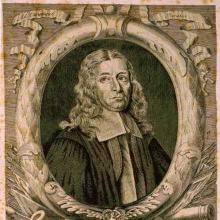
Arnaud was born on September 20, 1641 in Embrun, Hautes-Alpes, France. About 1650 his family returned to their native valley of Luserna. His parents were the Calvinist Embrun Arno and Waldenka Marguerite Gozio (Gosio).


(This scarce antiquarian book is a facsimile reprint of th...)
This scarce antiquarian book is a facsimile reprint of the original. Due to its age, it may contain imperfections such as marks, notations, marginalia and flawed pages. Because we believe this work is culturally important, we have made it available as part of our commitment for protecting, preserving, and promoting the world's literature in affordable, high quality, modern editions that are true to the original work.
http://www.amazon.com/gp/product/1167586735/?tag=2022091-20

( This is a reproduction of a book published before 1923....)
This is a reproduction of a book published before 1923. This book may have occasional imperfections such as missing or blurred pages, poor pictures, errant marks, etc. that were either part of the original artifact, or were introduced by the scanning process. We believe this work is culturally important, and despite the imperfections, have elected to bring it back into print as part of our continuing commitment to the preservation of printed works worldwide. We appreciate your understanding of the imperfections in the preservation process, and hope you enjoy this valuable book. ++++ The below data was compiled from various identification fields in the bibliographic record of this title. This data is provided as an additional tool in helping to ensure edition identification: ++++ Histoire De La Glorieuse Rentrée Des Vaudois Dans Leurs Valées, Où L'on Voit Une Troupe De Ces Gens, Qui N'a Jamais Été Jusqu'à Mile Personnes, Soutenir La Guerre Contre Le Roi De France, & Contre S.A.R. Le Duc De Savoye... Henri Arnaud
http://www.amazon.com/gp/product/1274828996/?tag=2022091-20
Arnaud was born on September 20, 1641 in Embrun, Hautes-Alpes, France. About 1650 his family returned to their native valley of Luserna. His parents were the Calvinist Embrun Arno and Waldenka Marguerite Gozio (Gosio).
Arnaud was educated at La Tour (the chief village), later visiting the college at Basel (1662 and 1668) and the Academy at Geneva (1666).
He also studied theology in Switzerland.
After studying Arnaud returned to Piedmont and established himself as pastor at Torre Pellice (1685), where he led the resistance of the Waldensians against the persecution of Protestants that was inaugurated by Duke Victor Amadeus II of Savoy.
Eventually, Arnaud returned to Switzerland, where, with help from William III of Orange, he rallied the Waldensian exiles.
In 1689, encouraged by William’s accession to the English throne, Arnaud decided on a third attempt to return to Piedmont. The exiles met with resistance, but their successful and vigorous mountain warfare impressed Victor Amadeus, who, in June 1690, made peace with the Waldenses in return for their fighting on the Savoyard side against the French during the War of the Grand Alliance.
After Savoy made peace with France (1696), however, the persecution of the Waldenses was renewed, and, in July 1698, about 3, 000 of them were forced into exile.
Arnaud then founded a Waldensian settlement at Schönenberg in Württemberg, where he introduced the cultivation of alfalfa and mulberries.
Between 1704 and 1706, during the War of the Spanish Succession, the Waldenses were again tolerated by Savoy in return for support against France, and Arnaud returned to Piedmont.
In 1707 Arnaud visited England to obtain funds for his coreligionists and then returned to Schönenberg.
It was during his retirement that he compiled from various documents by other hands his Histoire de la glorieuse rentrée des Vaudois dans leurs vallées, which was published (probably at Kassel) in 1710, with a dedication to Queen Anne. It was translated into English (1827) by H. Dyke Acland, and has also appeared in German and Dutch versions. A part of the original MS. is preserved in the Royal Library in Berlin.
He died at Schönenberg, which was the church hamlet of the parish of Durrmenz, in 1721.
Henri Arnaud was a pastor of the Waldensians in Piedmont, who turned soldier in order to rescue, and who did rescue, his co-religionists from their dispersion under the persecution of Victor Amadeus II the Duke of Savoy. When the Waldensians were exiled a second time, Arnaud accompanied them in their exile to Schönenberg, and continued to act as their pastor until his death.
In memory of Henri Arnaud, several monuments have been installed, including in Rutesåme, Dürrenmertz and Torre-Pellic.
(This scarce antiquarian book is a facsimile reprint of th...)
( This is a reproduction of a book published before 1923....)
Henri Arnaud is among the later Waldensians who had joined the Protestant Reformation in Geneva.