Background
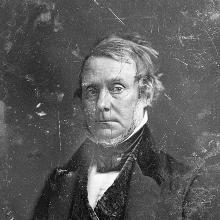
Henry Grinnell was a son of Captain Cornelius and Sylvia (Howland) Grinnell, a brother of Joseph and Moses Hicks Grinnell and father of Henry Walton Grinnell.


(Excerpt from Seasoning of Telephone and Telegraph Poles ...)
Excerpt from Seasoning of Telephone and Telegraph Poles All poles were peeled immediately after being cut and were then hauled or rafted to the seasoning yard, where they were skidded in single tiers about 2 feet above ground. About the Publisher Forgotten Books publishes hundreds of thousands of rare and classic books. Find more at www.forgottenbooks.com This book is a reproduction of an important historical work. Forgotten Books uses state-of-the-art technology to digitally reconstruct the work, preserving the original format whilst repairing imperfections present in the aged copy. In rare cases, an imperfection in the original, such as a blemish or missing page, may be replicated in our edition. We do, however, repair the vast majority of imperfections successfully; any imperfections that remain are intentionally left to preserve the state of such historical works.
https://www.amazon.com/Seasoning-Telephone-Telegraph-Classic-Reprint/dp/1390506657?SubscriptionId=AKIAJRRWTH346WSPOAFQ&tag=prabook-20&linkCode=sp1&camp=2025&creative=165953&creativeASIN=1390506657
Henry Grinnell was a son of Captain Cornelius and Sylvia (Howland) Grinnell, a brother of Joseph and Moses Hicks Grinnell and father of Henry Walton Grinnell.
Henry Grinnell obtained an excellent education at the New Bedford Academy.
In 1818 went to New York City where he became a clerk in the commission house of H. D. & E. B. Sewell. He remained in their employ for seven years, during which time he acquired an intimate knowledge of the shipping business.
Compelled by ill health to retire, Joseph Grinnell left the firm, January 1, 1829.
Robert B. Minturn took his place and some few years later the business became Grinnell, Minturn & Company.
Under the new name the scope of the firm’s operations was greatly expanded by its entry into the general shipping business, and though its policy was always extremely conservative, it gradually became one of the strongest mercantile houses in New York City.
For twenty-one years Henry Grinnell continued an active member of the firm, his high standard of commercial morality and aversion to speculative ventures being important factors in the increasing prosperity of the business, and when he retired in 1850 he was a wealthy man.
For a considerable period he now withdrew entirely from active business, but in 1859 he entered the insurance field and for a number of years was the United States manager for the Liverpool and London Insurance Company.
Grinnell’s early connection with the whaling industry had caused him to take great interest in all matters connected with the sea and more particularly the arctic regions and their exploration.
He had in consequence awaited the return of the Franklin Polar Expedition with more than ordinary anxiety, and when in 1850 over four years had passed and no tidings had been received of it, he bore the entire expense of fitting out two vessels, the Advance and Rescue, which under the command of Lieutenant De Haven, sailed from New York in May of that year in search of the lost explorer.
Undaunted by this failure, in 1853 Grinnell placed the Advance at the disposition of Elisha Kent Kane, for a second search, contributing assistance in other respects to Kane.
On later occasions Grinnell manifested his unabated interest in polar explorations, contributing munificently to the voyage of Isaac I. Hayes to Ellesmere and Grinnell Lands in 1860 and to the Polaris venture of Charles F. Hall.
(Excerpt from Seasoning of Telephone and Telegraph Poles ...)
He was a member of the American Geographical and Statistical Society.
He was married to Sarah Minturn.