(This book was originally published prior to 1923, and rep...)
This book was originally published prior to 1923, and represents a reproduction of an important historical work, maintaining the same format as the original work. While some publishers have opted to apply OCR (optical character recognition) technology to the process, we believe this leads to sub-optimal results (frequent typographical errors, strange characters and confusing formatting) and does not adequately preserve the historical character of the original artifact. We believe this work is culturally important in its original archival form. While we strive to adequately clean and digitally enhance the original work, there are occasionally instances where imperfections such as blurred or missing pages, poor pictures or errant marks may have been introduced due to either the quality of the original work or the scanning process itself. Despite these occasional imperfections, we have brought it back into print as part of our ongoing global book preservation commitment, providing customers with access to the best possible historical reprints. We appreciate your understanding of these occasional imperfections, and sincerely hope you enjoy seeing the book in a format as close as possible to that intended by the original publisher.
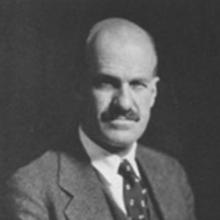
Herbert Eustis Winlock was an American Egyptologist and museum director.
Background
Herbert E. Winlock was born February 1, 1884, in Washington, D. C. , the oldest of two sons and one daughter of William Crawford Winlock and Alice Broom Monroe, and a grandson of Joseph Winlock, first director of the Harvard College Observatory. His father, also an astronomer, served at the Naval Observatory in Washington and later as assistant secretary of the Smithsonian Institution; he died when Herbert was twelve. Through boyhood visits to the Smithsonian, Herbert developed an abiding fascination with Egyptian mummies and artifacts.
Education
He attended Western High School in Washington and then entered Harvard, where he received the B. A. degree in 1906 with "great distinction" in archaeology and anthropology.
Career
That fall, at the invitation of Albert M. Lythgoe, his former archaeology professor, who had just been named the first curator of Egyptian art at the Metropolitan Museum of Art in New York City, Winlock joined the museum staff as part of its Egyptian expedition. He was to remain with the museum for the rest of his professional career, becoming assistant curator of Egyptian art (1909 - 1922), associate curator (1922 - 1929), and curator (1929 - 1939). Until 1932 — save for service in the army during World War I — Winlock spent the major part of his time excavating in Egypt.
After 1919 he gradually took over the direction of this work and officially became director in 1928. Although he excavated at several sites, including the oasis of Khargeh and el Lisht, south of Memphis, the most important site was the area of Deir el Bahri on the western side of Thebes. Here the museum established its headquarters. Two of Winlock's findings cast fresh light on the ordinary citizen and the daily life of ancient Egypt.
By thoroughly excavating (1919 - 1920) a previously explored 11th Dynasty tomb, that of Meket-Re, an official of King Mentuhotep II, he uncovered a set of painted wooden models of boats and workshops -"spirit models" designed to provide service in the afterlife. These models realistically portrayed clerks, farmers, and craftsmen at their work. At his summer home in North Haven, Maine, Winlock reconstructed one of the boats to its original scale and managed to sail in it.
In another tomb of the same period a cache of papyri was found (1921 - 1922), later designated the Heka-nakhte papers, which proved to be family letters. They gave a rare picture of a tenant farmer's relations with his sons, and the personality of the querulous old man seemed to come alive.
One of Winlock's major contributions was the excavation of the royal tombs at Thebes of the periods preceding and following the Middle Kingdom. Working from ancient accounts of the tomb robberies, he largely reconstructed the succession of the rulers of these times and identified the remains of their monuments. So adept was he at analysis that when he unearthed the burial place of a group of soldiers, he determined from the angle of their wounds that they had died storming a fortress, and suggested the specific battle involved.
In 1923 Winlock began excavating along the causeway leading to the Nile River from the famous temple of Queen Hatshepsut in Thebes. Here he discovered numerous fragments of statues of the queen, which had been smashed by her stepson and successor, Thutmose III, and cast out of the temple. After several years of painstaking research, Winlock reconstructed many of the pieces, and in some cases was able to unite them with previously discovered fragments in various museums. The particular qualities Winlock brought to his archaeological work were a keen and imaginative power of analysis that led him to discoveries other excavators had missed, and the ability to bring his findings vividly to life in his annual reports, monographs, and scholarly articles.
The objects found by his own expedition were, of course, major additions, but Winlock also brought to the collection, with the aid of loyal benefactors, important gifts, bequests, and purchases. Through contributions by Henry Walters and the Rogers Fund of the museum, the museum purchased in 1916, the Treasure of Lahun, a magnificent set of jewelry of the 12th Dynasty, an acquisition initiated by Lythgoe from Sir Flinders Petrie's excavations for the Egypt Exploration Society. The chief additions, however, were the collection of the noted British patron of archaeology, Lord Carnarvon, acquired with the aid of Edward S. Harkness, and the jewelry of three princesses of the reign of King Thutmose III of the 18th Dynasty.
In 1932 Winlock was named director of the Metropolitan Museum, a post he held concurrently with his Egyptian curatorship. Despite economic cutbacks caused by the depression, his tenure was marked by a significant expansion of the museum's holdings of American art, and by the opening in 1938 of The Cloisters, a museum to house the collection of medieval art assembled by the sculptor George Gray Barnard.
Winlock suffered a stroke in 1937 and retired two years later, at the age of fifty-five, although he continued to act as a consultant and to write prolifically. He died January on 26, 1950, of a coronary thrombosis while on vacation in Venice, Florida, and was buried in Arlington National Cemetery.
Achievements
Herbert Eustis Winlock was one of the most outstanding archaeologists working in Egypt during the twentieth century.
During the 1930's, Herbert Winlock received honorary degrees from Yale, Princeton, Michigan and Harvard.
Herbert E. Winlock founded a Harvard Club at an oasis in the Sahara Desert.
Personality
With his shaggy brows and balding head, Herbert E. Winlock has been described as resembling a Roman proconsul. In addition, he was rather a witty and convivial man.
Connections
On October 26, 1912, Herbert E. Winlock married Helen Chandler, daughter of the dean of the department of architecture at the Massachusetts Institute of Technology. The couple had three children.