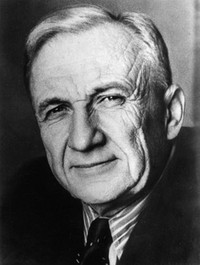
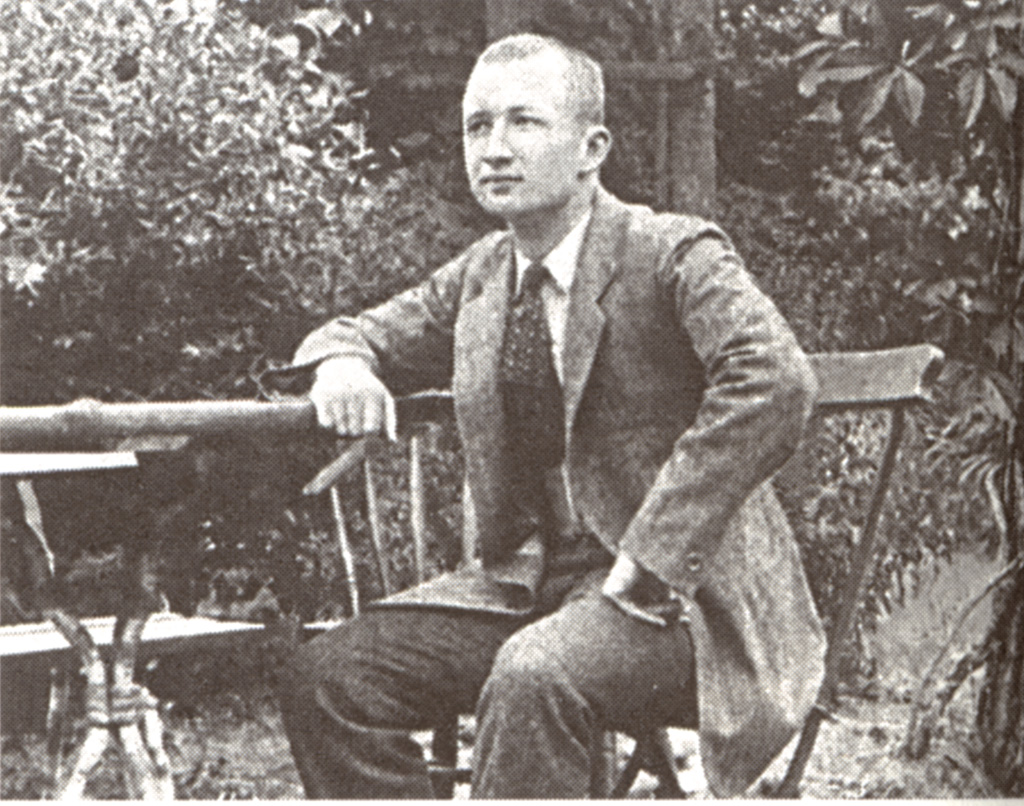
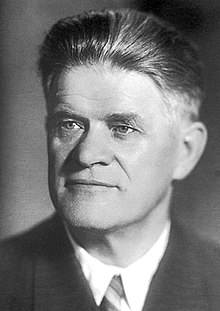
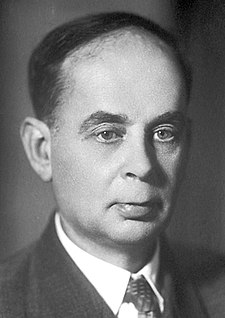
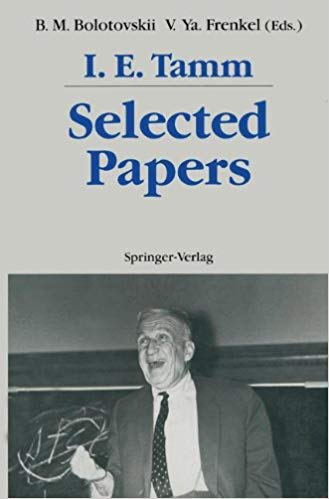
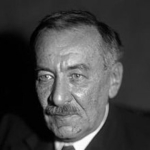
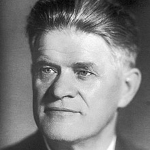
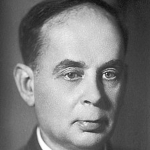
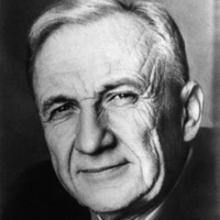
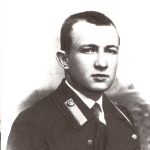
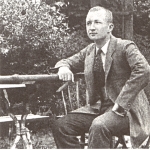
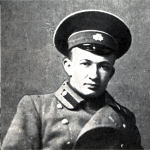
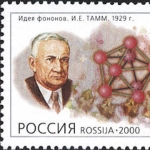
Igor Evgenievich Tamm was a Soviet physicist, professor and writer. Tamm’s work on nuclear physics and elementary particles covered a wide variety of topics, including relativity, quantum theory, cosmic rays, nuclear forces, plasma physics, and the properties of mesons. He is best known, however, for his theoretical explanation of the origin of Cherenkov radiation, discovered by colleague Pavel Cherenkov in about 1935.
Background
Igor Evgenievich was born on July 8, 1895, in Vladivostok, Primor'ye, Russian Federation. His parents were Evgeny Tamm, a civil engineer, and the former Olga Davydova. When Tamm was six years old, his family moved to Elizavetgrad (later renamed Kirovograd), in Ukraine.
Education
Tamm graduated from the Elizavetgrad Gymnasium in 1913, then he spent a year at the University of Edinburgh. The end of his first year in Scotland coincided with the beginning of World War I, and Tamm returned to Russia. There he enrolled in the faculty of physics and mathematics at Moscow State University. Tamm's schooling was interrupted when the battlefront moved eastward. When the war came to an end, he returned to his studies and was awarded his bachelor’s degree in physics in 1918. Tamm earned his doctor's degree from Moscow State University in 1933.
Tamm became a member of the Elizavetgrad City Soviet of Workers and Soldier Deputies in 1917. Tamm’s first teaching appointments were at the Crimean University (now Tavrida National V.I. Vernadsky University) from 1919 to 1921, and the Odessa Polytechnic Institute in Simferopol from 1921 till 1922. At the latter institution, he made the acquaintance of Leonid Mandel’shtam, later to be called the father of Russian physics. Mandel’shtam was to have a critical and long-lasting influence on Tamm’s professional career. One of Tamm’s earliest research interests was crystal optics, a field in which Mandel’shtam had made important discoveries. Tamm also worked on the scattering of light (the Mandel’shtam-Brillouin effect or Rayleigh scattering), particularly on the scattering of light by crystals (the so-called Raman effect, discovered by Mandel’shtam and G. S. Landsberg in 1930).
In 1922 Tamm was offered a teaching post at the J. M. Sverdlov Communist University in Moscow, where he remained until 1925. During the same period he held appointments at the Second Moscow University (now Moscow State Pedagogical University) from 1923 to 1929, and Moscow State University from 1924 to 1937. At Moscow State University he was promoted to professor of theoretical physics and was made head of the department in 1930.
During the late 1920s and early 1930s Tamm investigated a number of applications of quantum theory, which holds that energy exists in discrete units. Perhaps his best-known discovery concerned the properties of electrons on the surface of a crystalline solid. He found that these electrons are bonded in a unique way that gives a surface special properties. The discovery of these “Tamm surface levels” has had important applications in the development of solid-state devices, especially those containing semiconductors— solids whose electrical conductivity falls between that of an insulator and that of a conductor.
Another topic of interest to Tamm during the 1930s was the atomic nucleus. In 1934 he predicted that the neutron, although uncharged, would have a magnetic moment with a negative sign. Although the idea did not meet with widespread approval at first, Tamm’s prediction has since been shown to be correct. At about the same time, Tamm began a study of nuclear forces. He developed a theory that attributed beta decay (the spontaneous breakup of neutrons in the nucleus) to forces carried between nucleons (protons and neutrons) by means of electrons and neutrinos. He was incorrect in his choice of force carriers, but understood the general mechanism of intranuclear force transmission.
In the period from 1934 to 1936 Tamm’s colleague, Pavel Cherenkov, discovered the phenomenon that now carries his name: Cherenkov radiation. The term “Cherenkov radiation” refers to the pale blue light emitted when gamma radiation passes through a (usually) liquid medium. Although Cherenkov determined a number of properties of this radiation, he was unable to develop a satisfactory theory explaining its origin. That explanation came through the efforts of Tamm and Il’ya Frank in about 1936. Tamm and Frank found that although objects cannot travel faster than the speed of light in a vacuum, they can do so in other media. In the case of Cherenkov radiation, the passage of gamma rays through a medium results in the emission of electrons that do just that. Electrons emitted in this way form a wave that spreads out in a cone-shaped pattern in advance of the gamma ray in much the way that a sonic boom is produced by a supersonic aircraft. The blue glow is produced, then, when the wave velocity exceeds some given value.
The last four decades of Tamm’s life were spent at the P. N. Lebedev Physical Institute in Moscow, where he was named director of the theoretical section in 1934. After his work on Cherenkov radiation, Tamm returned to problems of nuclear physics and elementary particles. During the 1950s he also carried out research on plasma physics, a topic critical to the development of controlled thermonuclear fusion reactions. Tamm was long interested in problems of science education and the peaceful applications of nuclear energy. In connection with the latter, he was active in the Pugwash movement for science and world affairs of the 1950s and 1960s.
Among Tamm’s writings are Osnovy teorii elektrichestva (title means “Principles of the Theory of Electricity”), On the Magnetic Moment of the Neutrino, and Relativistic Interaction of Elementary Particles.
His discovery of “Tamm surface levels” in crystalline solids has had application in the development of solid-state devices.
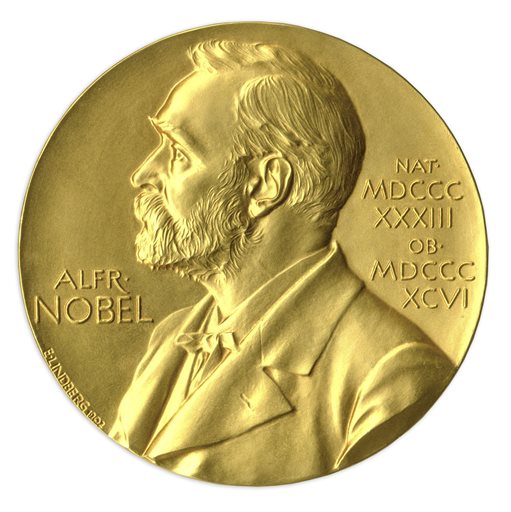
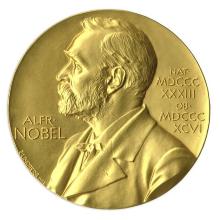
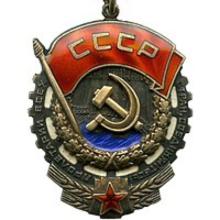
For his theoretical explanation of the origin of Cherenkov radiation, Tamm was awarded the 1958 Nobel Prize in physics. In addition to the Nobel Prize in physics, Tamm was awarded four Orders of Lenin and the Order of the Red Banner of Labor in 1945. In 1946, Tamm earned USSR State Prize of the first degree for the discovery and study of the radiation of electrons when they move in a substance with superluminal speed. He also won USSR State Prize in 1953 and became the Hero of Socialist Labour the next year.
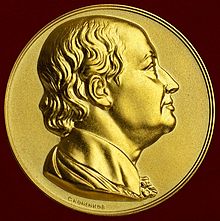
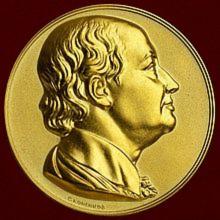
For outstanding achievements in the theory of elementary particles and other areas of theoretical physics, Tamm was awarded the Lomonosov Gold Medal in 1967.
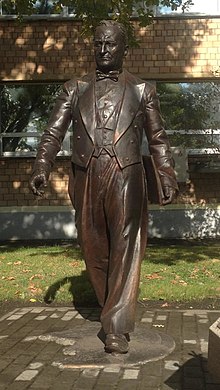
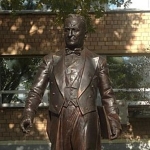
There are several monuments installed in his honor, including the sculpture on the alley "Nobel Prize winners" in Moscow at the National Research Nuclear University "MEPhI". Tamm's name was given to the Theoretical Department of the P. Lebedev Physical Institute of the Russian Academy of Sciences. The street in Kropyvnytskyi is named after him, as well as the square in Moscow. In addition, the Lunar crater Tamm is named after him.
(This book contains a commented selection of Tamm's most i...)
Politics
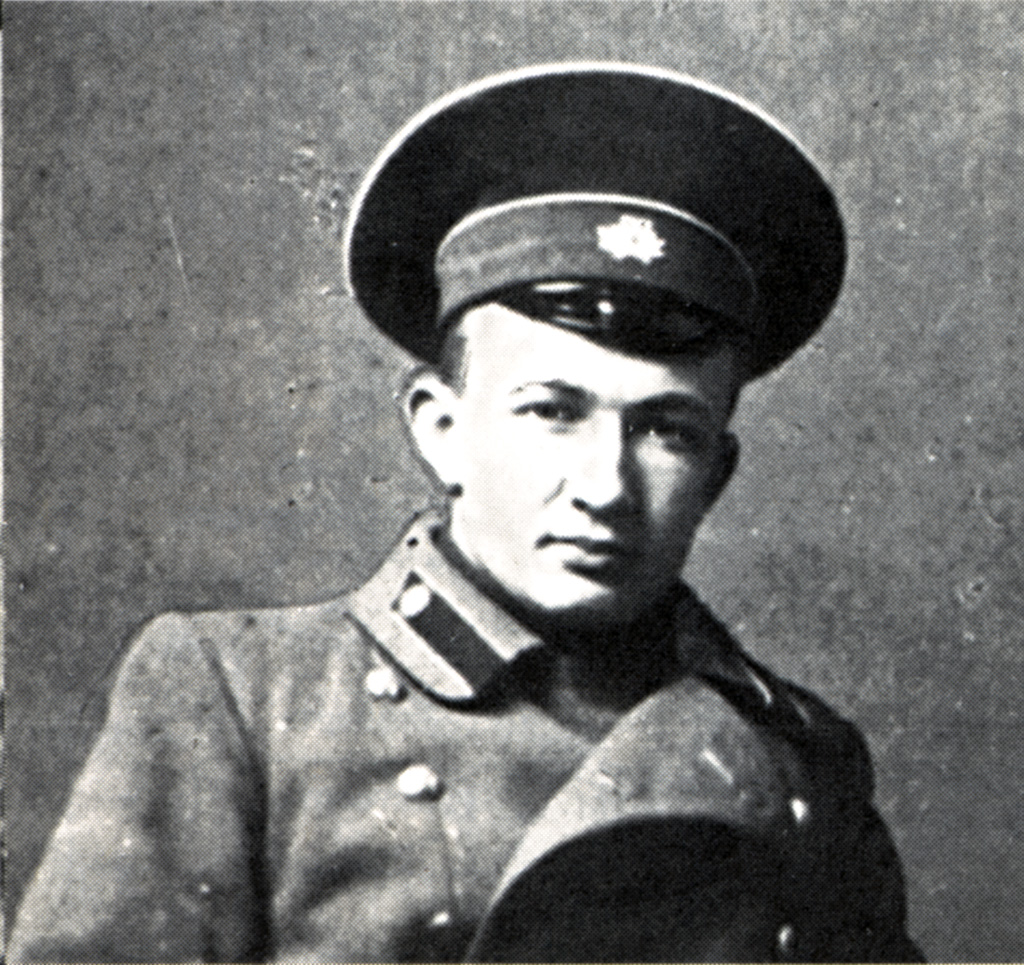
Tamm was a very strong willed person from a young age and was staunchly against participation of Russia in the World War I. In this pursuit he got associated with the ongoing Revolutionary movement in 1917 and remained an active campaigner against the war. Following the March Revolution that year he served the revolutionary committees. He never took up weapons, but faced incarceration several times.
Views
In the 1950s and 1960s, Tamm became deeply interested in issues of science education and the peaceful use of nuclear energy.
Quotations:
"Creativity makes life valuable. Man is the sole creator; he stands out from the swarming masses of petty little folks. It doesn't matter what kind of creativity it is - whether scientific or socio-political - it's of equal value."
Membership
German Academy of Sciences Leopoldina
,
Germany
1964
Academy of Sciences of the USSR
,
USSR
1953
Royal Swedish Academy of Sciences
,
Sweden
1959
Tamm became a foreign member.
Polish Academy of Sciences
,
Poland
1959
Tamm was named an honorary foreign member.
American Academy of Arts and Sciences
,
United States
1961
Personality
Tamm was an incorrigible optimist.
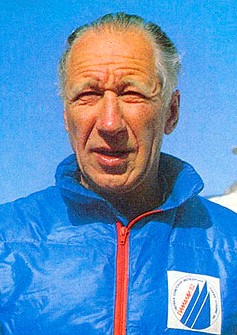
Tamm's main hobby was mountaineering, which he began to practice in 1926. He was a Master of Sports of the USSR and went to the mountains to the age of seventy. He also liked to travel and cave survey.
The scientist was fluent in English, French and German, he spoke Italian and Dutch as well.
Connections
Tamm married Natalie Shuiskaya on September 16, 1917. They had one daughter, Irene, and one son, Eugen.
Father:
Evgeny Tamm
Mother:
Olga Davydova
Wife:
Natalie Shuiskaya
Son:
Eugen Tamm
He was an honored coach of the USSR in mountaineering.
Daughter:
Irene Tamm
A specialist in explosions, she was engaged in physical chemistry.
teacher:
Leonid Isaakovich Mandelstam
He was a Soviet physicist. The main emphasis of his work was broadly considered theory of oscillations, which included optics and quantum mechanics.
colleague:
Pavel Alekseyevich Cherenkov
He was a Soviet physicist who shared the Nobel Prize in physics with Ilya Frank and Igor Tamm.