Background
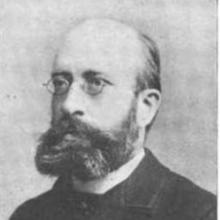
James Bixby was born on July 30, 1843, in Barre, Massachussets, United States, the third child of Clark Smith Bixby, a merchant, and of Elizabeth (Clark) Bixby, daughter of Abijah and Elizabeth (Heald) Clark of Hubbardston, Massachussets.

(This is a pre-1923 historical reproduction that was curat...)
This is a pre-1923 historical reproduction that was curated for quality. Quality assurance was conducted on each of these books in an attempt to remove books with imperfections introduced by the digitization process. Though we have made best efforts - the books may have occasional errors that do not impede the reading experience. We believe this work is culturally important and have elected to bring the book back into print as part of our continuing commitment to the preservation of printed works worldwide. This text refers to the Bibliobazaar edition.
https://www.amazon.com/Thenew-World-Thought-James-Thompson/dp/1117209814?SubscriptionId=AKIAJRRWTH346WSPOAFQ&tag=prabook-20&linkCode=sp1&camp=2025&creative=165953&creativeASIN=1117209814
(This book deals with the steps in the evolution of religi...)
This book deals with the steps in the evolution of religion and the Influence of the Environment on Religion. The most remarkable thing yet discovered about this planet is the fact that human beings exist upon it in large numbers, scattered almost everywhere over its surface, that pay homage to superterrestrial powers. But this fact, remarkable as it is, is only a portion of the truth. For the most searching and unprejudiced investigation has failed to reveal any time in human history when it was otherwise. However ignorant and forlorn man may have been in the past, we have no evidence that he has ever been so low down in the scale of being that he did not look upward with some degree of reverence and awe to higher powers. Not many years ago this fact of the universal prevalence of religion among men was seriously called in question by no less weighty writers than Sir John Lubbock and Herbert Spencer. They quoted at length from the reports of certain travelers and missionaries among the Eskimos of North Greenland, the Hottentots of South Africa and the Indians of Lower California in support of their position; and they stoutly contended that in these documents we have proof positive that there are communities now in existence that have no religion at all. This challenge led to a careful and thorough study of the status of these tribes by competent anthropologists, and in every case an extensive mythology was discovered among them, together with elaborate religious rites. A false idea of the meaning and scope of religion, a short stay in the country, or a lack of knowledge of the native language, had been the cause of the mistaken judgment. Probably no scholar of repute to-day would hesitate to accept the statement of Professor Brinton in his recent work on "The Religions of Primitive Peoples" that: “There has not been a single tribe, no matter how rude, known in history or visited by travelers, which has been shown to be destitute of religion under some form.” The reason for this historical fact is a psychological one, and has never been more clearly or forcibly expressed than by Dr. Edward Caird. He asserts: “Man, by the very constitution of his mind, has three ways of thinking open to him: he can look outwards upon the world around him; he can look inwards upon the self within him; and he can look upwards to the God above him.” And he very appropriately adds, "none of these possibilities can remain utterly unrealized." For the fact is that man is a self-conscious being. And inasmuch as he is endowed with some degree of reason and will, he can not stand still and passively gaze at the objects about him as though he were a mere brute. He must at least exert himself enough to form some kind of a conception of the powers around and above him, and put forth some degree of energy to place himself in harmonious relations with them. But it should not at all surprise us if, at the outset of his career as a religious being, he shows the same confusion of ideas about the objects he worships, as he does about all the other matters that come within the sphere of his experience. On the contrary, we should naturally expect to find him growing and developing in his religious ideas as he grows and develops in all others...
https://www.amazon.com/Steps-Evolution-Religion-Sargent-Hoffman/dp/1986925978?SubscriptionId=AKIAJRRWTH346WSPOAFQ&tag=prabook-20&linkCode=sp1&camp=2025&creative=165953&creativeASIN=1986925978
(This is a reproduction of a classic text optimised for ki...)
This is a reproduction of a classic text optimised for kindle devices. We have endeavoured to create this version as close to the original artefact as possible. Although occasionally there may be certain imperfections with these old texts, we believe they deserve to be made available for future generations to enjoy.
https://www.amazon.com/Similarities-Physical-Religious-Knowledge-Thompson-ebook/dp/B07DDB5YNZ?SubscriptionId=AKIAJRRWTH346WSPOAFQ&tag=prabook-20&linkCode=sp1&camp=2025&creative=165953&creativeASIN=B07DDB5YNZ

(This is a pre-1923 historical reproduction that was curat...)
This is a pre-1923 historical reproduction that was curated for quality. Quality assurance was conducted on each of these books in an attempt to remove books with imperfections introduced by the digitization process. Though we have made best efforts - the books may have occasional errors that do not impede the reading experience. We believe this work is culturally important and have elected to bring the book back into print as part of our continuing commitment to the preservation of printed works worldwide. This text refers to the Bibliobazaar edition.
https://www.amazon.com/Open-Secret-Study-Deeper-Forces/dp/1117291510?SubscriptionId=AKIAJRRWTH346WSPOAFQ&tag=prabook-20&linkCode=sp1&camp=2025&creative=165953&creativeASIN=1117291510
(Leopold is delighted to publish this classic book as part...)
Leopold is delighted to publish this classic book as part of our extensive Classic Library collection. Many of the books in our collection have been out of print for decades, and therefore have not been accessible to the general public. The aim of our publishing program is to facilitate rapid access to this vast reservoir of literature, and our view is that this is a significant literary work, which deserves to be brought back into print after many decades. The contents of the vast majority of titles in the Classic Library have been scanned from the original works. To ensure a high quality product, each title has been meticulously hand curated by our staff. This means that we have checked every single page in every title, making it highly unlikely that any material imperfections – such as poor picture quality, blurred or missing text - remain. When our staff observed such imperfections in the original work, these have either been repaired, or the title has been excluded from the Leopold Classic Library catalogue. As part of our on-going commitment to delivering value to the reader, within the book we have also provided you with a link to a website, where you may download a digital version of this work for free. Our philosophy has been guided by a desire to provide the reader with a book that is as close as possible to ownership of the original work. We hope that you will enjoy this wonderful classic work, and that for you it becomes an enriching experience. If you would like to learn more about the Leopold Classic Library collection please visit our website at www.leopoldclassiclibrary.com
https://www.amazon.com/Ethics-Evolution-Occasioned-Doctrine-Development/dp/B01JBZPEYQ?SubscriptionId=AKIAJRRWTH346WSPOAFQ&tag=prabook-20&linkCode=sp1&camp=2025&creative=165953&creativeASIN=B01JBZPEYQ

(Leopold is delighted to publish this classic book as part...)
Leopold is delighted to publish this classic book as part of our extensive Classic Library collection. Many of the books in our collection have been out of print for decades, and therefore have not been accessible to the general public. The aim of our publishing program is to facilitate rapid access to this vast reservoir of literature, and our view is that this is a significant literary work, which deserves to be brought back into print after many decades. The contents of the vast majority of titles in the Classic Library have been scanned from the original works. To ensure a high quality product, each title has been meticulously hand curated by our staff. This means that we have checked every single page in every title, making it highly unlikely that any material imperfections – such as poor picture quality, blurred or missing text - remain. When our staff observed such imperfections in the original work, these have either been repaired, or the title has been excluded from the Leopold Classic Library catalogue. As part of our on-going commitment to delivering value to the reader, within the book we have also provided you with a link to a website, where you may download a digital version of this work for free. Our philosophy has been guided by a desire to provide the reader with a book that is as close as possible to ownership of the original work. We hope that you will enjoy this wonderful classic work, and that for you it becomes an enriching experience. If you would like to learn more about the Leopold Classic Library collection please visit our website at www.leopoldclassiclibrary.com
https://www.amazon.com/Religion-Similarities-Physical-Religious-Knowledge/dp/B01IH8F0PG?SubscriptionId=AKIAJRRWTH346WSPOAFQ&tag=prabook-20&linkCode=sp1&camp=2025&creative=165953&creativeASIN=B01IH8F0PG
(This is a pre-1923 historical reproduction that was curat...)
This is a pre-1923 historical reproduction that was curated for quality. Quality assurance was conducted on each of these books in an attempt to remove books with imperfections introduced by the digitization process. Though we have made best efforts - the books may have occasional errors that do not impede the reading experience. We believe this work is culturally important and have elected to bring the book back into print as part of our continuing commitment to the preservation of printed works worldwide. This text refers to the Bibliobazaar edition.
https://www.amazon.com/Crisis-Morals-Examination-Rational-Science/dp/1103550101?SubscriptionId=AKIAJRRWTH346WSPOAFQ&tag=prabook-20&linkCode=sp1&camp=2025&creative=165953&creativeASIN=1103550101
James Bixby was born on July 30, 1843, in Barre, Massachussets, United States, the third child of Clark Smith Bixby, a merchant, and of Elizabeth (Clark) Bixby, daughter of Abijah and Elizabeth (Heald) Clark of Hubbardston, Massachussets.
James was prepared for college in the Cambridge High School and graduated from Harvard in 1864. Three years later he received the degree of A. M. from Harvard and entered the Harvard Divinity School, being the first to receive the degree of B. D. from that school in 1870. From July 1883 to June 1885 he was in Europe, studying in the universities of Heidelberg, Jena, and Leipzig, and obtaining the degree of Ph. D. in Leipzig in March 1885.
Ordained September 20, 1870, Bixby was pastor of the First Parish, Watertown, Massachussets, until April 1874, and from November 1874 to 1878 was pastor of the Independent Congregational (Unitarian) Church of Belfast, Maine. He then became professor of religious philosophy and ethnic religions in the Meadville Theological School, serving also as pastor of the Unitarian Church of Meadville, Pennsylvania. From July 1883 to June 1885 he was in Europe. For a year after his return he supplied the Unitarian Church of Ann Arbor, Michigan, and then was settled over the Unitarian Church in Yonkers, New York, from January 1887 until he retired in December 1903. His preaching, though often too burdened with learning, was marked by deep spirituality and sensitive comprehension of human suffering.
In his earlier pastorates Bixby published in the Unitarian Review many vigorous discussions of the problems created for religion and ethics by the evolutionary science of Spencer, Darwin, and Huxley. In this connection he argued that science, to be complete as science, must apply its methods of observation, induction, and verification to the indisputable facts of religion in human experience. Other articles (1876, 1877) advocated a Theistic Monism on the basis of evolutionary science. A second stage in his career was marked by his interest in comparative religion, which bore fruit in many articles in the Unitarian Review (1880 - 90) and the New World (1892 - 1900) and in lectures before the Meadville Theological School (1887 - 1899) and the Greenacre Summer School.
One of his influential books was The Crisis in Morals (1891) which reappeared in larger revision as The Ethics of Evolution (1900), a searching criticism of the hedonism of Spencer's Data of Ethics, followed by a constructive argument that the source of moral principles is found in the fundamental unity of life with its pressure to larger and higher existence. His other books were Similarities of Physical and Religious Knowledge (1876); Religion and Science as Allies (1889); The New World and the New Thought (1902); The Open Secret; A Study of Life's Deeper Forces (1912).
James Bixby is known as founder of a "scientific theology" and reseacher of comparative religion. He won distinction also as an early expositor of the philosophy of Lotze and of the physiological psychology of Fechner and Wundt (1877). In his later years he dealt a lot with the question of immortality, writing two influantial books, Bibliotheca Sacra and Biblical World.
(This book deals with the steps in the evolution of religi...)
(Leopold is delighted to publish this classic book as part...)
(Leopold is delighted to publish this classic book as part...)
(This is a pre-1923 historical reproduction that was curat...)
(This is a pre-1923 historical reproduction that was curat...)
(This is a pre-1923 historical reproduction that was curat...)
(This is a reproduction of a classic text optimised for ki...)
Bixby was an active member of the Reform Club, the Authors Club, and the Liberal Ministers' Association.
On September 1, 1870, Bixby was married to Emma Gibson of Boston. His first wife having died on March 20, 1902, he was married on February 24, 1906, to Clara Webster Parker of Yonkers.