Background
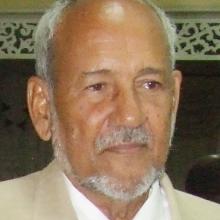
James Fitz-Allen Mitchell wasborn on 15 May 1931 on the island of Bequia.

government official politician teacher
James Fitz-Allen Mitchell wasborn on 15 May 1931 on the island of Bequia.
Following his education in St. Vincent, he enrolled at the Imperial College of MITRE. BARTOLOME Tropical Agriculture in Trinidad and later attended the University of British Columbia in Vancouver.
Prior to entering politics, he spent three years as an agricultural research officer, two years as a school teacher, and one and a half years with the British Ministry of Overseas Development in London. He also put out several works on Caribbean agriculture.
Mitchell won election to the legislature from the Grenadines constituency as a member of the St. Vincent Labour Party (SLP) in 1966, and in 1967 was appointed minister of trade, production, labour, and tourism in the SLP government headed by Robert Milton Cato. By 1972. however. Mitchell had broken with Labour and had won the Grenadines seat as an independent. In this election, the SLP and opposition Peoples Political Party (PPP) were deadlocked in legislative support, paving the way for Mitchell, the independent, to become the compromise choice for premier. He lost this position in a no confidence vote brought by the SLP and PPP two and a half years later (1974). Mitchell then attempted to build a new party, which put forward 11 candidates in the next election. Only Mitchell emerged victorious, again representing the Grenadines.
Mitchell’s concern for the Grenadines was unstinting. His fear of emasculation of these small islands by larger St. Vincent induced him to oppose independence. But independence did come to St. Vincent in 1979. That same year Mitchell founded the New Democratic Party (NDP) and led it to second-rank and “loyal opposition” status. Mitchell himself was defeated, however, in a head-to-head race against Ebenezer Joshua, leader of the PPP. In the 1984 election Mitchell was vindicated and assumed the prime ministership following victory by the NDP.
In the context of St. Vincentian politics, Mitchell can be described as middle- of-the-road to slightly “left of center.” In a May 1985 interview he stated his desire to see an active Vincentian private sector, although acknowledging need for strong government regulation, espcially to protect local real estate from purchase by overseas interests. He particularly promoted peasant agriculture. His government opposed the Reagan administration’s attempts to increase militarization in the region via the Eastern Caribbean Regional Security and Detense Pact signed in 1983.