

Background
Collier, James Lincoln was born on June 27, 1928 in New York City. Son of Edmund and Katharine (Brown) Collier.

( The classic story of one family torn apart by the Revol...)
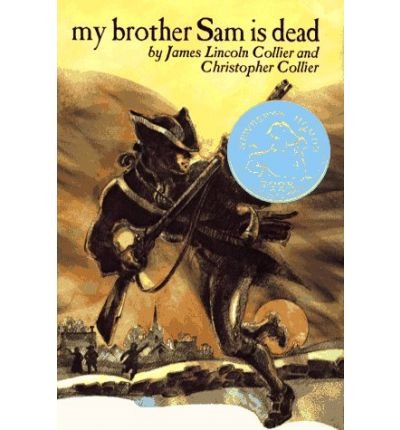
The classic story of one family torn apart by the Revolutionary War -- now with special After Words bonus features! All his life, Tim Meeker has looked up to his brother Sam. Sam's smart and brave -- and is now a part of the American Revolution. Not everyone in town wants to be a part of the rebellion. Most are supporters of the British -- including Tim and Sam's father. With the war soon raging, Tim know he'll have to make a choice -- between the Revolutionaries and the Redcoats . . . and between his brother and his father.
http://www.amazon.com/gp/product/0439783607/?tag=2022091-20

http://www.amazon.com/gp/product/B010ZDB4F6/?tag=2022091-20

http://www.amazon.com/gp/product/B00N1BEEG6/?tag=2022091-20
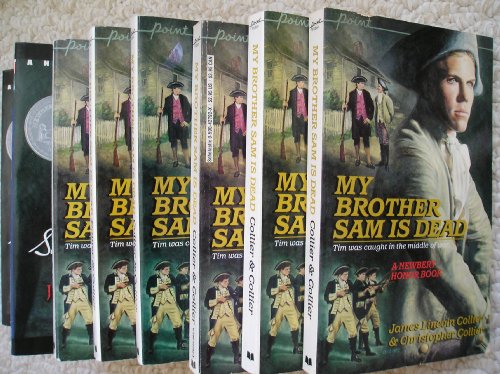
(Guided reading set of 8 for classroom use.)
Guided reading set of 8 for classroom use.
http://www.amazon.com/gp/product/B002MVUBOK/?tag=2022091-20

(Carrie has been a kitchen slave in Sam Fraunces's tavern...)
Carrie has been a kitchen slave in Sam Fraunces's tavern in New York City for as long as she can remember. But after she narrowly escapes a kidnapper, Carrie becomes more curious about her mysterious past. After all, she doesn't even know her own last name. When her friend Dan Arabus comes to town, he talks about his dream of buying his mother's freedom with the Continental notes his father left him. Deciding to help Dan discover how much the notes are worth, Carrie finds herself eavesdropping on Thomas Jefferson, Alexander Hamilton, and President Washington himself. What's more, Carrie also stumbles upon the startling truth about her own family.
http://www.amazon.com/gp/product/0375895035/?tag=2022091-20

http://www.amazon.com/gp/product/B007S6AQJY/?tag=2022091-20

(Young Daniel Arabus and his mother are slaves in the hous...)
Young Daniel Arabus and his mother are slaves in the house of Captain Ivers of Stratford, Connecticut. By law they should be free, since Daniel's father fought in the Revolutionary army and earned enough in soldiers' notes to buy his family's freedom. But now Daniel's father is dead, and Mrs. Ivers has taken the notes from his mother. When Daniel bravely steals the notes back, a furious Captain Ivers forces him aboard a ship bound for the West Indies--and certain slavery. Even if Daniel can manage to jump ship in New York, will he be able to travel the long and dangerous road to freedom?
http://www.amazon.com/gp/product/0440443237/?tag=2022091-20

http://www.amazon.com/gp/product/B004IGYUP8/?tag=2022091-20

(Reissue)
Reissue
http://www.amazon.com/gp/product/B01071G3GG/?tag=2022091-20

(Set of 12 paperback Newbery Medal and Honor books. Titles...)
Set of 12 paperback Newbery Medal and Honor books. Titles include Call It Courage ~ The Cay ~ Holes ~ The Whipping Boy ~ A Long Way From Chicago ~ The Westing Game ~ Johnny Tremain ~ My Brother Sam Is Dead ~ Misty of Chincoteague ~ Amos Fortune ~ Chucaro ~ The Egypt Game.
http://www.amazon.com/gp/product/B004AOU4L2/?tag=2022091-20

(Sneaking into the majestic house on Park Row last night a...)
Sneaking into the majestic house on Park Row last night and unlocking the door for the well-dressed stranger had been exciting. Still, Roger knows that what he did for Circus was wrong, especially when he learns from the newspaper that one of the inhabitants was killed. But the fifty dollars he earned is a fortune! His mother never seems to have any change left over for dinner after she buys her daily supply of liquor. And his father is in the hospital, recovering from a gunshot wound. With fifty dollars Roger can buy those yellow trousers hes been admiring and a decent dress for Lulu, his younger sister. Now Circus is asking him to pull another job. In spite of the temptation of easy money, Roger vows he wont listen to that fast-talking redhead. Too many unanswered questions buzz through Rogers mind. Who shot his father? Why does Circus take such an interest in his fathers health? Why does his father ask questions about a redheaded man? And what is Circus connection to his father? My Crooked Family is both a gripping mystery and a powerful coming-of-age novel about a fourteen-year-olds decision to enter a world of professional crime.
http://www.amazon.com/gp/product/1620646889/?tag=2022091-20

(Reprint)
Reprint
http://www.amazon.com/gp/product/B01070XKYK/?tag=2022091-20
http://www.amazon.com/gp/product/B006DUG96K/?tag=2022091-20

http://www.amazon.com/gp/product/B011DBC9EO/?tag=2022091-20

http://www.amazon.com/gp/product/B01071DJUO/?tag=2022091-20

http://www.amazon.com/gp/product/1935430777/?tag=2022091-20

(Born of poor Jewish immigrant parents in Chicago in 1909,...)
Born of poor Jewish immigrant parents in Chicago in 1909, Beny Goodman joined the local synagogue band at the age of ten with two of his brothers. As he was the smallest of the three he was given a clarinet. Within a decade he was a musical legend, constantly in demand for radio shows and guest appearances with America's leading jazz orchestras. In 1934 he formed his own band, and by the mid-1930s, Benny Goodman was hailed as the undisputed 'King of Swing'. James Lincoln Collier brilliantly recreates the colourful popular music world of the 1920s and 1930s, when the music industry was just expanding, radio was the great source of musical entertainment, and swing bands were first finding national audiences. He also offers perceptive insights into the character and music of a man whose magic transformed the Depression years into the Swing Era.
http://www.amazon.com/gp/product/0195052781/?tag=2022091-20

http://www.amazon.com/gp/product/B010BF4LJY/?tag=2022091-20

http://www.amazon.com/gp/product/0914678302/?tag=2022091-20

http://www.amazon.com/gp/product/B004X7APZ6/?tag=2022091-20

(Lot of 30 unused books. Perfect for schools or tutoring c...)
Lot of 30 unused books. Perfect for schools or tutoring companies.
http://www.amazon.com/gp/product/B003JUHXRQ/?tag=2022091-20

(It is a crowded, smoky room. Strongly rhythmic music play...)
It is a crowded, smoky room. Strongly rhythmic music plays, couples dance, dress is casual and revealing. Nearly everyone is drinking--beer or wine, gin or whiskey--and the distinct scent of marijuana hangs in the air. The foregoing scene might have happened in any of the vice districts in America at the turn of the century, such as Storyville in New Orleans or the Barbary Coast in San Francisco. But it might have occurred just as easily today, not in an underworld dive, but in the living rooms of ordinary people, in cities large and small all around America. What was once relegated to the red light district is now common on Main Street. In this provocative and highly original look at America, James Lincoln Collier asks a simple question: how did we get from Storyville to Main Street? How did the United States turn from a social code in which self-restraint was a cardinal virtue to one in which self-gratification was the norm? To answer this question, he traces the gradual decline of Victorian values and the concomitant rise of selfishness in our country, in a book filled with colorful history: the early dance crazes (the Fox Trot, the Grizzly Bear, the Texas Tommy); Irene and Vernon Castle, whose austere grace drained the sexuality out of dancing and made it acceptable to middle class America; the great radio shows of the 1930s (Amos 'n' Andy, Charlie Chan, The Shadow); and the great brothels of the Victorian age. But we also see the isolation of life in big cities, the great influx of immigrants, and the spread of industrialization. Collier shows that with the unprecedented blocks of free time created by industrialization, the entertainment industry mushroomed, and soon not only immigrants but the middle class began to drink and dance in public, and women began to smoke and dress in sexually revealing clothes. Indeed, by the late 1920s, the majority of Americans were devoted to movies, popular music, dancing, and the entertainment industry in general--they were preoccupied with having fun. If the Depression slowed the process down somewhat, Collier shows how the affluence after World War Two let Americans indulge themselves as never before, how the popularity of television has contributed to the fragmentation of society (watching TV, he says, is essentially a way of disengaging the self from others), and how Beat Generation writers such as Ginsberg and Kerouac and the Hippie movement of the '60s promoted self-indulgence as a virtue. Until the 1970s, however, the rise of selfishness was gradual, but with the incredible affluence of those years, and the disillusionment of Vietnam and Watergate, the "me generation" was born, leading to the corporate takeover, junk-bond mentality of the 1980s. The Rise of Selfishness in America is a fascinating social history as well as a personal meditation on what made Americans the way we are today. But more importantly, it is a passionate cri de coeur for change, for a new birth of selflessness in our society. It will appeal to anyone disturbed by the excesses of the 1980s.
http://www.amazon.com/gp/product/0195052773/?tag=2022091-20

http://www.amazon.com/gp/product/B011MEBBKA/?tag=2022091-20

http://www.amazon.com/gp/product/B010BF49R8/?tag=2022091-20

http://www.amazon.com/gp/product/B00Y2VZ9RW/?tag=2022091-20

http://www.amazon.com/gp/product/B000WGM8CK/?tag=2022091-20

(Everyone in Timber Falls knows that his family is trash, ...)
Everyone in Timber Falls knows that his family is trash, and sometimes Harry White thinks hell always be trash. But he cant help getting angry. After all, what had he and his sister, Helen, ever done to anybody? When he discovers the local carpet factory is polluting the river, he comes up with a bold exposé that, if he is successful, will make people sit up and show him respect. He wants to do it alone even though he knows hes asking for trouble. As trash, Harrys got nothing to lose. Or does he?Gripping, disturbing, and exhilarating, When the Stars Begin to Fall reveals the hidden forces that conspire against well-meaning innocents. Harrys desire to change himself and society is so powerful, his voice so direct and real, that listeners wont forget his struggle for dignity. In this striking departure from the historical novels he is so well known for, James Lincoln Collier has written a powerfuleven shockingnovel that challenges and defies the rhetoric of contemporary America.
http://www.amazon.com/gp/product/0440204119/?tag=2022091-20

http://www.amazon.com/gp/product/B000YYDURC/?tag=2022091-20

http://www.amazon.com/gp/product/B004X7A3E4/?tag=2022091-20

(A fantastic detailed overview of Jazz from its origins to...)
A fantastic detailed overview of Jazz from its origins to the mid-sixties. Combines historical, social, academic musical,literary, entertainment, and psychological perspectives in which all components 'swing'. In spite of being from 1978, it still stands as the best book on Jazz history. Collier is balanced, was a musician himself and, last but not least, is an apt researcher.
http://www.amazon.com/gp/product/0385286686/?tag=2022091-20

http://www.amazon.com/gp/product/B012HU6WLQ/?tag=2022091-20

http://www.amazon.com/gp/product/B010BF4CS4/?tag=2022091-20

(Everyone in Timber Falls knows that his family is trash, ...)
Everyone in Timber Falls knows that his family is trash, and sometimes Harry White thinks he’ll always be trash. But he can’t help getting angry—what had he and his sister, Helen, ever done to anybody? When he discovers the local carpet factory is polluting the river, he comes up with a bold expose to make people sit up and show him respect—if his plan works. He wants to do it alone even though he knows he’s asking for trouble. As trash, Harry’s got nothing to lose. Or does he? Gripping, disturbing, and exhilarating, When the Stars Begin to Fall reveals the hidden forces that conspire against well–meaning innocents. Harry’s desire to change himself and society is so powerful, his voice so direct and real, that listeners won’t forget his struggle for dignity. In this striking departure from the historical novels he is so well known for, James Lincoln Collier has written a powerful—even shocking—novel that challenges and defies the rhetoric of contemporary America.
http://www.amazon.com/gp/product/B00DC9XXQE/?tag=2022091-20

http://www.amazon.com/gp/product/B00LY0DVR4/?tag=2022091-20

(Willy Freeman's life changes forever when she witnesses h...)
Willy Freeman's life changes forever when she witnesses her father's death at the hands of the Redcoats and returns home to find that the British have taken her mother as a prisoner to New York City. Willy, disguised as a boy, begins her long search for her mother and luckily finds a haven at the famous Fraunces Tavern. But even with the help of Sam Fraunces and her fellow worker, Horace, Willy knows that to be black, female, and free leaves her open to danger at every turn. What will tomorrow bring?
http://www.amazon.com/gp/product/0440495040/?tag=2022091-20

(Set of fourteen paperback Newbery Medal and Honor books. ...)
Set of fourteen paperback Newbery Medal and Honor books. Titles include Tuck Everlasting, Dear Mr. Henshaw, Hoot, Sarah Plain and Tall, Number the Stars, Abel's Island, Matchlock Gun, Rascal, Philip Hall Likes Me, Tale of Despereaux, Family Under Bridge, From Mixed-Up Files, Afternoon of the Elves, My Brother Sam is Dead.
http://www.amazon.com/gp/product/B004AS1DRC/?tag=2022091-20

(Praised by the Washington Post as a "tough, unblinkered c...)
Praised by the Washington Post as a "tough, unblinkered critic," James Lincoln Collier is probably the most controversial writer on jazz today. His acclaimed biographies of Louis Armstrong, Duke Ellington, and Benny Goodman continue to spark debate in jazz circles, and his iconoclastic articles on jazz over the past 30 years have attracted even more attention. With the publication of Jazz: The American Theme Song, Collier does nothing to soften his reputation for hard-hitting, incisive commentary. Questioning everything we think we know about jazz--its origins, its innovative geniuses, the importance of improvisation and spontaneous inspiration in a performance--and the jazz world, these ten provocative essays on the music and its place in American culture overturn tired assumptions and will alternately enrage, enlighten, and entertain. Jazz: The American Theme Song offers music lovers razor-sharp analysis of musical trends and styles, and fearless explorations of the most potentially explosive issues in jazz today. In "Black, White, and Blue," Collier traces African and European influences on the evolution of jazz in a free-ranging discussion that takes him from the French colony of Saint Domingue (now Haiti) to the orderly classrooms where most music students study jazz today. He argues that although jazz was originally devised by blacks from black folk music, jazz has long been a part of the cultural heritage of musicians and audiences of all races and classes, and is not black music per se. In another essay, Collier provides a penetrating analysis of the evolution of jazz criticism, and casts a skeptical eye on the credibility of the emerging "jazz canon" of critical writing and popular history. "The problem is that even the best jazz scholars keep reverting to the fan mentality, suddenly bursting out of the confines of rigorous analysis into sentimental encomiums in which Hot Lips Smithers is presented as some combination of Santa Claus and the Virgin Mary," he maintains. "It is a simple truth that there are thousands of high school music students around the country who know more music theory than our leading jazz critics." Other, less inflammatory but no less intriguing, essays include explorations of jazz as an intrinsic and fundamental source of inspiration for American dance music, rock, and pop; the influence of show business on jazz, and vice versa; and the link between the rise of the jazz soloist and the new emphasis on individuality in the 1920s. Impeccably researched and informed by Collier's wide-ranging intellect, Jazz: The American Theme Song is an important look at jazz's past, its present, and its uncertain future. It is a book everyone who cares about the music will want to read.
http://www.amazon.com/gp/product/0195079434/?tag=2022091-20
Collier, James Lincoln was born on June 27, 1928 in New York City. Son of Edmund and Katharine (Brown) Collier.
Bachelor, Hamilton College, 1950.
Editor, Alex Hillman Publications, New York City, 1954-1955; editor, Magazine Management, New York City, 1955-1958; freelance writer, since 1958.
(Willy Freeman's life changes forever when she witnesses h...)
( The classic story of one family torn apart by the Revol...)
(Born of poor Jewish immigrant parents in Chicago in 1909,...)
(Praised by the Washington Post as a "tough, unblinkered c...)
(Praised by the Washington Post as a "tough, unblinkered c...)
(Sneaking into the majestic house on Park Row last night a...)
(Everyone in Timber Falls knows that his family is trash, ...)
(Everyone in Timber Falls knows that his family is trash, ...)
(Carrie has been a kitchen slave in Sam Fraunces's tavern...)
(Young Daniel Arabus and his mother are slaves in the hous...)
(A fantastic detailed overview of Jazz from its origins to...)
(Set of fourteen paperback Newbery Medal and Honor books. ...)
(Set of 12 paperback Newbery Medal and Honor books. Titles...)
(Guided reading set of 8 for classroom use.)
((from VARIETY 2010 on amazon marketplace ..see picture li...)
(Making of Jazz a Comprehensive History)
(It is a crowded, smoky room. Strongly rhythmic music play...)
(Will be shipped from US. Used books may not include compa...)
(Lot of 30 unused books. Perfect for schools or tutoring c...)
(Reissue)
(Reprint)
Member Author's Guild.
Married Carol Burrows, September 3, 1952 (divorced July 1972). Children: Geoffrey Lincoln, Andrew Kemp. Married Ida Karen Potash, July 22, 1983.
