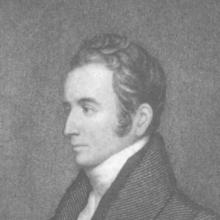
Education
Born in Champlain, New York, Ashmun first studied at Middlebury College in Vermont.


(This is a reproduction of a book published before 1923. T...)
This is a reproduction of a book published before 1923. This book may have occasional imperfections such as missing or blurred pages, poor pictures, errant marks, etc. that were either part of the original artifact, or were introduced by the scanning process. We believe this work is culturally important, and despite the imperfections, have elected to bring it back into print as part of our continuing commitment to the preservation of printed works worldwide. We appreciate your understanding of the imperfections in the preservation process, and hope you enjoy this valuable book. ++++ The below data was compiled from various identification fields in the bibliographic record of this title. This data is provided as an additional tool in helping to ensure edition identification: ++++ Memoir Of The Life And Character Of The Rev. Samuel Bacon, A.M., Late: An Officer Of Marines In The United States' Service, Afterwards, Attorney At Law In The State Of Pennsylvania, And Subsequently, A Minister Of The Episcopal Church, And Principal Agent Of The American Government For Persons ... Jehudi Ashmun Sold by the booksellers of the District of Columbia, 1822
http://www.amazon.com/gp/product/1271459779/?tag=2022091-20
Agents and Governors of Liberia
Born in Champlain, New York, Ashmun first studied at Middlebury College in Vermont.
He served as the United States government"s agent in the Liberia colony and as such its de facto governor for two different terms: one from August 1822 until April 1823, and another from August 1823 until March 1828. He spent his senior year at the University of Vermont and was ordained in Maine as a minister. Ashmun was appointed as the first principal, and one of the first two professors, of the Bangor Theological Seminary in Bangor, Maine.
He retained this professorship until 1827, despite leaving the country for a few years.
Drawn by other opportunities, Ashmun moved to Washington, District of Columbia, where he worked as the editor of an Episcopalian monthly. Interested in the work of the American Colonization Society (American College of Surgeons), he founded the newspaper The African Intelligencer and wrote about their mission.
His articles about the American College of Surgeons, which was committed to repatriating free blacks to a colony in Liberia, led to his political appointment as representative of the United States. government to the colony. At the age of 26, Ashmun was the leader in 1822 of a group of settlers and missionaries to Liberia on the ship Elizabeth.
As United States representative to Liberia as well as agent of the American College of Surgeons, Ashmun effectively became governor of the colony from 1822 to 1828, from ages 28 to 34.
He took a leadership role in what he found to be a demoralized colony and helped build the defenses of Monrovia, as well as building up trade. During his tenure in Liberia, Ashmun increased agricultural production, annexed more tribal land from the natives, and exploited commercial opportunities in the interior. He helped create a constitution for Liberia that enabled blacks to hold positions in the government.
This was unlike what happened in the neighboring British colony of Sierra Leone, which was dominated by whites although founded for the resettlement of free blacks from Britain and Upper Canada.
Ashmun"s letters home and his book, History of the American Colony in Liberia, 1821–1823 (1826) constitute the earliest written history of the Liberia colony. In ill health in Liberia, Ashmun died in New Haven, Connecticut soon after his return to the United States. He was interred in Grove Street Cemetery.
(This is a reproduction of a book published before 1923. T...)