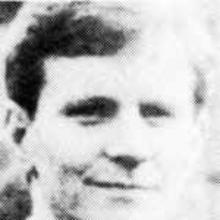
James “Jim” Lynagh was an Irish republican, Sinn Féin councillor, and Provisional IRA commander from Monaghan. Imprisoned after a premature bomb explosion in 1973, he later became associated with the East Tyrone Brigade and with a Maoist-influenced military strategy. He was killed during the 1987 Loughgall attack on an RUC station.
Background
James Lynagh, widely known as Jim Lynagh, was born on April 13, 1956, in Monaghan, County Monaghan, Ireland. He was one of twelve children and was raised on the Tully Estate, a housing estate in the townland of Killygowan on the southern edge of Monaghan town.
Lynagh joined the Provisional Irish Republican Army in the early 1970s. In December 1973, he was seriously injured when a bomb exploded prematurely; he was arrested and subsequently spent five years in the Maze Prison, also known as Long Kesh. During his imprisonment, he studied Mao Zedong and became an admirer of Maoist revolutionary theory.
Career
Lynagh joined the Provisional Irish Republican Army in the early 1970s. Following his arrest after the 1973 premature bomb explosion, he spent five years in the Maze Prison, a major detention facility for republican and loyalist paramilitary prisoners during the Troubles.
After his release in 1979, Lynagh was elected as a Sinn Féin councillor for Monaghan Urban District Council. The council was the local authority serving Monaghan town before the restructuring of Irish local government, and his election gave him a formal political role alongside his continuing republican activity.
Lynagh subsequently became active in the IRA's East Tyrone Brigade and rose to a command position. He was associated with a strategy influenced by Maoist ideas of rural guerrilla warfare and the creation of areas in which the security forces would find it difficult to operate. The strategy was connected with attacks on isolated Royal Ulster Constabulary stations, including the destruction of the Ballygawley station in December 1985 and the attack on the Birches station in County Tyrone in August 1986.
On May 8, 1987, Lynagh took part in an IRA attack on the Royal Ulster Constabulary station at Loughgall, County Armagh. The attacking unit used a large bomb and firearms but was ambushed by soldiers of the British Army's Special Air Service; Lynagh and seven other IRA members were killed. He was buried in Monaghan after the attack, and the eight men killed at Loughgall became known within Irish republican circles as the Loughgall Martyrs.
Politics
Lynagh's political affiliation was with Sinn Féin, the Irish republican party that sought an end to British sovereignty in Northern Ireland and the creation of an all-Ireland political settlement. After his release from prison in 1979, he was elected as a Sinn Féin councillor for Monaghan Urban District Council and remained in that position until his death.
His political life unfolded during the Troubles, when Sinn Féin operated alongside the Provisional Irish Republican Army within the broader republican movement. His elected office coexisted with continued involvement in the IRA's armed campaign, reflecting the movement's simultaneous use of electoral politics and paramilitary activity during the period.
Views
During his imprisonment, Lynagh studied the writings of Mao Zedong and became an admirer of Maoist revolutionary thought. His later military ideas were associated with a rural guerrilla strategy adapted to the conditions of Ireland, emphasizing sustained armed struggle, attacks on isolated security installations, and the attempt to establish areas where state forces could operate only with difficulty.
Connections
Lynagh was associated with the Provisional Irish Republican Army and its East Tyrone Brigade. His political activity was conducted through Sinn Féin, for which he served as a councillor in Monaghan after his release from prison.