Background
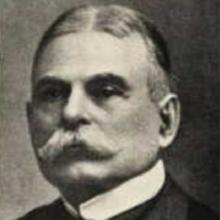
John Haldane Flagler was born on September 3, 1836, at Cold Spring, New York, the son of Harvey K. Flagler. and Sarah Jane Haldane.


(This book was originally published prior to 1923, and rep...)
This book was originally published prior to 1923, and represents a reproduction of an important historical work, maintaining the same format as the original work. While some publishers have opted to apply OCR (optical character recognition) technology to the process, we believe this leads to sub-optimal results (frequent typographical errors, strange characters and confusing formatting) and does not adequately preserve the historical character of the original artifact. We believe this work is culturally important in its original archival form. While we strive to adequately clean and digitally enhance the original work, there are occasionally instances where imperfections such as blurred or missing pages, poor pictures or errant marks may have been introduced due to either the quality of the original work or the scanning process itself. Despite these occasional imperfections, we have brought it back into print as part of our ongoing global book preservation commitment, providing customers with access to the best possible historical reprints. We appreciate your understanding of these occasional imperfections, and sincerely hope you enjoy seeing the book in a format as close as possible to that intended by the original publisher.
https://www.amazon.com/Reception-Flagler-McKeesport-forty-years/dp/B00ABUXW0E?SubscriptionId=AKIAJRRWTH346WSPOAFQ&tag=prabook-20&linkCode=sp1&camp=2025&creative=165953&creativeASIN=B00ABUXW0E
John Haldane Flagler was born on September 3, 1836, at Cold Spring, New York, the son of Harvey K. Flagler. and Sarah Jane Haldane.
Flagler attended the academy at Patterson, Dutchess County, New York (not at Paterson, New Jersey, as usually given).
In 1854, Flagler entered the iron business with his uncles, John and James Haldane of New York, who operated the Greenwich Iron Works.
After a visit to Europe to study methods of making iron tubes, he was given charge of the Boston branch of the business in 1860, and furnished some of the iron used in the construction of the Monitor, and other boats of this class.
With the increasing demand for tubing for the growing oil industry, Flagler and his brother, Harvey K. Flagler, formed in 1867 the firm of J. H. Flagler & Company which was merged with the National Tube Works Company in 1869, with works in East Boston.
It was soon seen that Boston was too far both from raw materials and from the principal market for the product, and in 1872 the branch at McKeesport, Pennsylvania, began production. This plant was the first to use gas furnaces under the Siemens patent in the manufacture of iron, and Flagler later obtained seven patents for improvements in the manufacture of pipe.
The East Boston plant was discontinued in 1874, and the plant at McKeesport became the largest producer of pipe in the world, employing over 4, 500 men when Flagler resigned as general manager in 1888. During his stay in McKeesport, he was active in the affairs of the town and had a large part in its development from an unsightly village to a prosperous manufacturing city.
In 1909, when Flagler revisited the scene of his labors, he was given a reception by some forty of his old employees who had worked for the company more than twenty-five years.
Flagler continued as director of the National Tube Works Company until 1899, at which time it became the National Tube Company. From this time his interests were diversified — banking, insurance, manufacturing and mining, and he served as officer or director in many corporations, maintaining an office in New York until his death. John H. Flagler died on September 8, 1922, at his home at Greenwich, Connecticut, of pneumonia.
(This book was originally published prior to 1923, and rep...)
John H. Flagler was a member of various philanthropic, cultural, and scientific organizations.
John H. Flagler was married three times: in 1856 to Anna H. Converse, by whom he had a daughter; in 1894, to Alice Mandelick who died in 1918; and, in 1921, to Beatrice Wenneker.
Beatrice Francis Wenneker was married to John H. Flagler. After the death of her first husband, in 1927, Beatrice Francis Flagler married Armand M. Sullivian.