

Background
Garner was born on November 22, 1868 in Red River County, Texas, the son of John Nance Garner III, a farmer, and Sarah Guest.

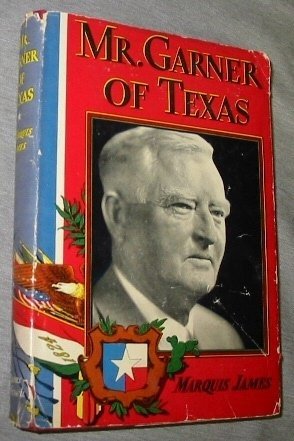
https://www.amazon.com/Mr-Garner-Texas-Marquis-James/dp/B00085K1GK?SubscriptionId=AKIAJRRWTH346WSPOAFQ&tag=prabook-20&linkCode=sp1&camp=2025&creative=165953&creativeASIN=B00085K1GK
Garner was born on November 22, 1868 in Red River County, Texas, the son of John Nance Garner III, a farmer, and Sarah Guest.
Garner attended local schools and played semiprofessional baseball. He attended Vanderbilt University briefly but returned to northeast Texas to read law in Clarksville. There he was admitted to the bar in 1890 and was an unsuccessful candidate for city attorney in 1892.
Suffering from a chest ailment, Garner moved in January 1893 to the drier climate of south-central Texas, settling in Uvalde, from which he worked the courthouse circuit in nine counties. Since much of his payment for legal services was in kind, Garner was soon plunged into commercial transactions involving land, commodities, and livestock. He expanded his business interests over the years, especially into the areas of personal loans and banking. These enterprises and his frugality eventually made him wealthy. Garner entered politics again in 1893, when he was appointed Uvalde County judge, largely an administrative position; he was elected as a Democrat to the post in 1894. Defeated for reelection in 1896, he soon sought membership in the Texas House of Representatives, to which he was elected in 1898 and reelected in 1900. Garner made a name for himself in Austin as an opponent of pork-barrel legislation and a champion of increased regulation of corporations. During his second legislative term, he served as the chairman of the redistricting committee that created a huge new congressional district in his part of Texas. He then appealed successfully to the bankers, cattle barons, Spanish-speaking people, and county political bosses of the new Fifteenth District in seeking nomination and election to Congress in 1902. Garner's constituents regarded him as a homespun man of the people and consistently returned him to Congress. Although his district changed considerably, he served in Congress for thirty years. Although Garner was an able debater, he seldom spoke publicly. Moreover, Garner did not introduce much legislation. Most of what he sponsored were private bills relating to his constituents and measures concerning Texas, such as legislation advancing the construction of the Gulf Intercoastal Waterway. Garner made his mark in Washington, D. C. , by being a diligent and studious legislator and an effective negotiator. He soon became popular in Congress. He gained a remarkable number of friends among both Democrats and Republicans. Garner initially served on the House Railways and Canals Committee, but he soon moved up to the Foreign Affairs Committee. He became Democratic whip in the House in 1911 and a member of the powerful Ways and Means Committee in 1913. Although an advocate of economy, Garner was usually considered a moderate liberal, espousing independence for the Philippines, improved agricultural credit, marketing, and road programs, currency expansion, and antimonopolistic measures. He was a leading figure in the successful revolt in 1910 against the authoritarian management of the House by Speaker Joseph G. Cannon. An advocate of equitable taxes, Garner was instrumental in incorporating the graduated income tax into the Underwood Tariff Act of 1913. He also supported enactment of the Federal Reserve System and of a federal inheritance or estate tax. Although by 1913 Garner had become an authority on fiscal matters in Congress, he was not close to the new Democratic president, Woodrow Wilson. As Wilson's relations with Speaker Champ Clark and Chairman Claude Kitchin of the Ways and Means Committee deteriorated by 1917, the president made Garner his spokesman on financial legislation in the House. Garner consequently played a key role in securing passage of the administration's war finance measures in 1917 and 1918. By the end of World War I Garner was highly influential in Congress, especially on tariff, tax, and trade matters. He was also esteemed as a party loyalist and a mediator among his fellow Democrats in the House. During the 1920's Garner generally opposed American involvement abroad and demanded the payment of foreign debts to the United States, although he resisted tariff increases. He opposed Prohibition and the Ku Klux Klan, was instrumental in legislating a federal inheritance or estate tax in 1926, and worked with some effect for a more equitable income tax reduction policy. In 1923 Garner became the ranking Democrat on the Ways and Means Committee and chairman of the House Democratic Committee on Committees, which allowed him to determine his party's committee assignments. Garner succeeded Finis J. Garrett as the Democratic leader in the House in 1929. He worked smoothly with his close Republican friend, Speaker Nicholas Longworth, in running the affairs of the House during the Seventy-first Congress. Operating what pundits dubbed "the Board of Education, " Garner and Longworth minimized partisan disagreements among their colleagues, and thus facilitated the passage of legislation in the House. In December 1931 Garner was elected speaker by a majority of three votes. Given his party's narrow majority in the House and the crisis of economic depression, he decided to cooperate with the Republican administration of President Herbert Hoover whenever possible. This resulted in 1932 in the establishment of the Reconstruction Finance Corporation, the strengthening of the Federal Reserve System and Federal Land Banks, and tax increases designed to balance the budget. Yet Speaker Garner also pressed, unsuccessfully, for a federal sales tax and payment of a bonus to World War I veterans and, successfully, for expanded public works projects, farm relief, and a tax on gasoline. Garner ran for the Democratic presidential nomination in 1932. Backed by publisher William Randolph Hearst, he won the California presidential primary over New York's Franklin D. Roosevelt and Alfred E. Smith. He also had the support of the Texas delegation. It became clear after the third ballot at the Democratic National Convention that Garner could not win the nomination, so he released his delegates to Governor Roosevelt, who was nominated on the fourth ballot. Garner did win the vice-presidential nomination, and provided geographical balance and additional name recognition to the ticket. He was otherwise little involved in the successful 1932 Democratic campaign. As vice-president, Garner was relatively influential. He worked effectively to obtain enactment of many administration proposals during President Roosevelt's first term, and he was an active member of Roosevelt's circle of advisers. Garner also played a significant role in the establishment of the Federal Deposit Insurance Corporation, despite the president's opposition to it. Roosevelt and Garner were renominated and overwhelmingly reelected in 1936. After that they increasingly split on policy matters. Their differences began over the president's proposal to alter the composition of the Supreme Court and his unwillingness to discourage sit-down strikes in 1937. The division between the two leaders continued over the issues of the mounting federal deficit, Roosevelt's opposition to Democratic dissenters in the 1938 elections, and the president's decision to run for a third term. By 1940 Garner had become the symbol of traditionalist opposition among Democrats to the administration, and he became a candidate for his party's presidential nomination. His challenge to Roosevelt infuriated organized labor and liberal Democrats. Garner attracted only sixty-one votes at the 1940 Democratic National Convention, and Roosevelt handily won renomination for president. Garner did not run for renomination for vice-president. In 1941 Garner retired to Uvalde, never to return to Washington. He tended to his many business interests and engaged in some philanthropy. Garner also often held court for admiring fellow citizens, usually commenting on public affairs good-naturedly and sensibly, if conservatively. He died in Uvalde.
Although he considered himself a good Methodist, he made no secret of his enjoyment of bourbon, cigars, and poker.
Although Garner considered himself a good Methodist, he made no secret of his enjoyment of bourbon, cigars, and poker. He was amiable and honest, spoke pithily and often colorfully, and was well-informed. Garner was not petty or mean, and he avoided taking extreme positions. He was a person of notable integrity and of outstanding ability in handling legislative matters. Where there was room for negotiation between conflicting interests, he was remarkably adept at striking honest bargains.
Quotes from others about the person
John L. Lewis of the Congress of Industrial Organizations (CIO) characterized Garner as "a poker-playing, whiskey-drinking, labor-baiting, evil old man. "
On November 25, 1895, Garner married Mariette ("Ettie") Rheiner, the daughter of a prosperous rancher. She served as his legislative secretary and political confidante. They had one child.

