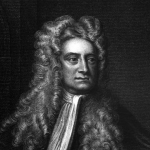
Keill studied at Edinburgh University under David Gregory who was the first to teach pupils on the basis of the newly published Newtonian philosophy. In 1692, he obtained his Bachelor's degree with a distinction in physics and mathematics.
Gallery of John Keill
Balliol College, Oxford, England
Keill attended Balliol College, Oxford, obtaining his Master of Arts degree on February 2, 1694.
Career
Achievements
Membership
Royal Society
1700
Royal Society, London, England
In 1700 Keill was elected fellow of the Royal Society.
Keill studied at Edinburgh University under David Gregory who was the first to teach pupils on the basis of the newly published Newtonian philosophy. In 1692, he obtained his Bachelor's degree with a distinction in physics and mathematics.
John Keill was an English mathematician and physicist. He acted as a propagator of Newton's philosophy, and became one of his most important disciples.
Background
John Keill was born on December 1, 1671, in Edinburgh, Scotland. He was the son of Sarah Cockburn and Robert Keill, an Edinburgh lawyer, and nephew of William Cockburn. He was also the older brother of James Keill, a noted physician, philosopher, and medical writer.
Education
Keill studied at Edinburgh University under David Gregory who was the first to teach pupils on the basis of the newly published Newtonian philosophy. In 1692, he obtained his Bachelor's degree with a distinction in physics and mathematics. Keill then attended Balliol College, Oxford, obtaining his Master of Arts degree on February 2, 1694.
In 1699 Keill became deputy to Thomas Millington, Sedleian professor of natural philosophy. After a short absence from Oxford he became Savilian professor of astronomy there in 1712, and a year later a public act made him a doctor of physic. He remained as Savilian professor until his death.
Support from Henry Aldrich, Dean of Christ Church College, Oxford, helped Keill’s preferment, particularly in becoming deputy to Millington in 1699, just after the attack on Burnet, Whiston, and Bentley. In 1709 Robert Harley helped Keill become treasurer for the refugees from the Palatinate, in which connection he traveled to New England. From 1712 to 1716, with Harley’s help, he was a decipherer to Queen Anne.
Achievements
John Keill was one of the very important disciples gathered around Newton. He transmitted his principles of philosophy to the scientific and intellectual community, thereby influencing the directions and emphases of Newtonianism.
As one of the few around Newton with High Church patronage, Keill apparently tried to counter the Low Church influences of such spokesmen as Richard Bentley and William Whiston. While agreeing with them that the discoveries and doctrine of universal attraction of Mewtonianism should play a crucial role in fighting “atheistic” Cartesianism and mechanical thinking, he rejected the notion that this should be accomplished exclusively or primarily by means of natural theology. Rather, natural theology should be subordinated to the Scripture, while natural philosophy should acknowledge the important role played not only by Providence but also by outright miracles. These arguments are made in Keill’s first work, An Examination of Doctor Burnet’s Theory of the Earth, together with Some Remarks on Whiston’ New Theory (1698). This was probably written before he had met Newton and was an attack on the cosmogonical treatises about the world’s creation then being widely debated by many members of the Royal Society.
Although supposedly written specifically against the unscientific methods of the theories of Thomas Burnet and William Whiston, in substance it amounted to a very hostile attack - in the name of orthodoxy - on the delusions of “world-making” which were caused, Keill claimed, by Cartesian natural philosophy. As an antidote, Keill prescribed the more modest and exact Newtonian philosophy, based solidly on mathematical reasoning, even though Newton himself was known at the time to have sympathies with the cosmogonical theories. Besides those of Burnet and Whiston, Keill attacked the ideas of Richard Bentley, who had tried to use Newtonian principles as the foundation for his physicotheology in his famous Boyle lectures in 1692.
Keill’s role as a propagator of Newtonian philosophy was carried out primarily through his major work, Introductio ad veram physicam (1701), based on the series of experimental lectures on Newtonian natural philosophy he had been giving at Oxford since 1694. The first such lectures ever given their attempt to derive Newton’s laws experimentally did much to influence later publications. Although Keill makes the decidedly anti-Newtonian principle of the infinite divisibility of matter in nature a fundamental axiom, the Introduction again unfavorably contrasts Cartesian mechanism, with its dangers of atheism, and Newtonianism. Descartes’ insufficient use of geometry, his attempt to define the essences of things rather than being content merely to describe their major properties, and his desire to explain the complex before he can adequately deal with the simple distinguish his fictions from the true principles of Newton. An appendix to the Introductio gives a proof for the law of centrifugal “force,” whose magnitude had been announced in 1673 by Christiaan Huygens. Several years after the Introduction, Keill published an article on the laws of attraction, dealing mainly with short-range forces between small particles, in which he elaborated on Newtonian hypotheses that Newton himself had been unable to pursue.
Some of Keill’s writings also brought hostile attacks against Newtonianism from the Continent. For example, his charge that Leibniz had plagiarized from Newton’invention of the calculus gave rise to a major dispute between English and Continental natural philosophers, in which Keill served as Newton’s “avowed Champion.” Keill’s article on the laws of attraction also brought criticisms from the Continent against the employment in Newtonianism of such dubious philosophical concepts as an attraction.
Membership
In 1700 Keill was elected fellow of the Royal Society.
Fellow
Royal Society
,
London
1700
Connections
Keill’s marriage in 1717 to Mary Clements, many years his junior and of lesser social standing, was the cause of some scandal. Besides her, Keill was survived by a son, who became a linen draper in London.