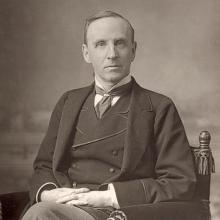
Background
John Morley, 1st Viscount Morley of Blackburn, was born on December 24, 1924. He was the son of Austin and Patricia (Bray) Master of Education St. John's College, Cambridge.


W Park Rd, Blackburn BB2 6DF, UK
Morley attended Queen Elizabeth Grammar School, Blackburn.

Frognal, Hampstead, London NW3 6XH, United Kingdom
Morley attended University College School.

Bath Rd, Cheltenham GL53 7LD, UK
Morley attended Cheltenham College.

Turl St, Oxford OX1 3DR, United Kingdom
Morley attended Lincoln College in Oxford.
W Park Rd, Blackburn BB2 6DF, UK
Morley attended Queen Elizabeth Grammar School, Blackburn.
Frognal, Hampstead, London NW3 6XH, United Kingdom
Morley attended University College School.
Bath Rd, Cheltenham GL53 7LD, UK
Morley attended Cheltenham College.
Turl St, Oxford OX1 3DR, United Kingdom
Morley attended Lincoln College in Oxford.


https://www.amazon.com/Modern-Characteristics-John-Morley/dp/0559294883/?tag=2022091-20
1865

https://www.amazon.com/Studies-Conduct-Essays-Saturday-Review-ebook/dp/B07DYHJV2N/?tag=2022091-20
1867
https://www.amazon.com/Edmund-Burke-Historical-John-Morley-ebook/dp/B07DTV48G8/?tag=2022091-20
1867
https://www.amazon.com/Critical-Miscellanies-John-Morley-ebook/dp/B07H1D33B1/?tag=2022091-20
1871

https://www.amazon.com/Voltaire-John-Morley-ebook/dp/B00AQM5X86/?tag=2022091-20
1872

(Christianity is the name for a great variety of changes w...)
Christianity is the name for a great variety of changes which took place during the first centuries of our era, in men's ways of thinking and feeUng about their spiritual relations to unseen powers, about their moral relations to one another, about the basis and type of social union.
https://www.amazon.com/Rousseau-1878-John-Morley-ebook/dp/B0164R2KRI/?tag=2022091-20
1873
(Liberals that the present aspect of the question of natio...)
Liberals that the present aspect of the question of national education in England is only a new version of the old quarrel between conventicle and steeple-house. The complaints against the Twenty Fifth clause are set down to the resentment of a religious faction.
https://www.amazon.com/Struggle-National-Education-Classic-Reprint/dp/B008K4E0JK/?tag=2022091-20
1873
(His most considerable contribution to current thought.......)
His most considerable contribution to current thought....In this essay the writer laments that the crumbling away of dogma, incident to the use of the historic method in all departments of research, has enervated men to relax their hold upon positive and categorical beliefs. We are so persuaded of the relativity of all ascertained truth in politics, morals, and religion, that our minds are hospitable to opinions which no logic can reconcile, and which immediately conflict when put into practice.
https://www.amazon.com/Compromise-John-Morley/dp/1537705709/?tag=2022091-20
1874
https://www.amazon.com/Diderot-Encyclop%C3%A6dists-Vol-1-2-ebook/dp/B004TRDICM/?tag=2022091-20
1878
https://www.amazon.com/Burke-John-Morley-1838-1923/dp/B008GDFU2Q/?tag=2022091-20
1879
https://www.amazon.com/Life-Richard-Cobden-FACSIMILE/dp/B0017Q99KI/?tag=2022091-20
1881
(When time has wrought changes of fashion, mental and soci...)
When time has wrought changes of fashion, mental and social, the critic serves a useful turn in giving to a poet or a teacher his true place, and in recovering ideas and points of view that are worth preserving. Interpretation of this kind Emerson cannot require.
https://www.amazon.com/Ralph-Waldo-Emerson-Classic-Reprint/dp/B008CAFI66/?tag=2022091-20
1884
https://www.amazon.com/Walpole-John-Morley/dp/1347485511/?tag=2022091-20
1889
https://www.amazon.com/Studies-Literature-John-1838-1923-Morley-ebook/dp/B018PIIWUS/?tag=2022091-20
1891
(Satire is a genre of literature where vices, follies, abu...)
Satire is a genre of literature where vices, follies, abuses, and shortcomings in humans and their institutions are held up to ridicule with the intent of shaming individuals, corporations, government, or society itself into reform. While satire is generally meant to be humorous, its greater purpose is generally constructive social criticism.
https://www.amazon.com/Machiavelli-romanes-lecture-delivered-Sheldonian/dp/B00XC5L26G/?tag=2022091-20
1897
(Collections of Essays are anthologies that have been comp...)
Collections of Essays are anthologies that have been compiled in order to demonstrate the works of a number of essayists. The list of essayists who have been active throughout the world and throughout time, is extraordinary.
https://www.amazon.com/Macaulay-English-Letters-Cotter-Morison/dp/B01D2P2IAO/?tag=2022091-20
1898
https://www.amazon.com/Oliver-Cromwell-John-Morley-2005-08-04/dp/B01K913U38/?tag=2022091-20
1900
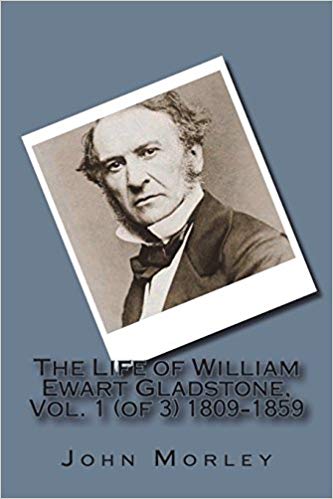
(The Life of William Ewart Gladstone, Vol. 1 (of 3) 1809-1...)
The Life of William Ewart Gladstone, Vol. 1 (of 3) 1809-1859 by John Morley Excerpt I am well aware that to try to write Mr. Gladstone's life at all - the life of a man who held an imposing place in many high national transactions, whose character and career may be regarded in such various lights, whose interests were so manifold, and whose years bridged so long a span of time - is a stroke of temerity.
https://www.amazon.com/Life-William-Ewart-Gladstone-1809-1859/dp/1721862463/?tag=2022091-20
1903
(Public speaking, or oratory is the process of performing ...)
Public speaking, or oratory is the process of performing a speech to a live audience. Speeches are generally structured to achieve three interrelated purposes: to inform, persuade and entertain. Public speaking is generally face-to-face speaking of one person to an audience. In different contexts, public speaking may be governed by different rules and structures. While some people will possess natural public speaking skills, even those who do not can become proficient with practice, and taking the advice that is available in appropriate texts.
https://www.amazon.com/Speeches-Indian-Affairs-John-Morley/dp/B01EK8DAAO/?tag=2022091-20
1908
(Indian polity. These speeches, with no rhetorical pretens...)
Indian polity. These speeches, with no rhetorical pretensions, contain some of the just, prudent, and necessary points and considerations, that have guided this transaction, and helped to secure for it the sanction of Parliament. The too limited public that follows Indian affairs with coherent attention, may find this small sheaf of speeches, revised as they have been, to be of passing use.
https://www.amazon.com/Indian-Speeches-1907-1909-Classic-Reprint/dp/1440077479/?tag=2022091-20
1909

https://www.amazon.com/Notes-politics-history-Vol-1-university/dp/B007Z17UF0/?tag=2022091-20
1913
https://www.amazon.com/Recollections-John-Viscount-Morley-Volumes/dp/B002IJ9WMI/?tag=2022091-20
1917
https://www.amazon.com/Works-Lord-Morley-Vol-ebook/dp/B01JNST9SI/?tag=2022091-20
1921
https://www.amazon.com/Life-William-Ewart-Gladstone-1809-1859-ebook/dp/B078RZGVJ6/?tag=2022091-20
1927
actor editor playwright statesman
John Morley, 1st Viscount Morley of Blackburn, was born on December 24, 1924. He was the son of Austin and Patricia (Bray) Master of Education St. John's College, Cambridge.
The elder Morley had taught himself Latin and French, and was a lover of Racine, Virgil, and Byron. Morley was encouraged in his education by his father, and attended Hoole’s Academy, University College School, Cheltenham College, and finally Lincoln College, Oxford on a scholarship. There, Morley fell under the sway of John Stuart Mill’s On Liberty, and lost his religious faith, causing his father to withdraw his support.
After a brief stint tutoring in Paris, Morley came to London to make his way as a freelance journalist. During this time he contributed historical and critical review pieces to journals such as The Saturday Review.
Through his journalistic endeavors, he befriended Mill when Mill noted one of his pieces, and also became friends with George Meredith, whom he admired greatly. These contacts were instrumental in helping him gain his next post, one that would place him squarely in the center of London’s literary and intellectual community. In 1866, Morley followed George Henry Lewes as editor of The Fortnightly. The magazine had been established the previous year as a journal of ideas that would include a wide spectrum of intellectual positions and biases. It had gained a following, which Morley nurtured.
I With his vigorous pursuit of the free exchange of ideas, the magazine rose to the forefront of the intellectual scene. As editor of The Fortnightly, Morley sought out giants and giants-to-be such as Herbert Spencer, George Meredith, John Stuart Mill, Frederic Harrison, Anthony Trollope, Matthew Arnold, Leslie Stephen, Walter Pater, Thomas Henry Huxley and Edmund Gosse. The review also included poems by such writers I as Dante Gabriel Rossetti and William Morris. Morley himself wrote nearly two hundred articles for the magazine during his tenure there, on numerous topics, including historical sketches of men like Macauley, Byron, and Carlyle.
In 1867, Morley traveled to America and met Walt Whitman and Ralph Waldo Emerson. He had also came in contact with numerous Irish-Americans who convinced him of the need to address the Irish problem. From 1880 to 1883, he was also editor of the Pall Mall Gazette, a political daily, and turned the once-conservative journal into a radical one. He also conceived of the English Men of Letters series, and recruited leading writers such as Henry James and Leslie Stephens to produce volumes on people such Swift, Pope, and Johnson.
Morley’s interest in politics had steadily grown during this time, and he had run unsuccessfully for office numerous times. He was finally elected as a M. P. from Newcastle upon Tyne in 1883. In 1885, he was made Gladstone’s chief secretary for Ireland, and was instrumental in writing the first Home Rule bill. In 1905, he became Secretary of State for India, and joined the peerage as Viscount Morley of Blackburn. He was also elected Chancellor of Manchester University. He continued in various posts, finally resigning from the House of Lords to protest the British alliance with Russia in World War I.
Perhaps Morley’s most ambitious writing project came in 1898, when Gladstone’s family asked him to write his biography. He combed through somewhere between two and three hundred thousand documents and forty volumes of Gladstone’s diary. Later, when Gladstone’s diaries were published, numerous misquotations were discovered, but the biography was a triumph in its time and afterward: more than one hundred thousand copies of the original three volume set were sold, and it did not go out of print until 1942. Morley’s varied career seems even more complex in retrospect.
John Morley epitomized the late nineteenth-century man of letters as social guardian, writing in the tradition of Matthew Arnold. Unlike Arnold, however, Morley devoted a great deal of energy to politics, and as a result perhaps never fully reached his literary potential. Still, he orchestrated one of the more fertile and robust periods in English intellectual life through his stewardship of The Fortnightly Review. He was interested in a wide array of cultural, intellectual and political issues.
Perhaps Morley’s most important work of the decade was On Compromise, a collection of Fortnightly Review articles published in 1874.
(Christianity is the name for a great variety of changes w...)
1873(Satire is a genre of literature where vices, follies, abu...)
1897(When time has wrought changes of fashion, mental and soci...)
1884(Liberals that the present aspect of the question of natio...)
1873(Collections of Essays are anthologies that have been comp...)
1898(Public speaking, or oratory is the process of performing ...)
1908(His most considerable contribution to current thought.......)
1874(The Life of William Ewart Gladstone, Vol. 1 (of 3) 1809-1...)
1903(Indian polity. These speeches, with no rhetorical pretens...)
1909Morley took up the cause in his writing, publishing numerous pieces in support of home rule. He also was fascinated by the French revolution and by the ideas of Auguste Comte. While Morley’s aesthetics were conservative, his politics were progressive; he supported the Second Reform Bill and, following Comte, he saw the potential for a coming alliance between the working class and the intellectual class. The French Revolution stood as the major event of the last century in Morley’s eyes, an event that still reverberated through history and was still transforming the world.
His biographical studies at The Fortnightly Review included profiles of figures like Rousseau, Diderot, Edmund Burke, and Robespierre, all important figures in understanding the Revolution’s context and ideology. Unlike Carlyle, who was hostile to the Revolution, Morley attempted to destigmatize the ideas behind it. He believed in typical liberal fashion that the Revolution had gone astray with Robespierre; in Edmund Burke: A Historical Study (1867), Morley connects the principles of the Revolution to Christianity.
In his role as Administrator for India, John strongly advocated Indian involvement in administration, and pushed for decentralization. He was a moralist, but one who believed that it was not necessarily literature’s role to advance social reforms; he left literature for the world of politics and then resigned on principle; he was a Victorian in sensibility and a sensitive and progressive politician.
In Studies in Conduct, published in 1867, Morley makes clear the Arnoldean sensibility suggested in the title, emphasizing the importance of self-denial andresistance to animal instincts. This moralism surfaced in Morley’s review of Swinburne’s Poems and Ballads. Morley responded negatively, criticizing what he perceived as the poet’s appeal to unbridled passion. The review set a tone for Swinburne criticism that would remain for many years. On the other hand, he did appreciate Walter Pater’s humanism in The Renaissance (1873) as a good sign.
Quotations: "That has taken place which I apprehended. The Labor party - that is, the most headstrong and unscrupulous and shallow of those who speak for labor - has captured the Liberal party. Even worse - the Liberal party, on our bench at any rate, has surrendered sans phrase, without a word of explanation or vindication".
In 1870, Morley married Rose Marie Ayling.

12 February 1828 – 18 May 1909
George Meredith was an English novelist and poet of the Victorian era.

May 31, 1819 – March 26, 1892
Walt Whitman was an American poet, essayist, and journalist.

May 25, 1803 – April 27, 1882
Ralph Waldo Emerson was an American essayist, lecturer, philosopher, and poet who led the transcendentalist movement of the mid-19th century.