(This is a pre-1923 historical reproduction that was curat...)
This is a pre-1923 historical reproduction that was curated for quality. Quality assurance was conducted on each of these books in an attempt to remove books with imperfections introduced by the digitization process. Though we have made best efforts - the books may have occasional errors that do not impede the reading experience. We believe this work is culturally important and have elected to bring the book back into print as part of our continuing commitment to the preservation of printed works worldwide. This text refers to the Bibliobazaar edition.
Spain, Portugal and the Atlantic Frontier of Medieval Europe (The Expansion of Latin Europe, 1000-1500)
(As seen from the perspective of 1492, the medieval expans...)
As seen from the perspective of 1492, the medieval expansion of Latin Europe was nowhere as dramatic or enduring as in the Iberian Peninsula and the Atlantic. Its Christian kingdoms continued their advance against Al-Andalus up to 1492, whereas territorial expansion elsewhere against the Muslim world had either ceased or subsided by the late 13th century. Castile and Portugal also transformed the Atlantic Ocean from the inaccessible dead-end of Eurasia into the most promising avenue for European expansion for the first time in history. The articles collected in this volume explore the causes and the nature of this expansion, from a variety of historical traditions. They investigate the extent to which the transference of Mediterranean traditions aided this process; the characteristics of Iberian conflict that eventually led to the success of its Christian kingdoms; and the motives for launching, and techniques for running, the first European overseas empires in the unfolding Atlantic frontier. In the process they illuminate the new identities and cultural interactions that this expansion produced in its wake, while the new introduction sets them in the broader context.
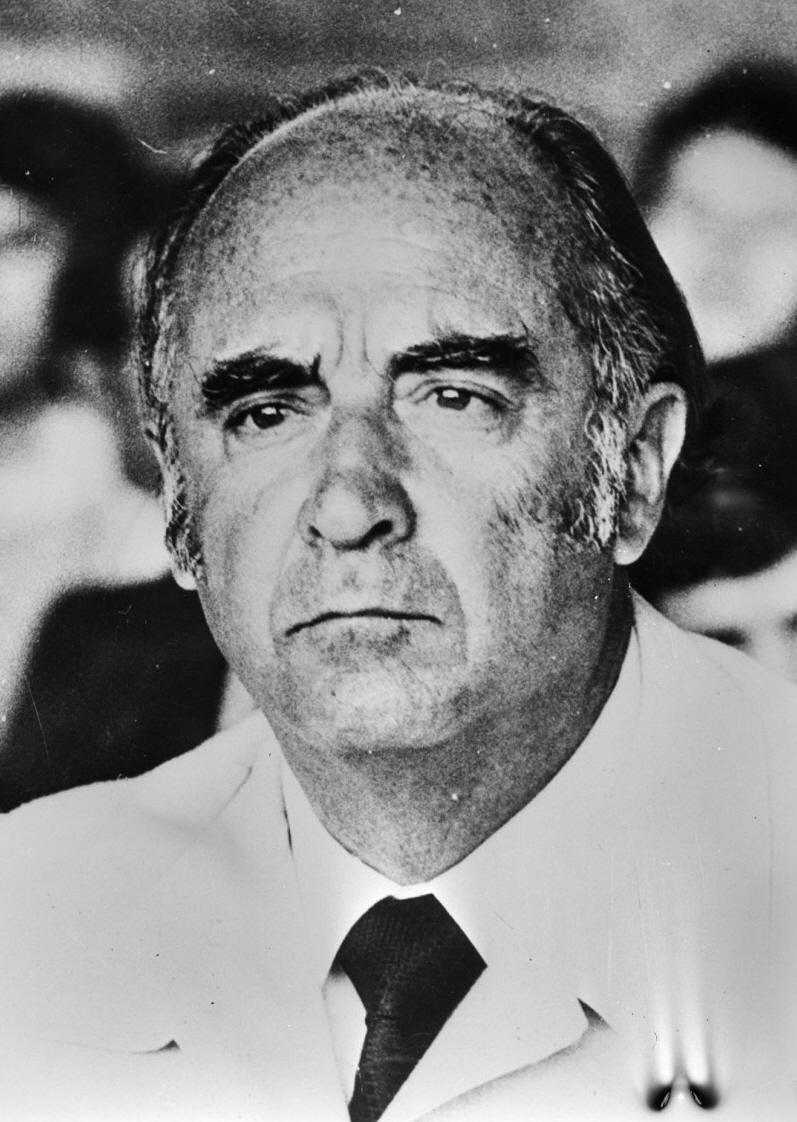
José Guillermo Abel López Portillo y Pacheco was a Mexican lawyer and politician affiliated with Institutional Revolutionary Party (PRI) who served as the 51st President of Mexico from 1976 to 1982.
Background
López Portillo was born on June 16, 1920 in Mexico City, to his father José López Portillo y Weber (1888–1974), an engineer, historian, researcher, and academic, and to Refugio Pacheco y Villa-Gordoa. He was the grandson of José López Portillo y Rojas, a lawyer, politician, and man of letters. He was the great-great-great grandson of José María Narváez (1768–1840), a Spanish explorer who was the first to enter Strait of Georgia, in present-day British Columbia, and the first to view the site now occupied by Vancouver.
Education
The violent decade of the Mexican Revolution had just ended, and he was able to pursue his primary and secondary education without the interruptions experienced by fellow Mexicans only slightly older.
Having finished his secondary education with excellent results at Mexico City's National Preparatory School, López Portillo received a political science scholarship from the Chilean government and used it to earn a law degree from the University of Santiago, Chile. An advanced law degree from the Universidad Nacional Autónoma de México prepared him to teach law at that same institution.
Career
He served as a law professor from 1947 to 1958. López Portillo's active political career began in 1958 when he became an adviser to Adolfo López Mateos during the presidential campaign of that year. His support was acknowledged in 1959 with his appointment as a high-ranking official in the Secretariat of National Patrimony (natural resources).
During the next decade he served as under-secretary in several government ministries and in 1973 became Mexico's finance secretary. The success and national reputation he garnered in this position paved the way for his nomination for the presidency as the PRI (Partido Revoluctonario Institucional) candidate in 1976.
López Portillo occupied the Mexican presidency at a most auspicious time. A few years prior to his inauguration the Arab oil embargo had enhanced the international prestige of the world's leading oil producers, and Mexico possessed huge proven reserves. The wealth generated by these reserves, the president argued optimistically, would help Mexico cope with high unemployment, would enable the country to pay off its foreign debt, and would solve its myriad other social problems.
López Portillo was not hesitant to flex his oil muscles in his relationships with the United States. His refusal to readmit the shah of Iran to Mexican territory precipitated a chain of events which culminated in the Iranian seizure of United States diplomats in Tehran.
Mexico was one of the few Latin American countries which did not support President Jimmy Carter's boycott of the 1980 Moscow Olympiad. And when Carter visited López Portillo in Mexico City, the Mexican president used the occasion to publicly upbraid his United States counterpart. President Ronald Reagan did not fare much better in his relationship with the Mexican chief executive. Mexico's independent foreign policy saw that country recognizing the guerrilla rebels in El Salvador as a representative political force just at the time that the Reagan administration was trying to isolate the guerrillas. Mexico's petroleum reserves certainly bolstered López Portillo's confidence both at home and abroad, but the petro-dollars generated by those reserves proved his undoing.
By late 1981, at a time when Mexico was importing expensive technology and capital equipment, a world oil glut precipitated a sharp drop in prices. As Mexico's leading source of foreign exchange earning was curtailed López Portillo watched the Mexican peso begin to drop against the dollar. By the summer of 1982 it had skidded to 100 to 1, its lowest point ever to that time, and inflation had begun to exact a heavy toll.
Between 1977 and 1979 the real earning power of the Mexican worker declined by 20 percent, and it would get worse, rather than better, during the next three years. When López Portillo turned over the presidential sash to his successor, Miguel de la Madrid Hurtado, late in 1982 knowledgeable Mexicans realized that the country had acquired one of the largest foreign debts in the world (it had increased eight-fold during the previous six years) and that the economy was in shambles. What they suspected, but could not yet prove, was that corruption of gigantic proportions had beset the López Portillo administration.
Shortly after taking office, Miguel de la Madrid Hurtado initiated a highly publicized anticorruption campaign targeting scores of middle-ranking functionaries and several high former officials under the López Portillo administration. The arrests came in 1983 and 1984. A number of high-ranking officials of PEMEX (the government-owned petroleum industry) were arrested for taking bribes, as was a federal deputy in Congress.
In July 1983 Jorge Díaz Serrano, López Mateos' director of PEMEX, was convicted of embezzling some $34 million.
Did López Portillo himself personally profit from his six-year presidential term? No formal charges were ever brought against him, but the Mexican press took considerable pleasure in publishing photographs of the four political residences which he built for himself and his family in plush Mexico City suburbs before leaving office.
Mexican public opinion has found him guilty of corruption, but the evidence in support of the charges might not bear scrutiny in open court. To counter this "extremely negative image I have in Mexican Society, " as López Portillo acknowledged to Larry Rohter in the New York Times, the ex-president wrote a two-volume, thirteen-hundred-page history and defense of his administration titled Mis tiempos: Biografia y testimonio politico (title means "My Times: Biography and Political Testament").
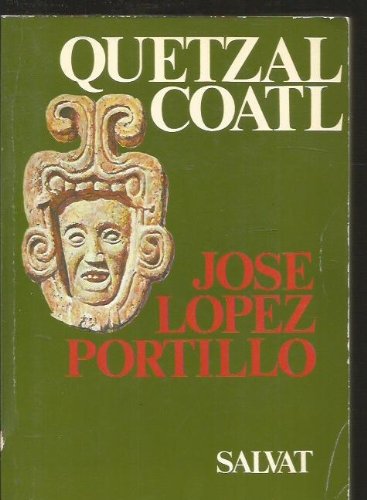
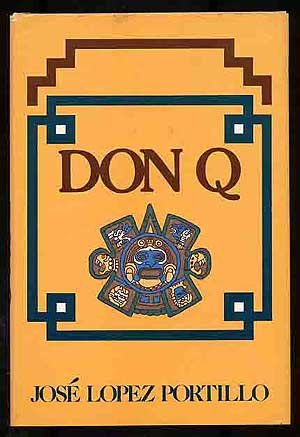
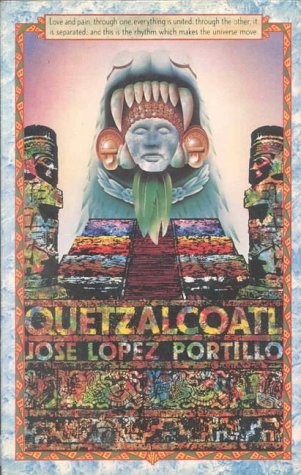
Composed of excerpts from the detailed diaries he kept as president along with autobiographical notes and commentary on current national issues, Mis tiempos offers an unusual inside look at the normally veiled workings of the Mexican executive power. López Portillo is also the author of several other works, including the novels La vida al traves de la muerte (1964; title means "Life Across Death"), Quetzalcoatl (1965; translation published in 1982 as Quetzalcoatl: In Myth, Archeology and Art), and Don Q: Conversaciones sobre la yoeidad y otras trascendentalidades (1969). Ellos Vienen: la conquista de Mexico (1987), was translated by Beatrice Berler as They Are Coming: The Conquest of Mexico and released in 1992.
An accomplished painter, López Portillo also created the illustrations for this work. López Portillo's interest in Mexico's past is explored in Dinamica Politica de Mexico, a four volume set whose first volume was published in 1993.
Achievements
He undertook an ambitious program to promote Mexico's economic development with revenues stemming from the discovery of new petroleum reserves in the states of Veracruz and Tabasco by Petróleos Mexicanos (Pemex), the country's publicly owned oil company.
In 1980, Mexico joined Venezuela in the Pact of San José, a foreign aid project to sell oil at preferential rates to countries in Central America and the Caribbean. According to some, the economic confidence that he fostered led to a short-term boost in economic growth, but by the time he left office, the economy had deteriorated.
One of his last acts as president, announced during his annual State of the Nation address on September 1, 1982, was to order the nationalization of the country's banking system.
López Portillo was the last economic nationalist president to emerge from the ranks of the Institutional Revolutionary Party. Subsequent presidents have all been for free trade (librecambismo).
Views
Mexico enjoyed excellent economic credit when López Portillo came to office. Foreign bankers were anxious to extend loans to a government which controlled one of the richest oil reserves in the world. López Portillo was just as anxious to borrow and did so almost with abandon. Predictions that prices for oil would continue to rise and enable Mexico to repay its foreign debt proved inaccurate.
Connections
López Portillo has been married twice, first to Maria del Careen, by whom he has three children: one son and two daughters; and second to Alexandra, by whom he has two children: Navila and Alejandro.