

Background
Hilaire Belloc was born in Saint-Cloud, France, on July 27, 1870. He was the son of Louis Belloc, a French lawyer, and Bessie Raynor Parkes, his English wife. Political disorder sent the family to England later that year.


(The Path to Rome (1902), an account of a walking pilgrima...)
The Path to Rome (1902), an account of a walking pilgrimage that author Hilaire Belloc made from central France across the Alps and down to Rome, has remained continuously in print. More than a mere travelogue, "The Path to Rome" contains descriptions of the people and places he encountered, his drawings in pencil and in ink of the route, humor, poesy, and the reflections of a large mind turned to the events of his time as he marches along his solitary way. At every turn, Belloc shows himself to be profoundly in love with Europe and with the Faith that he claims has produced it. As an essayist, Hilaire Belloc was one of a small, admired and dominant group (with Chesterton, E. V. Lucas and Robert Lynd) of popular writers. Hilaire Belloc (18701953) was an Anglo-French writer and historian who became a naturalized British subject in 1902. He was one of the most prolific writers in England during the early twentieth century. He is most notable for his Catholic faith, which had a strong impact on most of his works and his writing collaboration with G. K. Chesterton. Belloc wrote on myriad subjects, from warfare to poetry to the many current topics of his day. He has been called one of the Big Four of Edwardian Letters, along with H.G.Wells, George Bernard Shaw, and G. K. Chesterton, all of whom debated each other into the 1930s. Belloc was closely associated with Chesterton, and Shaw coined the term Chesterbelloc for their partnership. Asked once why he wrote so much, he responded, "Because my children are howling for pearls and caviar." Belloc observed that "The first job of letters is to get a canon," that is, to identify those works which a writer looks upon as exemplary of the best of prose and verse. For his own prose style, he claimed to aspire to be as clear and concise as "Mary had a little lamb." His best travel writing has secured a permanent following.
http://www.amazon.com/gp/product/1611043417/?tag=2022091-20

(Hilaire Belloc (1870-1953)one of the most prominent Cath...)
Hilaire Belloc (1870-1953)one of the most prominent Catholic authors of his timegives a common sense explanation of why the Crusades were necessary, and why they ultimately failed. He argues that the personal and strategic failings of the First Crusades leaders led to the establishment of a state that could not be sustained, and that the absence of such a state left Europe vulnerable to Islamic aggression for centuries afterward. Writing in 1937, following the demise of the Ottoman Empire, Belloc believed that the West had finally gained the advantage over its mortal foe. However, he also includes a prophetic warning to Western Civilization, about the eventual resurgence of Islam and its enduring desire to destroy Christendom.
http://www.amazon.com/gp/product/0991560639/?tag=2022091-20

( In this collection of short biographies Hilaire Belloc,...)
In this collection of short biographies Hilaire Belloc, one of the great Catholic historians of the twentieth century, shares his views on the principal characters of the Protestant Reformation, focusing primarily on those figures concerned with the events in England. Through each account, Belloc demonstrates that the motives of the Protestant leaders were rarely religious in nature, but usually political or economic. He reminds the reader that European Christendom was once a single united entity, under the authority of the Catholic Church, each country viewing itself as a single province of the whole. However, many of Europes Princes resented the power that the Bishop of Rome held in their own lands. The Reformation, aided by the rise of Nationalism, was a means for the nobles of Europe to shake off Papal authority and rule their territory independently. It also gave European monarchs control over the Church and all of its property in their realm, including the taxes that would normally be sent to Rome. Therefore, the nobles grew rich by confiscating the wealth of the Church, and resisted any form of reconciliation if that meant returning the wealth to its rightful owner. In subsequent generations, the fear of this possibility gave the noble classes an incentive to remain in the Protestant camp. Whats more, the political leaders of the Counter Reformation were not as effective as they ought to have been, often allowing their own dynastic or nationalistic agendas to take precedence over the restoration of religious unity in Europe. As usual, Bellocs historical perspective offers the sort of timeless wisdom rarely duplicated in modern times.
http://www.amazon.com/gp/product/0991560698/?tag=2022091-20
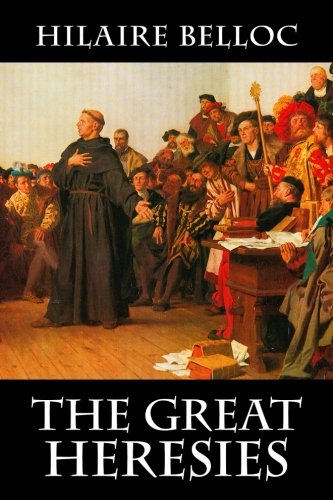
(Hilaire Belloc examines the five most destructive heretic...)
Hilaire Belloc examines the five most destructive heretical movements to have affected Christian Civilization: Arianism, Mohammedanism (Islam), Albigensianism (Cathar), The Reformation (Protestant), and The Modern Phase. Belloc describes how these movements began, how they spread, and how they continued to influence the world up until the time of his writing (1936). The Chapter on Islam is especially relevant in light of current events; in it Belloc accurately predicts the renewal of Jihadist aggression towards Western Civilization.
http://www.amazon.com/gp/product/0991560671/?tag=2022091-20
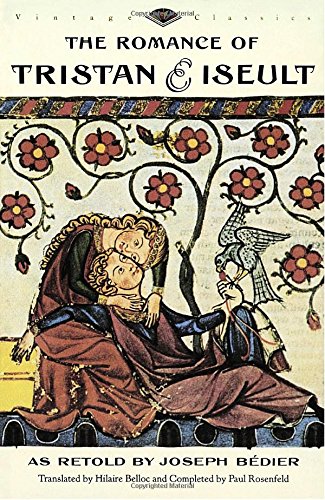
(A tale of chivalry and doomed, transcendent love, The Rom...)
A tale of chivalry and doomed, transcendent love, The Romance of Tristan and Iseult is one of the most resonant works of Western literature, as well as the basis for our enduring idea of romance. The story of the Cornish knight and the Irish princess who meet by deception, fall in love by magic, and pursue that love in defiance of heavenly and earthly law has inspired artists from Matthew Arnold to Richard Wagner. But nowhere has it been retold with greater eloquence and dignity than in Joseph Bédiers edition, which weaves several medieval sources into a seamless whole, elegantly translated by Hilaire Belloc and Paul Rosenfeld.
http://www.amazon.com/gp/product/0679750169/?tag=2022091-20

(One of the most artful narratives ever written concerning...)
One of the most artful narratives ever written concerning the life of The Maid. Hilaire Belloc wrote with a familiarity only possessed by those with an intimate knowledge of the facts. A Catholic, of both French and English descent, Belloc clearly had an emotional affinity for this episode in the long struggle between the two nations.
http://www.amazon.com/gp/product/B00BO3R5G4/?tag=2022091-20

(Originally published in 1906. This volume from the Cornel...)
Originally published in 1906. This volume from the Cornell University Library's print collections was scanned on an APT BookScan and converted to JPG 2000 format by Kirtas Technologies. All titles scanned cover to cover and pages may include marks notations and other marginalia present in the original volume.
http://www.amazon.com/gp/product/1846379725/?tag=2022091-20

( At last, this is an accurate explanation of how Christe...)
At last, this is an accurate explanation of how Christendom suffered "shipwreck" in the Protestant Reformation. Traces the titanic conflict blow-by-blow from pre-Luther, through "The Flood," "The English Accident," and Calvin, showing the spiritual, military, political and financial struggles which had ended in a divided Europe by 1648. No educated person can ignore this book!
http://www.amazon.com/gp/product/0895554658/?tag=2022091-20

(Format Paperback Subject History)
Format Paperback Subject History
http://www.amazon.com/gp/product/129066143X/?tag=2022091-20

( For readers of any age, a witty and strikingly irrevere...)
For readers of any age, a witty and strikingly irreverent collection of moral guidance Most notable among prolific English satirist Hilaire Belloc's writings are the sharp and clever admonishments he composed for children. Collected here and illustrated to wonderful haunting effect by Edward Gorey, these short, funny pieces offer moral instruction for all types of mischief makersfrom a certain young Jim, "who ran away from his nurse and was eaten by a lion," to the tale of Matilda, "who told lies and was burned to deathand add up to a delightful read for any fan of Roald Dahl or Shel Silverstein.
http://www.amazon.com/gp/product/0151007152/?tag=2022091-20

( A striking portrait of Charles I, this book also looks ...)
A striking portrait of Charles I, this book also looks closely at the role that the burgeoning financial powers played in shaping European politics and the effects that these powers had on the English monarchy during his reign. Belloc also explores the consequences of these effects for Europe generally. At the same time, it is a detailed study of the man who was Charles I with all his strengths, all his weaknesses. Bellocs sense of history sheds light on how those strengths and weaknesses contributed to action or inaction by Charles and how those actions affected England and the rest of Europe.
http://www.amazon.com/gp/product/0971828636/?tag=2022091-20

(The author was the William F. Buckley, Jr. of the early t...)
The author was the William F. Buckley, Jr. of the early twentieth century. He was a Roman Catholic who saw Jews taking over Europe, in his mind. While the book is sometimes anti-Semitic, it is republished so today's readers can see the common discussions of the 1920's.The naive' philosophical arguments give perspective to the European experience of Jewish people over the last one hundred years.
http://www.amazon.com/gp/product/1519625111/?tag=2022091-20

(The Servile State is a book written by Hilaire Belloc in ...)
The Servile State is a book written by Hilaire Belloc in 1912 about economics. Although it mentions Distributism, for which he and his friend G. K. Chesterton are famous, it avoids explicit advocation for that economic system. This book lays out, in very broad outline, Belloc's version of European economic history: starting with ancient states, where slavery was critical to the economy, through the medieval economies based on serf and peasant labor, to capitalism. Belloc argues that the development of capitalism was not a natural consequence of the Industrial Revolution, but a consequence of the earlier dissolution of the monasteries in England, which then shaped the course of English industrialization.
http://www.amazon.com/gp/product/1440476438/?tag=2022091-20
Hilaire Belloc was born in Saint-Cloud, France, on July 27, 1870. He was the son of Louis Belloc, a French lawyer, and Bessie Raynor Parkes, his English wife. Political disorder sent the family to England later that year.
Hilaire was educated at the Oratory School in Birmingham. As a boy, he was a precocious poet, artist, and mathematician. He graduated from Balliol College, Oxford, where he had won a scholarship in history.
Belloc began his literary career with Verses and sonnets (1895). In 1896 he married the American Elodie Hogan, and they had three children. That same year he published The Bad Child's Book of Beasts, which, together with Cautionary Tales and More Beasts for Worse Children, formed a collection destined to become a classic. In 1899 Belloc began a series of biographies, which included two French revolutionaries (Danton, 1899, and Robespierre, 1901) and many eminent literary and political figures of France and England. In 1902 he published Path to Rome, which is perhaps his most characteristic work in that it reveals his love of travel, gentle humor, and staunch Roman Catholicism.
During these years Belloc also became very active in political life. He became a British citizen in 1902, and in 1906 he was elected to Parliament. In 1910 he abandoned political office for journalism, which he felt was a more effective means of achieving reform. He joined with Cecil Chesterton in writing articles attacking imperialism and corruption in political life. In 1912 Belloc published The Servile State, which outlined his antisocialist and anticapitalist philosophy of distributism. His views were shared by G. K. Chesterton, and they founded the political weekly New Witness to press forward the fight for reform.
In the following years Belloc continued to publish prolifically. In 1942 he suffered a stroke, and though he wrote magazine articles occasionally, he published no more books. He died in 1953 from accidental burns.
( In this collection of short biographies Hilaire Belloc,...)
( A striking portrait of Charles I, this book also looks ...)
( For readers of any age, a witty and strikingly irrevere...)
(Hilaire Belloc examines the five most destructive heretic...)
(A tale of chivalry and doomed, transcendent love, The Rom...)
(Hilaire Belloc (1870-1953)one of the most prominent Cath...)
(The Path to Rome (1902), an account of a walking pilgrima...)
( At last, this is an accurate explanation of how Christe...)
(One of the most artful narratives ever written concerning...)
(The Servile State is a book written by Hilaire Belloc in ...)
(Format Paperback Subject History)
(Originally published in 1906. This volume from the Cornel...)
(The author was the William F. Buckley, Jr. of the early t...)
He was deeply religious and held a strong Catholic faith which was often reflected in many of his writings.
One of Belloc's most famous statements was "the faith is Europe and Europe is the faith"; this sums up his strongly held, orthodox Catholic views, and the cultural conclusions he drew from them. Those views were expressed at length in many of his works from the period 1920–40. These are still cited as exemplary of Catholic apologetics. They have also been criticised, for instance by comparison with the work of Christopher Dawson during the same period.
As a young man, Belloc lost his faith. Then came a spiritual event, which he never discussed publicly, that returned him to Catholicism for the remainder of his life. Belloc alludes to this return to the faith in a passage in The Cruise of the Nona. According to his biographer A. N. Wilson (Hilaire Belloc, Hamish Hamilton), Belloc never wholly apostatised from the Faith. The momentous event is fully described by Belloc in The Path to Rome. It took place in the French village of Undervelier at the time of Vespers. Belloc said of it, "not without tears", "I considered the nature of Belief" and "it is a good thing not to have to return to the faith".
Belloc's Catholicism was uncompromising. He believed that the Catholic Church provided hearth and home for the human spirit. More humorously, his tribute to Catholic culture can be understood from his well-known saying, "Wherever the Catholic sun does shine, there's always laughter and good red wine. " He had a disparaging view of the Church of England, and used sharp words to describe heretics, such as, "Heretics all, whoever you may be/ In Tarbes or Nimes or over the sea/ You never shall have good words from me/ Caritas non-conturbat me". Indeed, in his "Song of the Pelagian Heresy" he becomes quite strident, describing how the Bishop of Auxerre, "with his stout Episcopal staff/ So thoroughly thwacked and banged/ The heretics all, both short and tall/ They rather had been hanged".
He had a deep interest in politics and served as a Liberal Party Member of Parliament for Salford South for five years. He had strong views against capitalism.
He went into politics after he became a naturalised British subject. A great disappointment in his life was his failure to gain a fellowship of All Souls College, Oxford in 1895. This failure may have been caused in part by his producing a small statue of the Virgin and placing it before him on the table during the interview for the fellowship.
From 1906 to 1910 he was a Liberal Party Member of Parliament for Salford South. During one campaign speech he was asked by a heckler if he was a "papist. " Retrieving his rosary from his pocket he responded, "Sir, so far as possible I hear Mass each day and I go to my knees and tell these beads each night. If that offends you, then I pray God may spare me the indignity of representing you in Parliament. " The crowd cheered and Belloc won the election.
Quotations:
" There is nothing worth the wear of winning, but laughter and the love of friends. "
" All men have an instinct for conflict: at least, all healthy men. "
" An institute run with such knavish imbecility that if it were not the work of God it would not last a fortnight. "
" Any subject can be made interesting, and therefore any subject can be made boring. "
" Be content to remember that those who can make omelettes properly can do nothing else. "
" Child! Do not throw this book about; refrain from the unholy pleasure of cutting all the pictures out. "
" Every major question in history is a religious question. It has more effect in molding life than nationalism or a common language. "
" From quiet homes and first beginning, out to the undiscovered ends, there's nothing worth the wear of winning, but laughter and the love of friends. "
" I am writing a book about the Crusades so dull that I can scarcely write it. "
" I have wandered all my life, and I have also traveled; the difference between the two being this, that we wander for distraction, but we travel for fulfillment. "
He had a stroke in 1941 and suffered from its side-effects for as long as he lived.
He met American Elodie Hogan in 1890 and fell hopelessly in love with her. The young couple braved family opposition and got married in 1896. They had a happy marriage that produced five children and lasted till Elodie’s death in 1914.

